


Traditional Mahogany Tripod Table
A traditional mahogany tripod table brings warmth and functional elegance to a room, offering a sturdy yet movable surface for daily use.
Traditional Mahogany Tripod Table
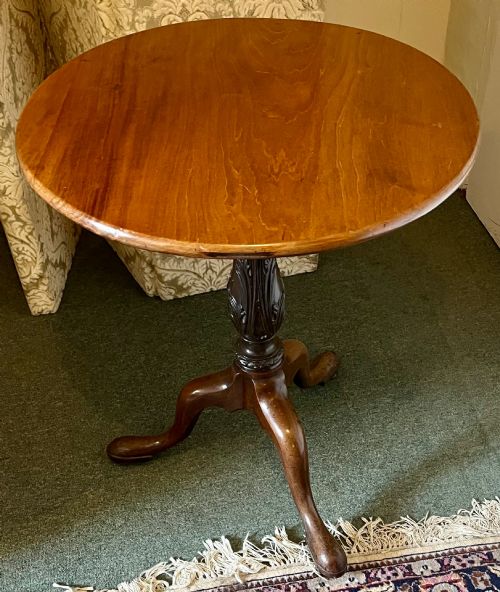
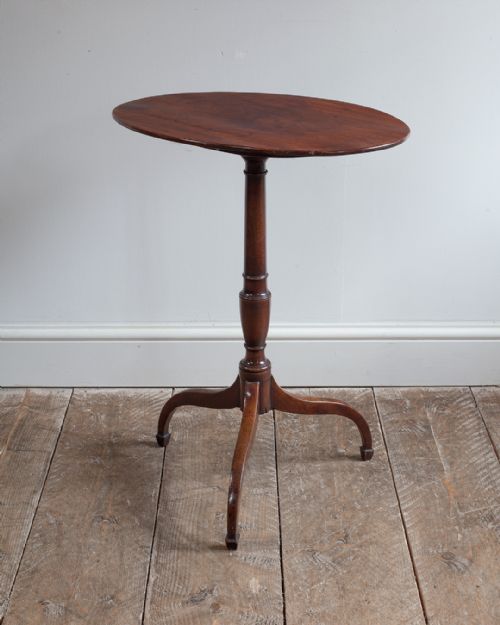
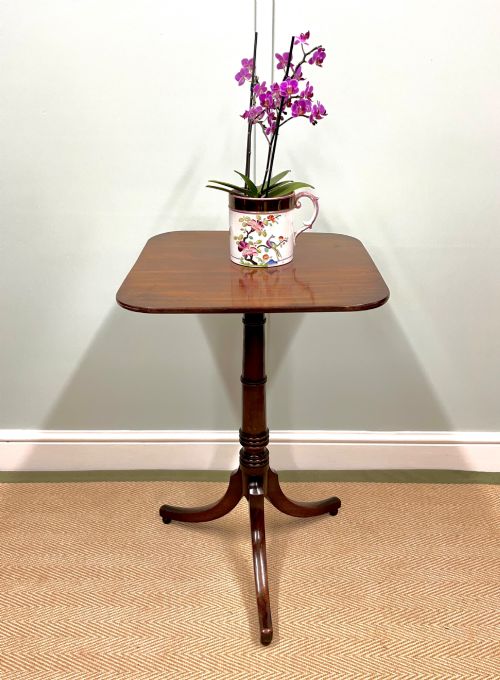
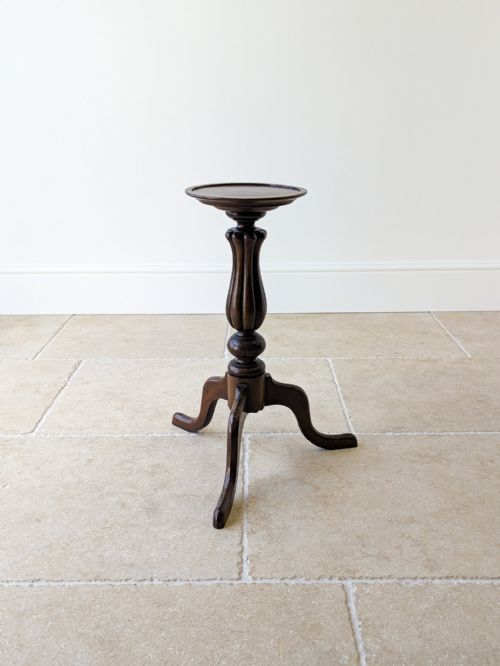
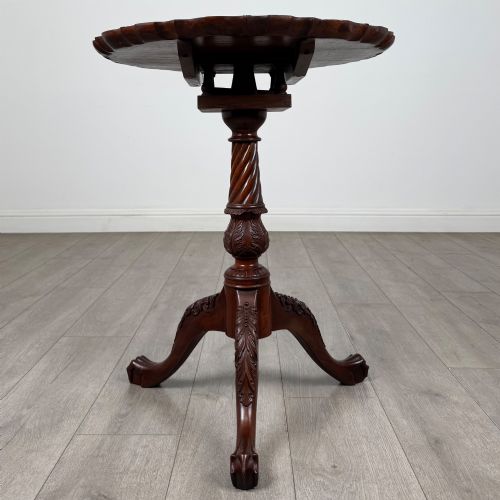
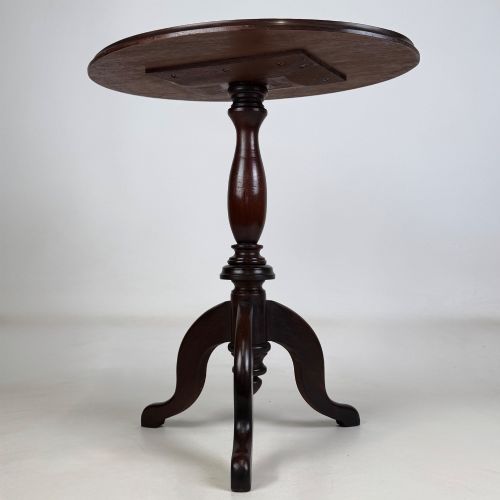
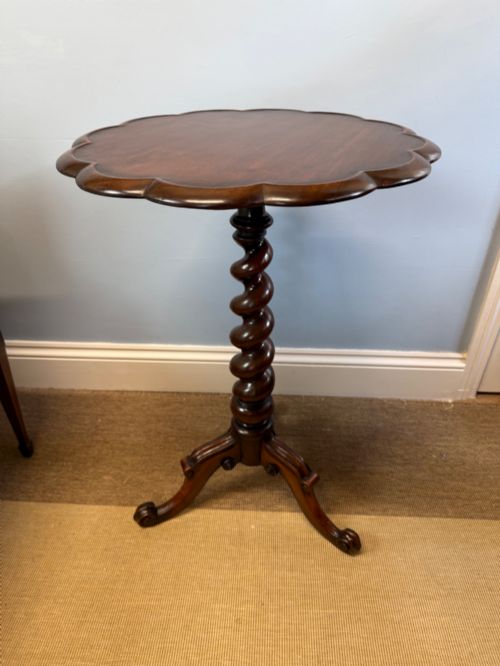
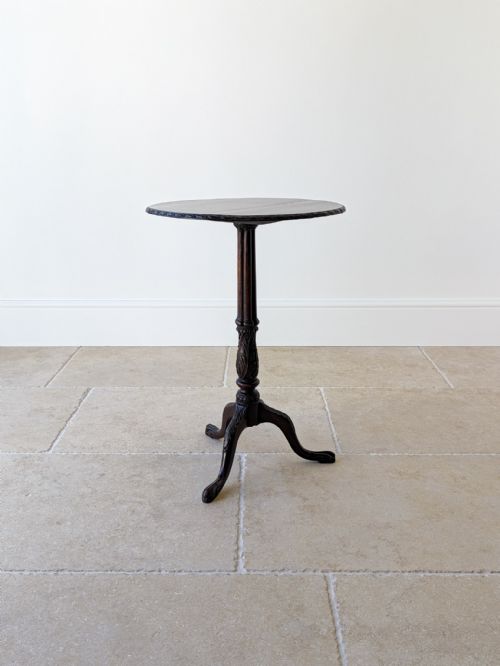
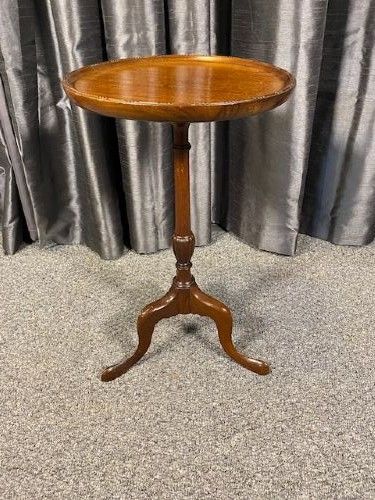
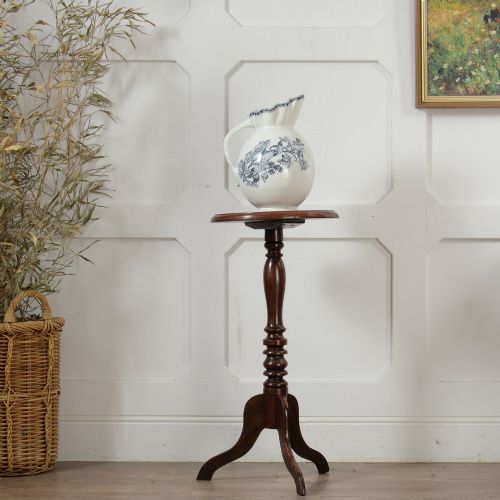
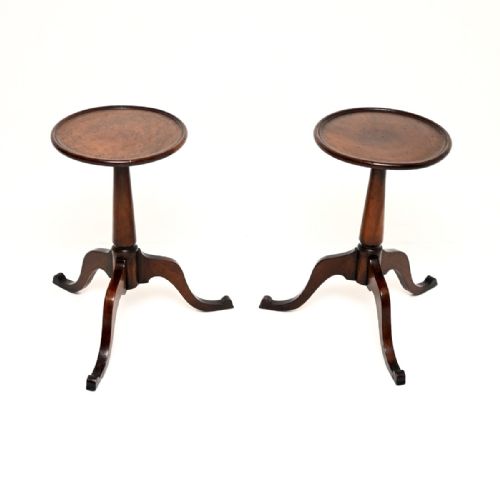
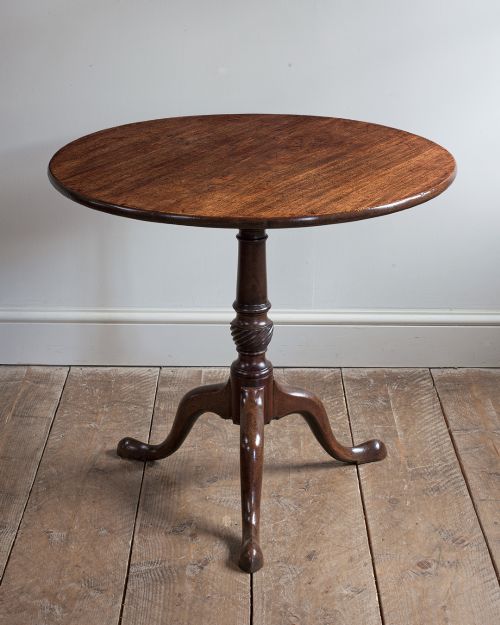
A traditional mahogany tripod table serves as a versatile piece of furniture designed with a central pedestal supported by three legs. You will most frequently encounter compact wine tables and occasional tables originating from the eighteenth, nineteenth, and early twentieth centuries. These tables often double as convenient side surfaces for lamps, drinks, or small decorative items.
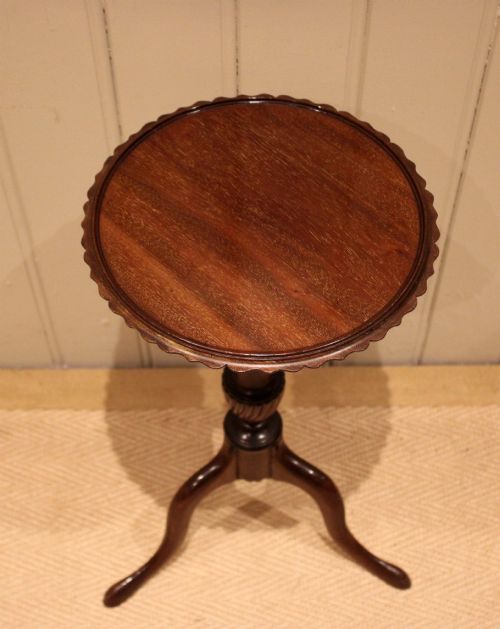
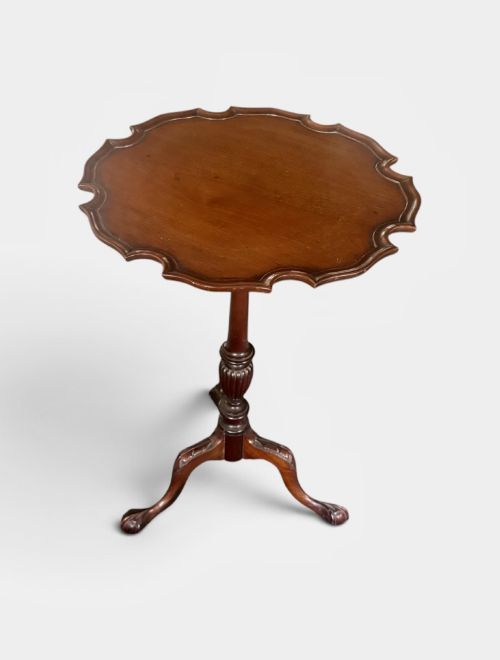
The selection ranges from simple George III circular tops to later revival pieces incorporating tilt-top mechanisms and birdcage supports. Form follows function closely, with many examples remaining light enough to reposition easily beside a chair or sofa. Occasional variations include shaped pie crust rims, gallery edges, and multi-tiered dumb waiters built on the characteristic three-legged base.
How they were made
Cabinetmakers relied primarily on solid mahogany and rich mahogany veneers, sometimes pairing them with secondary hardwoods to construct the central pillars and tripod feet. Turning lathes shaped the central columns into slender baluster forms, while hand-carving defined the knees and pad or claw feet. Joints were secured using traditional pegs and tenons to ensure stability across the three-legged frame.
Many tops incorporated tilting mechanisms or clever birdcage sub-assemblies, allowing the table surface to fold flat for storage against a wall when not in use. Specialised edges like raised gallery rims or shaped pie crust contours required patient hand-moulding from solid timber. Brass fittings occasionally appeared on catches and hinges, adding functional contrast to the dark wood.
Traditional Mahogany Tripod Table Retail Price Guide 2026
Typical asking prices for traditional mahogany tripod table among the pieces listed under this phrase on Sellingantiques today, from the lower quarter to the upper quarter. They describe what is for sale here now, not the wider market.
Forms include side tables, wine tables, dumb waiters, and kettle stands supported by characteristic tripod bases.
What varies in quality
Quality rests significantly in the choice of timber and the depth of figure within the mahogany grain. Superior examples exhibit tightly figured wood with rich natural colour, whereas lesser pieces rely on plain, uniform planking. The crispness of hand-carving on the pedestal and feet further separates standard production from finer workshop output.
Construction details dictate daily reliability, particularly the snugness of the tilt-top mechanism and the rigidity of the tripod base. A well-balanced table sits firmly without rocking, demonstrating precise joinery where the legs meet the central column. Minor variations in proportion also influence the overall visual harmony of the piece.
The Traditional Mahogany Tripod Table Glossary
- Mahogany
- A durable tropical hardwood prized for its deep reddish-brown colour and stable grain. It forms the primary material for the vast majority of these tables.
- Tripod base
- A support structure featuring three legs radiating from a central pillar. This design prevents rocking on uneven historical floors.
- Tilt-top
- A hinged tabletop mechanism that allows the surface to pivot into a vertical position. This clever feature saved floor space in period homes.
- Birdcage
- A revolving wooden framework beneath the tabletop that permits the surface to both rotate and tilt. It represents a more complex form of engineering.
- Pie crust rim
- A decorative raised tabletop edge carved with undulating curves resembling pastry work. This detail is typically hand-shaped from solid timber.
Traditional Mahogany Tripod Table: Frequently Asked Questions
How do I use a traditional mahogany tripod table today?
These tables fit easily beside armchairs to hold books, drinks, or small lamps without dominating a room's layout. Their modest footprint makes them practical for modern living spaces that require flexible surfaces.
Many people also use smaller wine tables as plant stands or display surfaces in hallways and corners. The movable nature of the three-legged design lets you shift them wherever extra table space is needed.
What is a tilt-top mechanism?
A tilt-top mechanism uses a hinged block beneath the surface that allows the tabletop to fold flat against the central pillar. This historical function permitted servants to store multiple tables compactly against walls when dining rooms needed to be cleared.
In daily use today, the mechanism lets you tuck the table neatly away when floor space is required. It remains a defining characteristic of many eighteenth and nineteenth-century examples.
How do I tell an 18th-century table from a later revival piece?
Eighteenth-century examples often display subtle tool marks, hand-carving nuances, and natural timber shrinkage consistent with age. The construction methods and patination on the wood develop a distinct depth over centuries of handling.
Later Victorian and Edwardian revival pieces frequently show more uniform machine-sawn components and standardised turning patterns. Examining the underside and the joinery usually reveals the manufacturing period.
Are these tables stable on modern floors?
A proper three-legged base naturally adjusts to contact the floor at three points, making them remarkably steady on older uneven surfaces. On very flat modern flooring, a well-balanced table will still rest firmly without wobbling.
If a table does rock slightly, it typically stems from minor historical wear in the leg joints rather than a design flaw. Careful placement or discreet adjustments can easily restore complete stability.