



Traditional Mahogany Towel Horse
A traditional mahogany towel horse brings warmth and practicality to a room, offering sturdy rails for airing linen.
Traditional Mahogany Towel Horse
A traditional mahogany towel horse is a freestanding frame designed for hanging and drying textiles, frequently found in bathrooms and bedrooms. These pieces range from compact single rails to larger multi-bar stands.
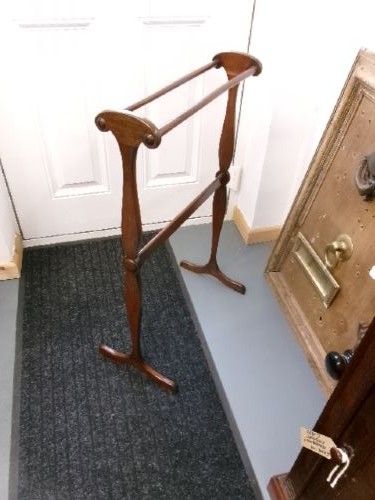
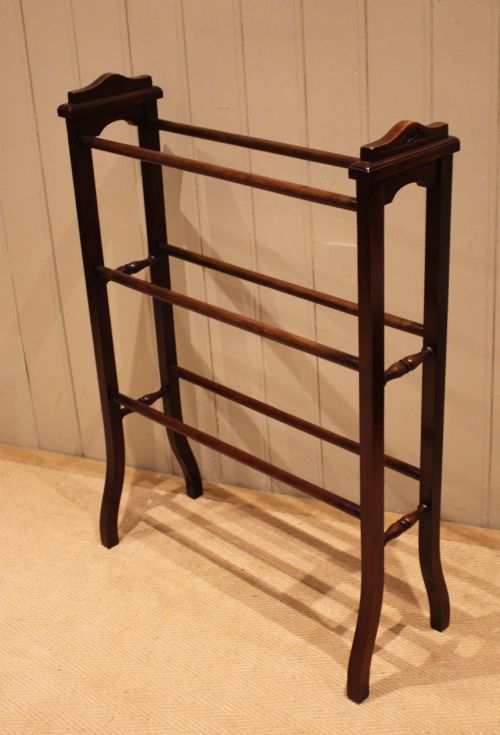
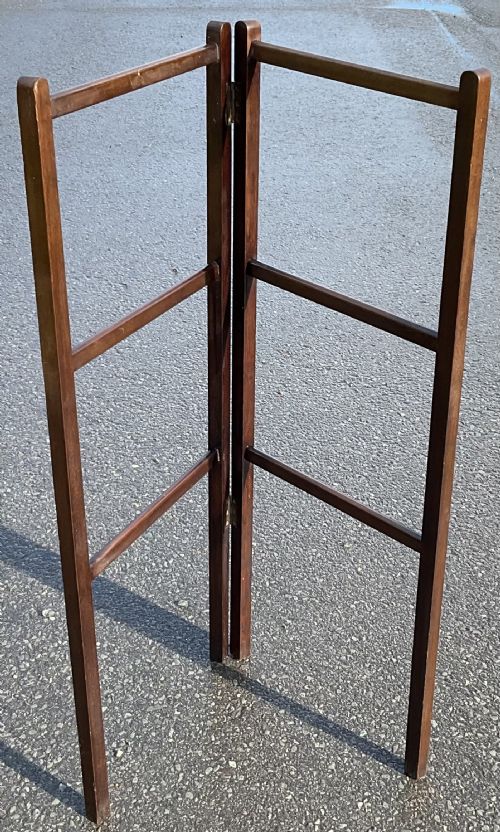
Buyers browsing this page most frequently encounter Edwardian and Victorian examples, alongside items dating from the nineteenth century and the Regency period. They take the form of standing towel rails and folding frames that suit both period and modern interiors.
The selection includes simple vernacular pieces as well as more substantial items with generous proportions. Many retain their original form, serving as functional furniture rather than decorative ornaments.
Judging quality in traditional mahogany towel horse designs
Quality rests primarily on the robustness of the joints and the calibre of the timber selection. Superior examples exhibit tight joinery and well-figured mahogany that has aged to a deep patina.
Decorative elements distinguish standard utility pieces from higher-tier items. The presence of crisp satinwood inlay or boxwood stringing indicates a greater investment of craftsmanship during manufacture.
Traditional Mahogany Towel Horse Retail Price Guide 2026
Typical asking prices for traditional mahogany towel horse among the pieces listed under this phrase on Sellingantiques today, from the lower quarter to the upper quarter. They describe what is for sale here now, not the wider market.
Some nineteenth-century examples feature silhouette designs, offering a distinct visual profile while keeping family towels neatly aired.
The Traditional Mahogany Towel Horse Glossary
- Mahogany
- A durable tropical hardwood prized for its deep reddish-brown colour and fine grain. It forms the primary structural material for these rails.
- Edwardian
- Pertaining to the period from nineteen hundred to nineteen ten, characterised by lighter furniture designs. Pieces from this era often feature refined proportions.
- Victorian
- Relating to the reign of Queen Victoria during the nineteenth century, encompassing robust and utilitarian furniture styles. Items from this era show solid, functional construction.
- Inlay
- A decorative technique where contrasting woods such as boxwood or satinwood are embedded into the surface. This adds linear detail and visual interest to the frame.
- Regency
- A stylistic period spanning the early nineteenth century, known for classical restraint and elegance. Pieces attributed to this era display refined lines.
Traditional Mahogany Towel Horse: Frequently Asked Questions
How do I date a towel horse?
Dating relies on stylistic clues and construction methods observed in the timber framework. Edwardian examples often appear lighter, whereas nineteenth-century pieces display heavier proportions.
Examining the joinery and any inlay work also helps narrow down the decade of manufacture. Comparing the patina on the mahogany gives further indication of age.
Are these rails sturdy enough for daily use?
These pieces were built from hardwood to handle heavy damp textiles in domestic settings. Most standing frames remain fully functional for modern bathrooms.
Folding variants require gentle handling at the hinges to preserve their original timber joints. Regular placement on level floors ensures the frame stays balanced.
What is the difference between folding and standing rails?
Standing rails feature fixed crossbars held rigidly in a permanent upright position. They offer a stable structure suited to permanent placement against a wall.
Folding rails utilise pivoting joints that allow the frame to collapse when not in use. This movable design provided flexibility in smaller period rooms.
How should I maintain mahogany furniture?
Mahogany benefits from occasional dusting with a soft cloth to prevent particle buildup on the polished surface. Applying a suitable wax preserves the moisture and sheen of the timber.
Avoiding direct placement near heat sources prevents the wood from drying out or splitting. Gentle care ensures the original finish endures.