
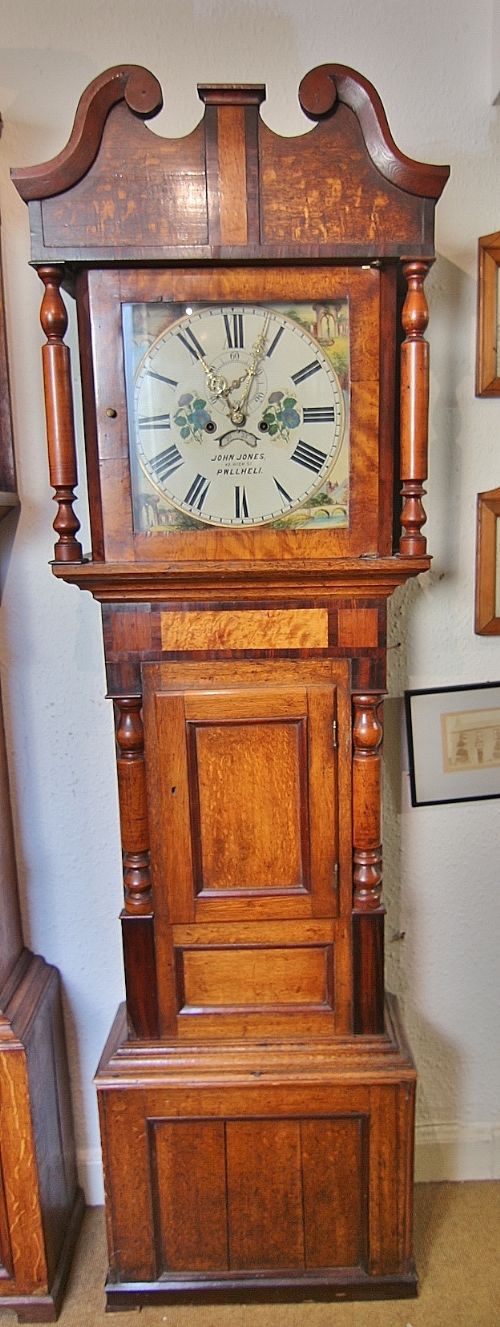
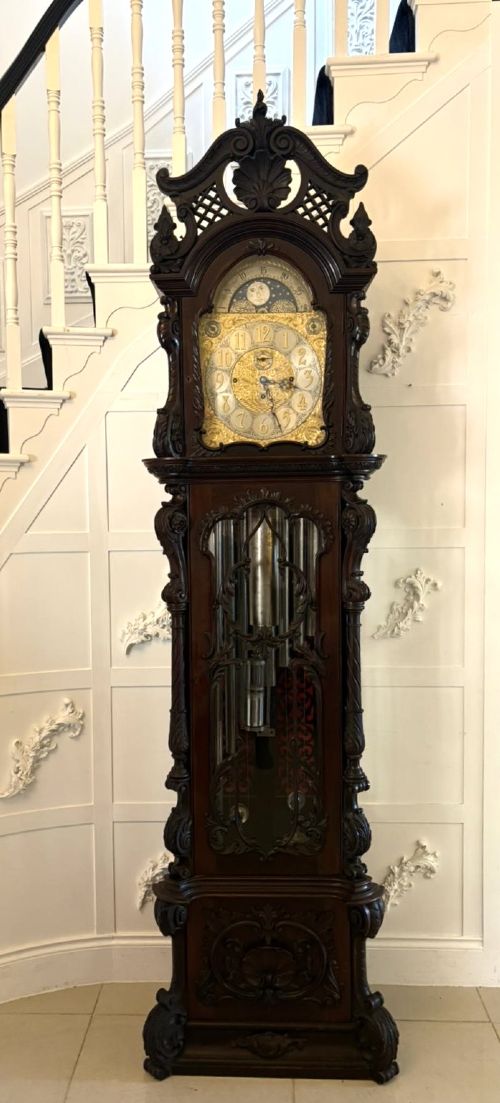
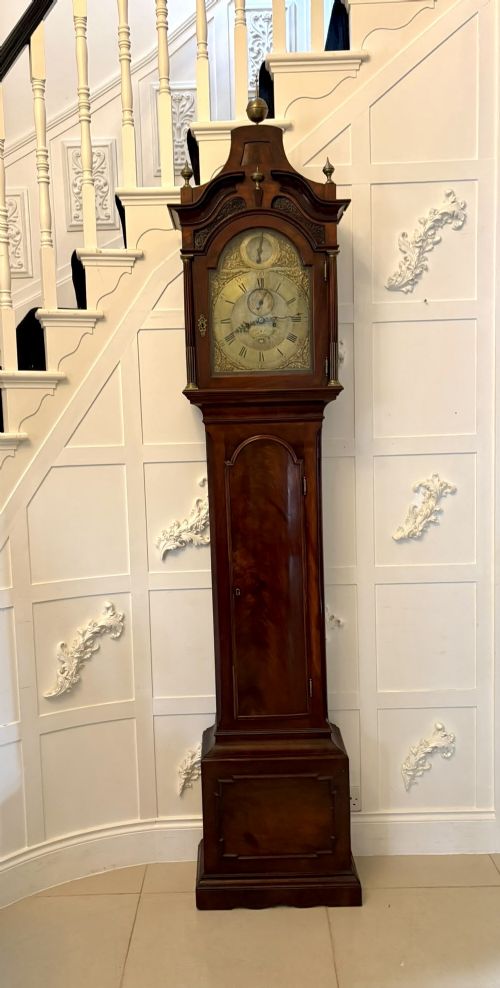
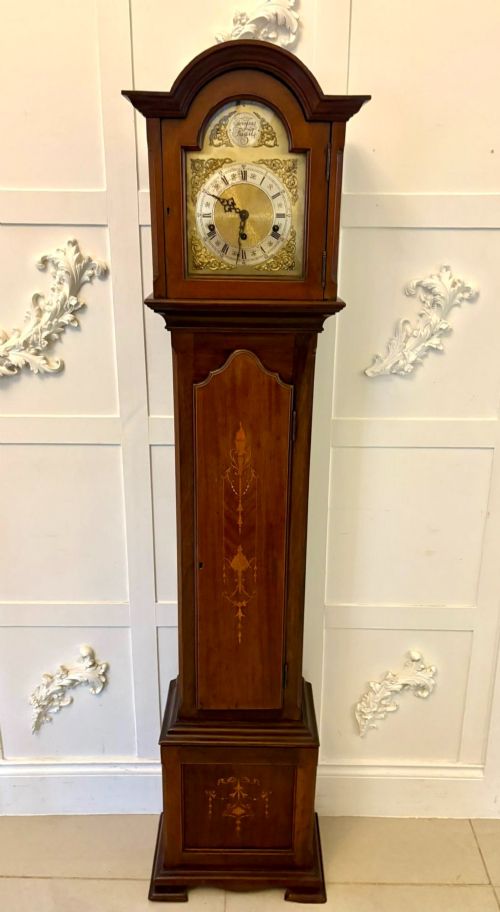
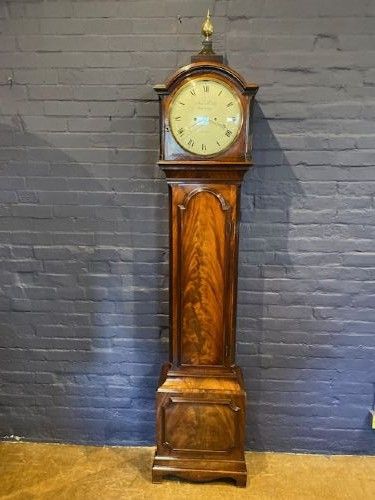
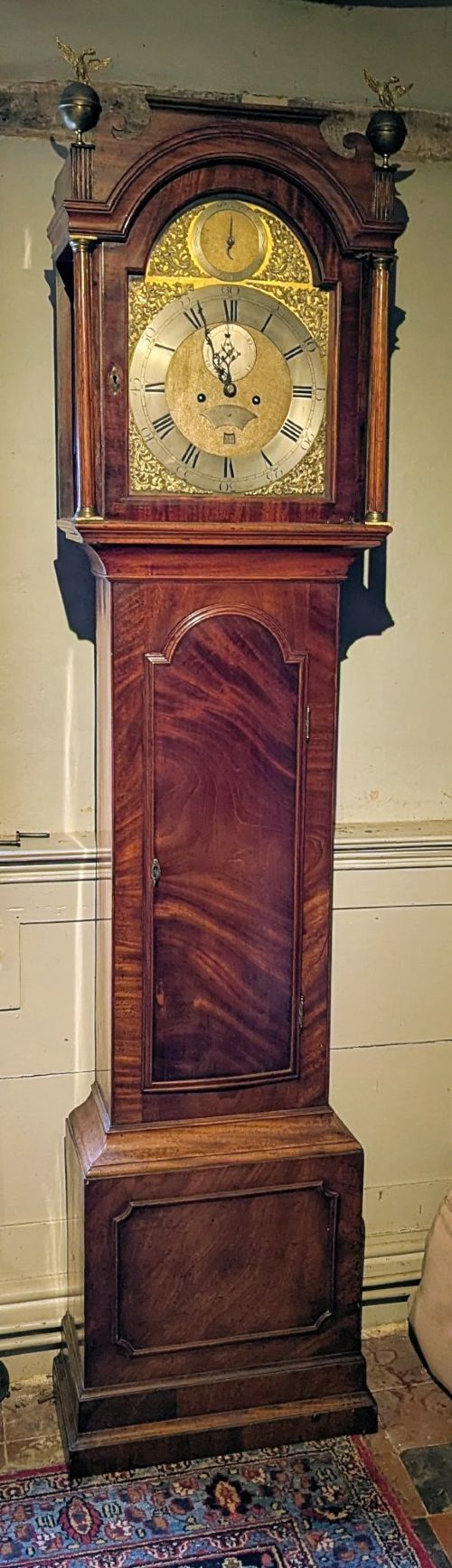
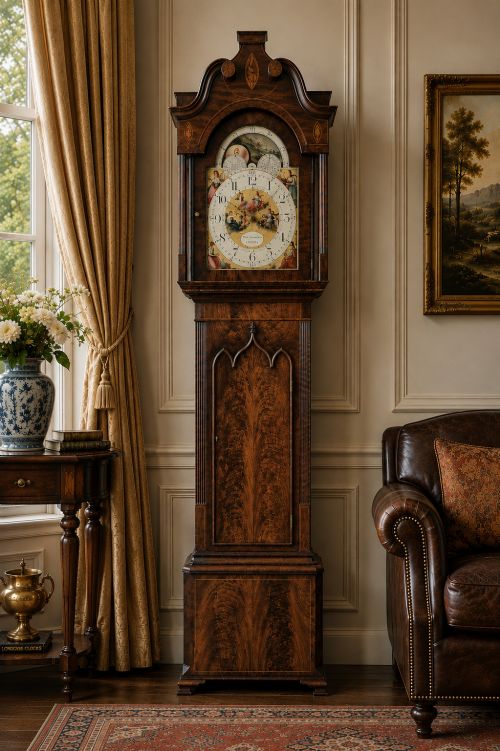
Traditional Mahogany Longcase Clock
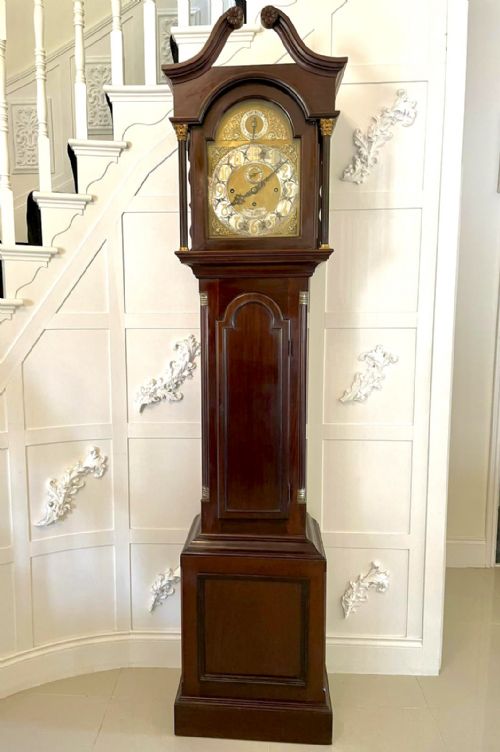
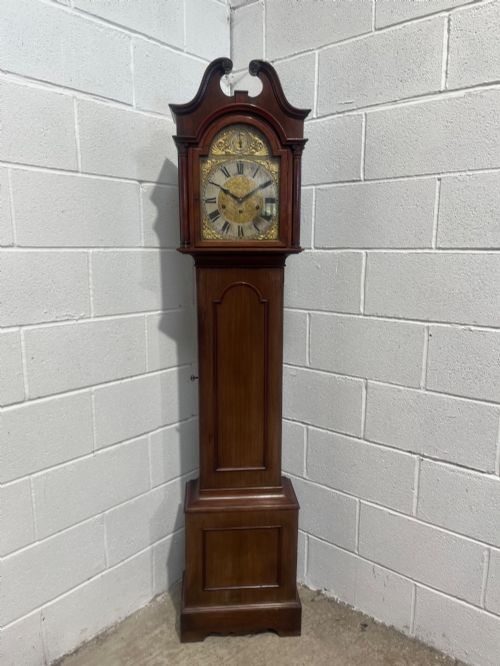
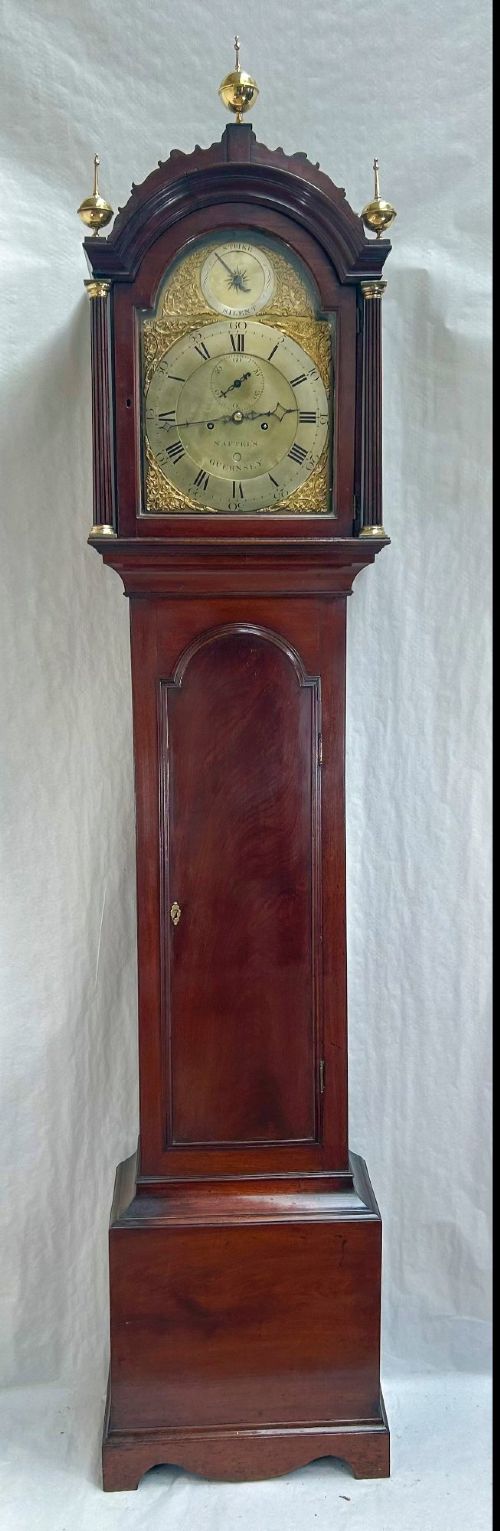
A traditional mahogany longcase clock anchors a hallway with rhythmic precision and rich cabinet timber.
Traditional Mahogany Longcase Clock
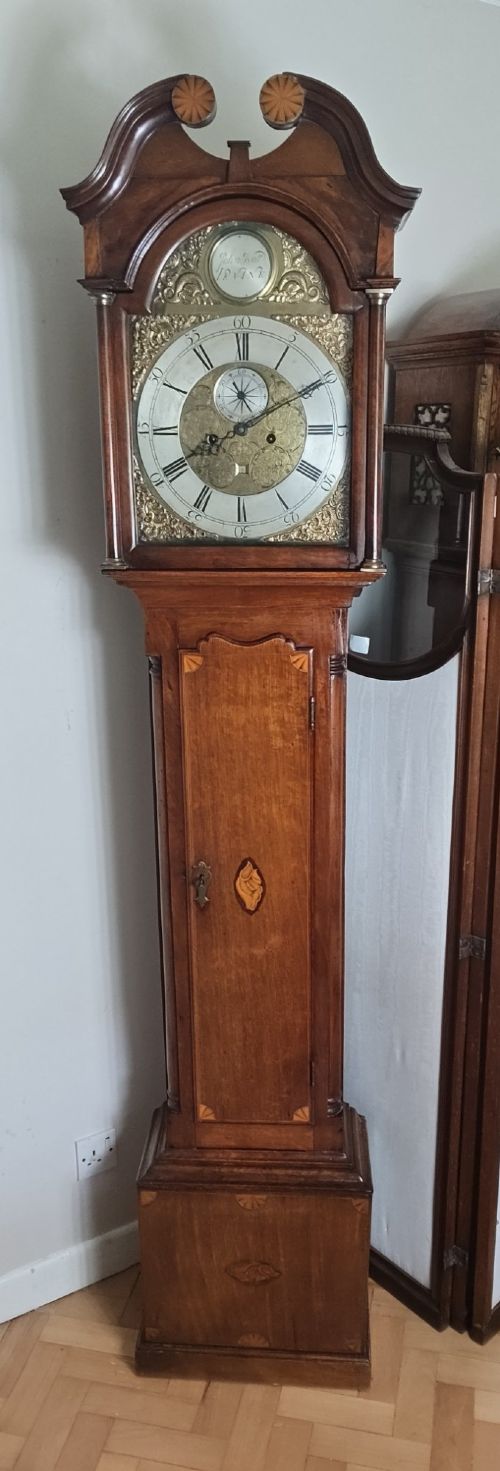
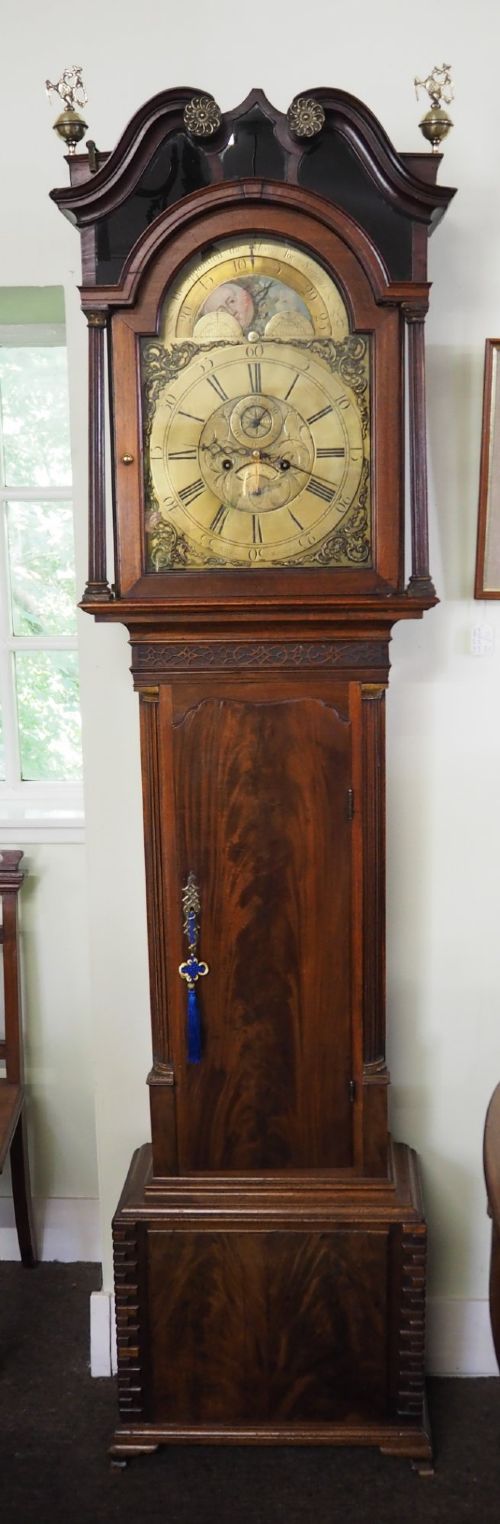
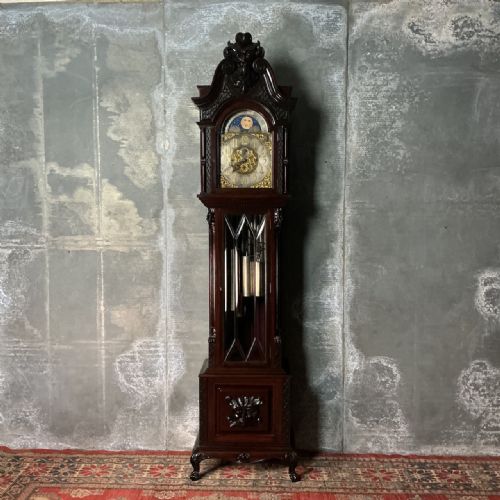
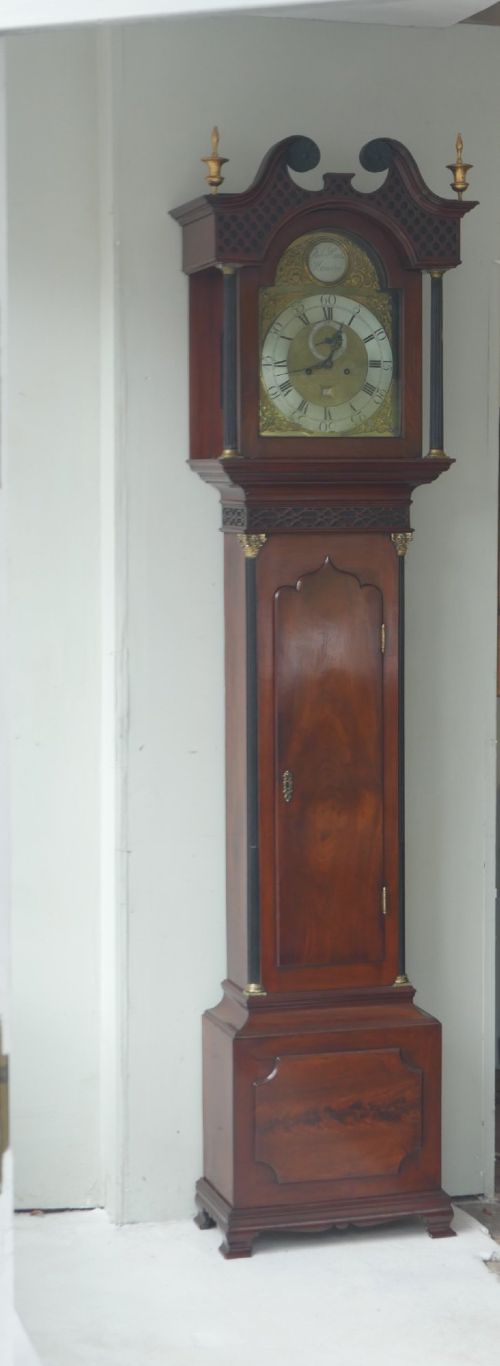
A traditional mahogany longcase clock is a tall floor-standing timepiece housing a weight-driven movement within a wooden case. These pieces emerge across the Georgian, Victorian, and Edwardian periods, stretching into the nineteen-thirties.
The form developed to protect delicate gear trains while serving as a prominent household fixture. Mahogany timber provides the primary exterior housing, frequently enriched with oak carcases or brass dial fittings.
How they were made
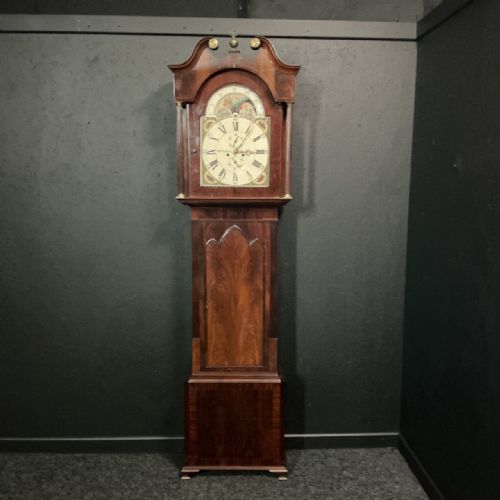
Cabinetmakers constructed the tall cases using solid mahogany and flame veneers over secondary timbers such as oak, applying intricate inlay and paterae where style demanded. Glass protects the dial aperture within the hood, while brass and steel form the intricate gear trains and motion works.
Dial faces rely on brass, painted iron, or enamel, often decorated with moon rollers, subsidiary seconds hands, and strike-silent mechanisms. Movement plates, wheels, and escapements depend on hand-finished brass and iron, driven by suspended lead or iron weights.
Movements vary from standard time-and-strike configurations to complex moonphase, musical, and strike-silent mechanisms.
What varies in quality
Quality rests in the precision of the movement, the depth of the mahogany figuring, and the clarity of the dial signature. Finer examples display crisp engraving on brass dial plates and complex musical or moonphase complications.
Cabinet proportion separates standard regional builds from sophisticated London or Scottish workshop output. Superior cases exhibit matched flame mahogany veneers, sound architectural mouldings, and original brass hardware.
James McCabe·Samuel Kellett of Bredbury·Winsor Bishop Norwich·Parkinson Bros Batley·Andrew Thom·Henry Weedon London
The Traditional Mahogany Longcase Clock Glossary
- Grandfather clock
- A tall floor-standing pendulum clock, typically over six feet in height, housing an eight-day or thirty-hour movement. This term became popular in the nineteenth century following the success of a famous musical tune.
- Moonphase
- A rotating dial disc tracking the lunar cycle behind a shaped aperture on the clock face. This complication required precise gear ratios connected to the main motion works.
- Quarter chiming
- A movement capability that sounds the quarters of the hour on bells, gongs, or chimes. Such systems demand additional gear trains alongside the standard time and strike functions.
- Drumhead
- A circular dial housing set directly onto a tapered wooden trunk without a traditional swan-neck hood. This regional style appears frequently in Scottish Victorian examples.
Traditional Mahogany Longcase Clock: Frequently Asked Questions
How do eight day movements work?
An eight day movement requires winding twice a month, transferring power from suspended weights through a train of brass wheels.
The escapement controls the release of this energy, driving the pendulum to maintain consistent oscillation and precise timekeeping.
What distinguishes a grandmother clock?
Grandmother clocks measure significantly shorter than standard grandfather clocks, often scaling down proportions for smaller domestic spaces.
These smaller versions appear predominantly in Edwardian and later twentieth-century periods while retaining traditional dial and movement layouts.
How do strike silent mechanisms operate?
A strike silent mechanism allows the owner to disengage the hour-striking train via a small lever on the dial face.
This prevents the clock from sounding during the night while allowing the timekeeping gear train to continue running uninterrupted.
Why choose a Scottish longcase clock?
Scottish longcase clocks often display distinctive regional cabinet proportions, drumhead dial formations, and robust brass or painted iron faces.
Workshops in Edinburgh, Dundee, and rural parishes developed individual aesthetic traits that differ from standard London designs.