

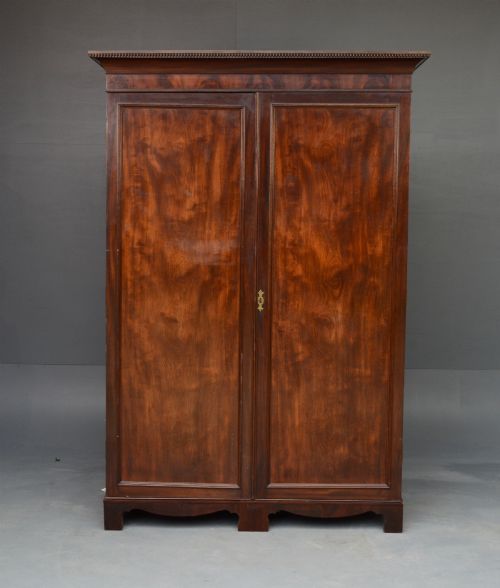
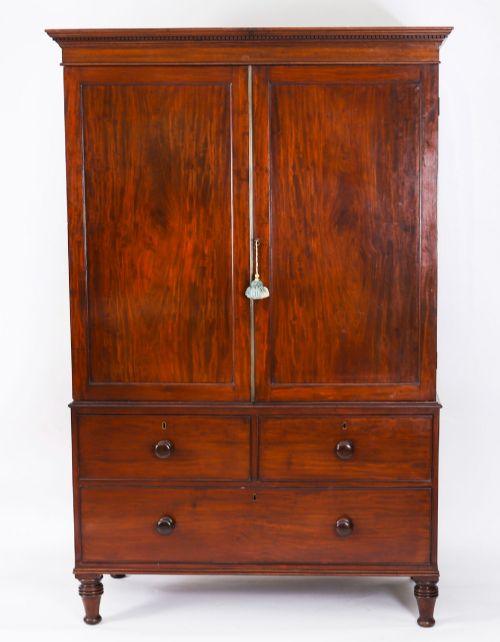
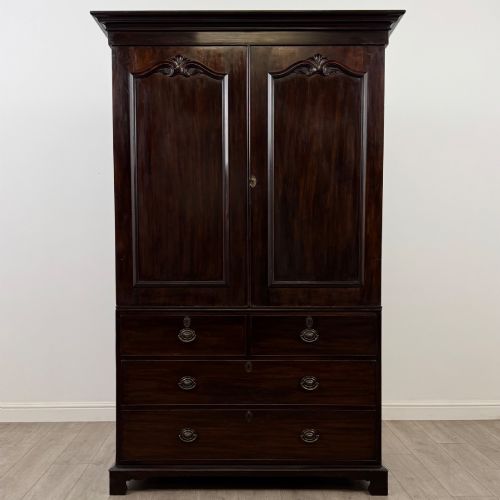
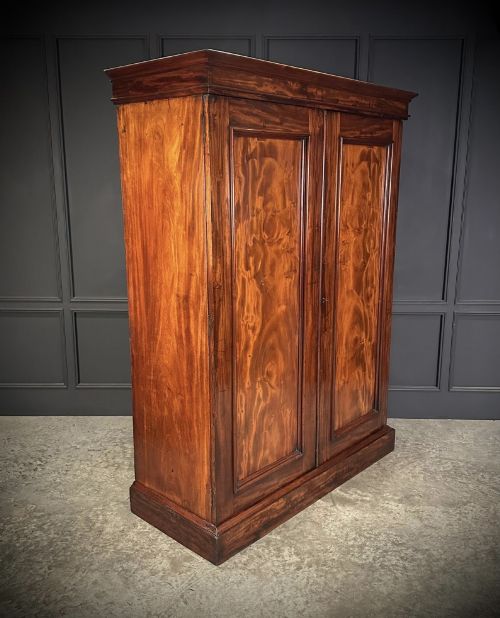


Traditional Mahogany Clothes Wardrobe
A traditional mahogany clothes wardrobe brings deep red timber and grand scale to a bedroom, offering heavy panelled doors and generous hanging space.
Traditional Mahogany Clothes Wardrobe
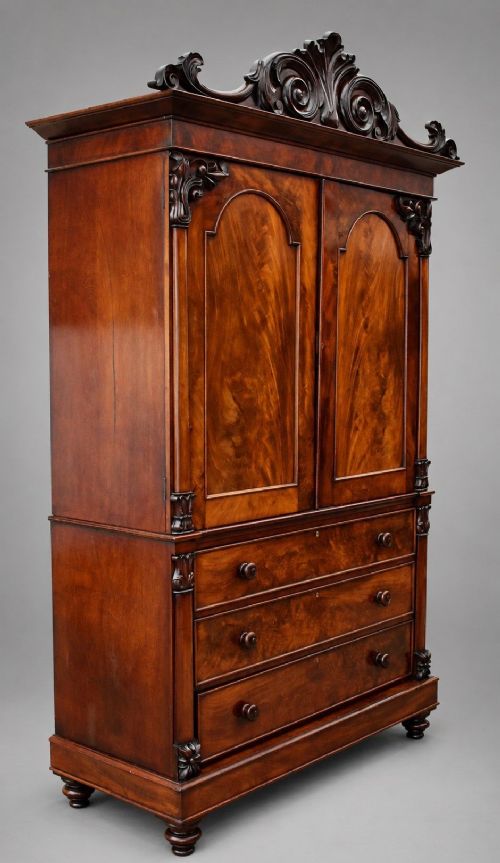
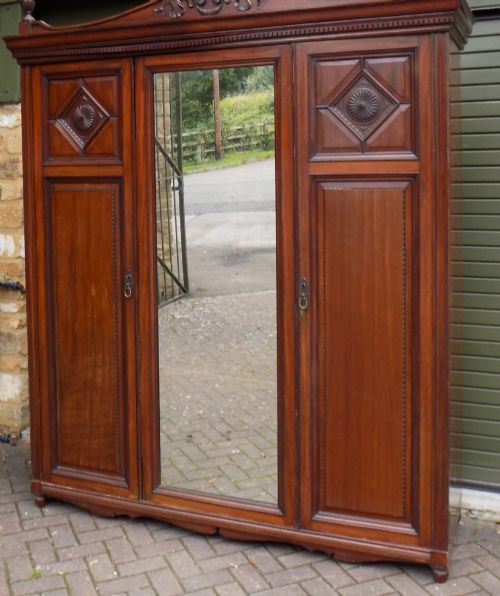
When you search for a traditional mahogany clothes wardrobe, you encounter substantial storage furniture spanning the eighteenth, nineteenth, and early twentieth centuries. These pieces encompass large double door wardrobes, expansive triple door designs, and tall linen presses with sliding trays above drawer bases.
The examples gathered here trace eras from George III and Regency through to Victorian and Edwardian periods. You find formal Georgian proportion alongside heavy William IV styling and occasional regional variations like Channel Islands or Dutch marquetry pieces.
The most common formats on this page divide into two main types: hanging wardrobes designed for long garments and linen presses originally built to store folded textiles. Both forms utilise rich timber figures to create commanding bedroom storage.
Materials and construction
Cabinet makers built these wardrobes using solid mahogany and flame mahogany veneer applied over secondary carcase timbers such as oak. The dense grain of Cuban mahogany appears alongside lighter varieties, often highlighted by contrasting boxwood inlay or delicate stringing.
Structural integrity relied on panelled door construction and heavy brass hardware including escutcheons, hinges, and hanging hooks. Internal configurations combined linen slides, drawer banks, and hanging space behind large architectural doors.
Traditional Mahogany Clothes Wardrobe Retail Price Guide 2026
Typical asking prices for traditional mahogany clothes wardrobe among the pieces listed under this phrase on Sellingantiques today, from the lower quarter to the upper quarter. They describe what is for sale here now, not the wider market.
Several pieces hail from the Channel Islands, where local cabinet makers gave traditional British forms a distinctly continental flair.
Distinctions in quality
Quality in these wardrobes rests upon the choice of timber and the handling of the grain. Pieces utilising highly figured flame mahogany veneers across symmetrical door panels stand apart from plain panelled carcases.
Fine craftsmanship shows in the subtlety of architectural mouldings, the precision of boxwood inlay, and the retention of original brass fittings. Proportions also dictate value, with breakfront triple and quadruple door arrangements showing superior design ambition over simple double door boxes.
The Traditional Mahogany Clothes Wardrobe Glossary
- Flame mahogany
- A veneer cut from timber where the grain creates a dramatic, flickering pattern resembling fire. This figure appears frequently on the principal doors of finer wardrobes.
- Linen press
- A tall piece of furniture featuring sliding internal trays enclosed by upper doors, sitting above a chest of base drawers. They served to keep folded textiles flat and protected.
- Compactum
- A multi-compartment wardrobe combining hanging space, linen slides, and drawers within a single unified carcase. They emerged to offer complete bedroom organisation.
- Breakfront
- A cabinet design where the central section projects forward from the flanking wings. This architectural arrangement creates depth and shadow on large wardrobes.
Traditional Mahogany Clothes Wardrobe: Frequently Asked Questions
How do I fit a tall wardrobe in a modern room?
These historical wardrobes were built as massive single units or modular carcases depending on the period. Check the ceiling height and door clearance of your room before delivery, as many nineteenth-century pieces cannot be easily modified.
Most larger wardrobes dismantle into cornices, bases, and separate door or side sections to ease transportation. Professional installation ensures the heavy timber frames sit square and doors hang true on uneven modern floors.
Can I use a linen press as a wardrobe?
A linen press traditionally contained sliding internal trays rather than a hanging rail. Many owners adapt these upper sections by removing shelves to install a modern clothes rail.
Retaining the original sliding trays provides excellent storage for folded knitwear and jumpers. Consider how you prefer to store your clothes before altering the internal configuration of an older press.
How do I tell a Georgian wardrobe from a Victorian one?
Georgian wardrobes, particularly from the George III era, favour cleaner architectural lines, restrained stringing, and balanced proportions. They often appear as tall linen presses with bracket feet or plinth bases.
Victorian and William IV examples tend to be heavier and wider, frequently utilising bold breakfront cornices, heavy carved corbels, and flame mahogany veneers. Edwardian pieces later introduced lighter timbers and inlaid boxwood detailing.
How do I care for mahogany bedroom furniture?
Mahogany responds well to stable room temperatures and protection from direct sunlight, which can bleach the warm reddish tone over time. Apply a traditional wax polish occasionally to nourish the timber surface.
Avoid placing large wardrobes against damp exterior walls to protect the underlying carcase woods and prevent veneer lifting. Keep brass fittings clean with a soft dry cloth.