


Traditional Mahogany Barometer
A traditional mahogany barometer measures atmospheric pressure while anchoring a hallway with rich timber grain and polished brass.
Traditional Mahogany Barometer
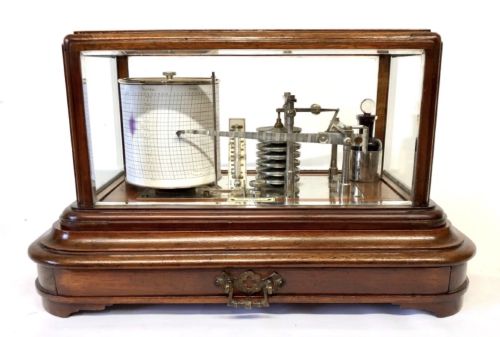
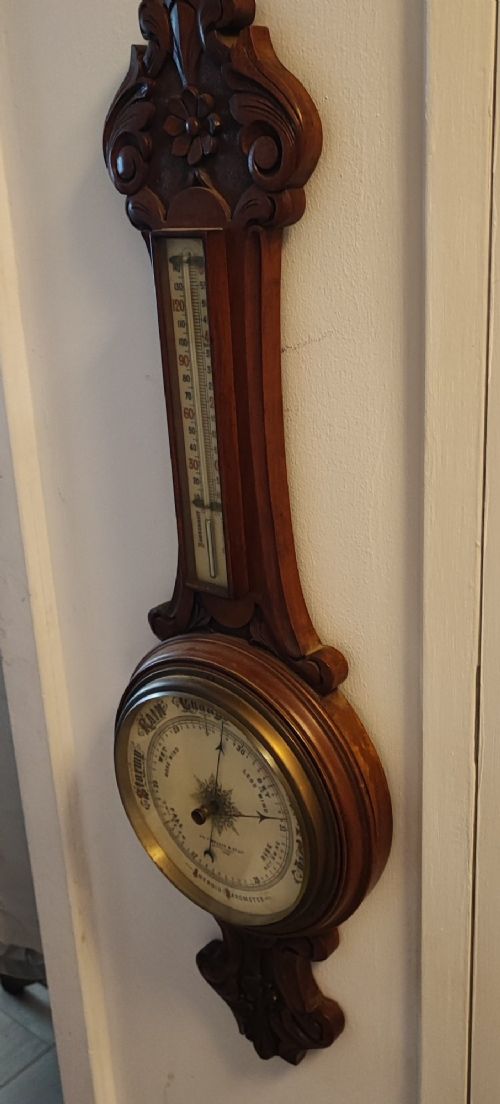
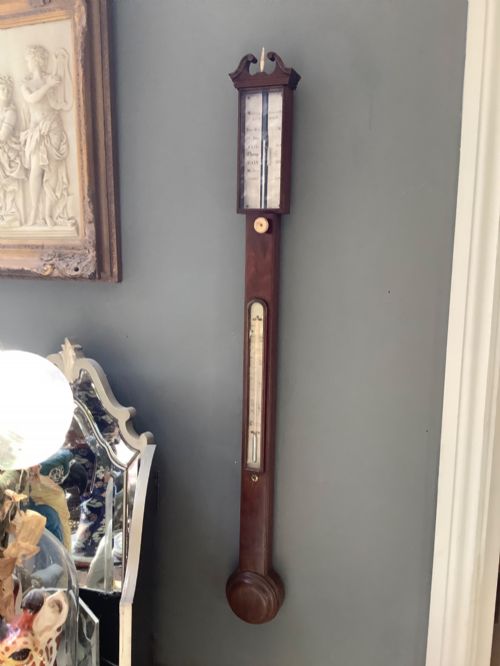
A traditional mahogany barometer represents a scientific instrument housed in a domestic timber case, designed to monitor weather changes in the home. The selections here include stick barometers, wheel barometers, aneroid models and recording barographs spanning the Georgian and Victorian eras.
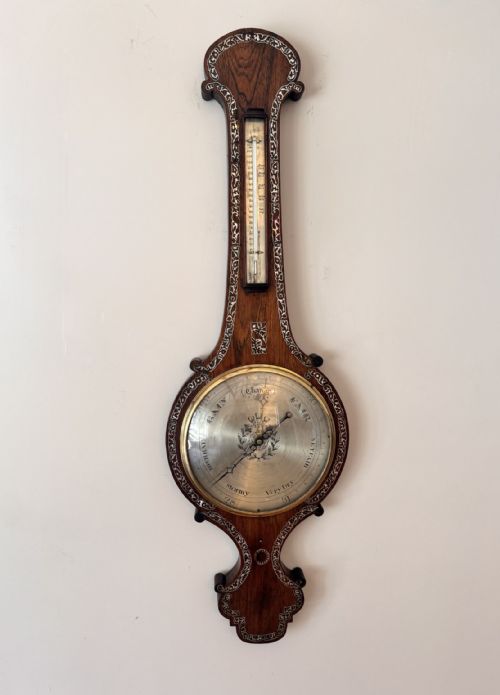
Most examples found on this page take the form of banjo barometers with curved pediments and inlaid details. These pieces combine practical weather forecasting dials with decorative woodwork suited to period interiors.
Makers ranging from provincial retailers to renowned instrument makers provide variety in scale and complexity. Buyers encounter simple stick configurations alongside elaborate instruments featuring thermometers and hygrometers.
Materials and construction
Makers utilised dense mahogany for the cases, often selecting figured timber veneers for the main body and incorporating contrasting boxwood or ebony stringing. Brass fixtures, bezels and thermometer scales provide structural support and visual contrast against the dark wood.
Glass protects the delicate dials, mercury tubes and silvered metal plates where pressure readings are engraved. Mother of pearl inlay and bone adjustment knobs appear on specific Victorian instruments to add decorative refinement.
Internal mechanisms rely on sealed metal aneroid chambers or glass tubes containing mercury to register shifts in air pressure. Woodworkers shaped the cases by hand, curving the damp timber for banjo shapes and turning cistern covers on lathes.
Listings feature scientific instruments across the Georgian, Victorian and Edwardian periods, utilising mahogany, brass, glass and mother of pearl.
Judging the standard
Quality rests in the crispness of the timber carving, the precision of the dial engraving and the integrity of the original case surface. Superior instruments display well-figured mahogany grain without heavy restoration or replaced bezels.
Signatures etched onto silvered brass dials by established makers distinguish ordinary production pieces from workshop highlights. The complexity of the movement, such as the inclusion of a functioning thermometer or barograph drum, elevates the standing of the instrument.
Negretti & Zambra·George Dollond of London·James H Kelly of Glasgow·Gaupp & Co·A Rivolta
The Traditional Mahogany Barometer Glossary
- Aneroid barometer
- An instrument that measures atmospheric pressure using a flexible metal box called an aneroid cell, without liquid mercury. This design became common during the Victorian period for domestic use.
- Stick barometer
- A tall, narrow instrument that shows barometric pressure directly through the height of a mercury column in a vertical glass tube. These forms offer a clean silhouette derived from eighteenth-century designs.
- Wheel barometer
- A banjo-shaped instrument that uses a pulley and weight system to translate mercury movement into the rotation of a pointer on a circular dial. The layout provides an easy-to-read face for domestic forecasting.
- Barograph
- A recording meteorological instrument that draws a continuous graph of atmospheric pressure onto a rotating drum driven by clockwork. These mechanical devices require precise brass gearing to function correctly.
- Silvered metal
- A brass plate treated with a silver solution to create a matte white surface for engraved numbers and weather inscriptions. This finish reduces glare and provides high contrast for reading measurements.
Traditional Mahogany Barometer: Frequently Asked Questions
Where should I hang a barometer?
Select an interior wall away from direct sunlight, radiators and exterior doors to protect the wood case and ensure steady readings.
Position the instrument at eye level so the dial or mercury column can be read clearly during daily routines.
How do I set the indicator hand?
Turn the small brass knob in the centre of the glass bezel to align the moveable pointer directly over the current pressure needle.
Observe whether the mercury or aneroid mechanism moves above or below your marker over the following hours to track local weather trends.
Are mercury barometers safe to own?
Sealed glass tubes containing mercury pose no risk during normal domestic use and remain stable within their timber housings.
Specialist care is only required if the instrument needs transport or restoration involving the removal of the glass reservoir.
How do I date a barometer?
Examine the dial style, case shape and fixing screws to identify manufacturing traits associated with Georgian or Victorian cabinet making.
Signed metal plates often name instrument makers whose working dates are recorded in trade directories.