
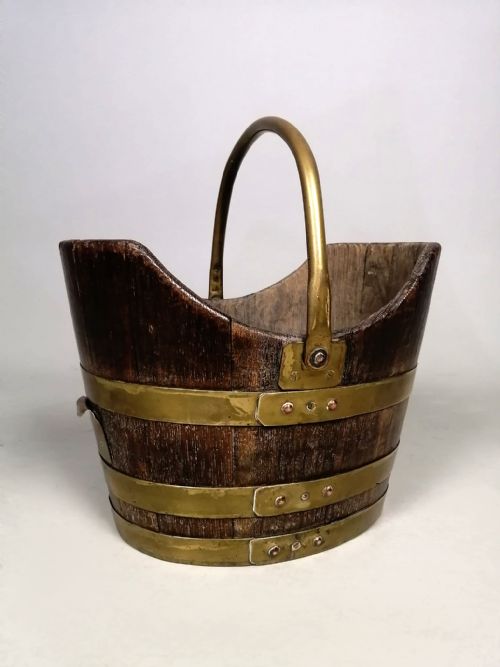


Traditional Log Bucket
A traditional log bucket sits beside the hearth to hold fuel, combining sturdy utility with the rich warmth of aged metal and timber.
Traditional Log Bucket
A traditional log bucket serves as a fireside container for firewood, peat, and coal, keeping fuel close to the hearth. Buyers seeking a traditional log bucket encounter items spanning the eighteenth, nineteenth, and early twentieth centuries, shaped by periods such as the Georgian and Victorian eras.
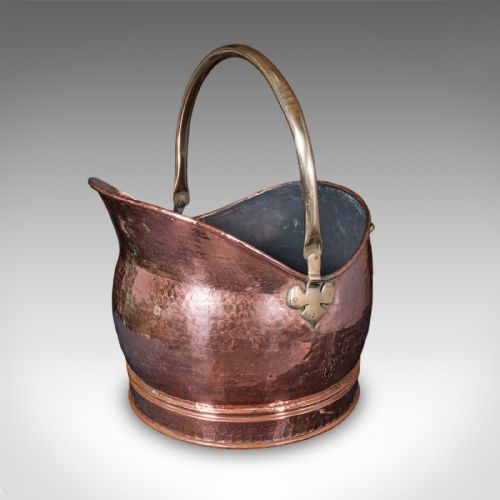
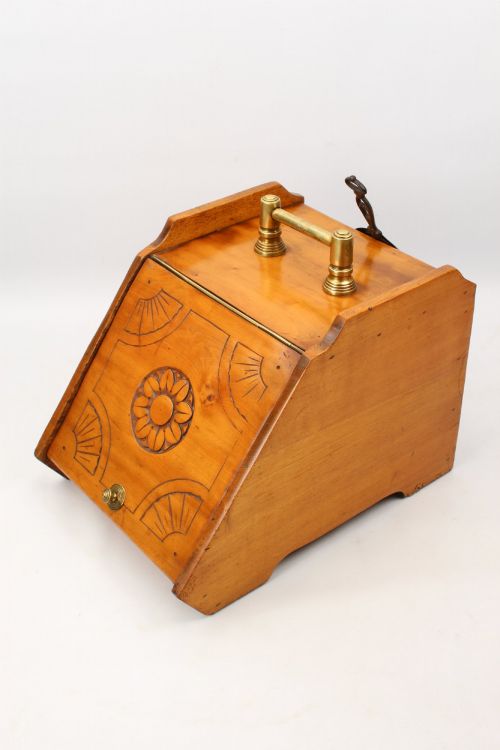
The selections on this page appear in forms that range from coopered timber buckets with metal bands to beaten metal coal scuttles, helmet buckets, and grain measures. Oak, mahogany, walnut, copper, and brass dominate the inventory, often featuring swing handles and riveted construction.
How they were made
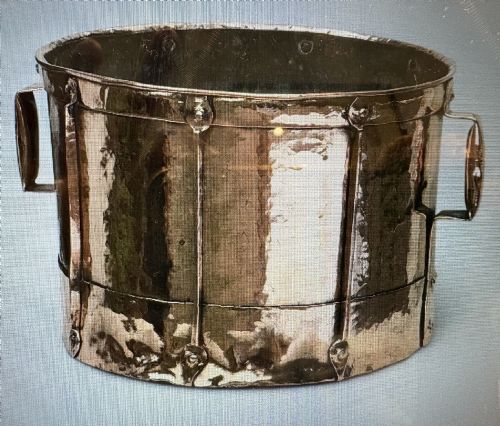
Metal vessels such as coal scuttles and log bins rely on sheet copper and brass, often hand-finished with riveted seams and paired with cast brass handles. Artisans shaped these metals into helmet and bucket profiles, sometimes adding swing handles and brass banding for structural strength.
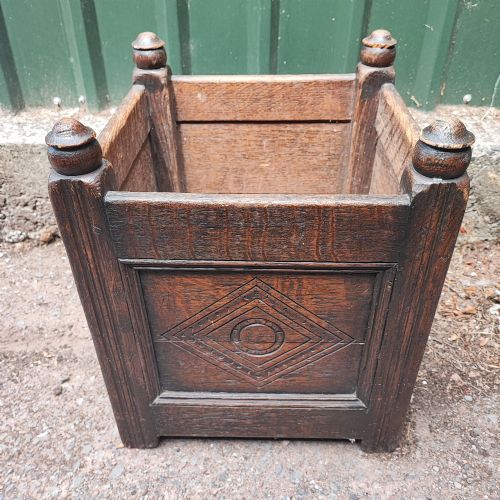
Wooden examples utilise traditional cooperage techniques, binding staves of oak, mahogany, or walnut with iron or brass hoops. These pieces range from peat buckets to well-style fuel stores, relying on tight joints and fitted metal hardware to contain fuel cleanly.
Several examples started life as grain measures before finding a warmer, smokier retirement beside the Victorian hearth.
What varies in quality
Quality rests in the weight of the metal and the precision of the joinery, distinguishing heavy gauge copper and thick timber staves from lighter, utilitarian wares. Superior examples display clean hammering, well-fitted metal bands, and robust original handles that bear the strain of heavy fuel.
The distinction between standard containers and finer pieces lies in decorative restraint and material selection, such as ribbed mahogany bodies or polished brass mountings. Pieces that retain untouched surfaces and authentic construction details command greater interest from collectors.
The Traditional Log Bucket Glossary
- Coopered
- Built using narrow staves of wood fitted together and secured with metal bands, much like a traditional barrel. This technique provides the strength needed for heavy fireside fuel.
- Helmet scuttle
- A metal coal container shaped with a flared, sloping rim resembling a classic helmet. It usually includes a fixed handle at the back and a swinging handle over the top for controlled pouring.
- Peat bucket
- A deep cylindrical vessel designed originally for storing turf or peat fuel by the hearth. These often feature rich timber grains and metal carrying bails.
- Coal bin
- A larger floor-standing container intended to hold bulk fuel reserves beside the fireplace. They are frequently constructed from heavy copper or brass with reinforced bases.
Traditional Log Bucket: Frequently Asked Questions
What is a traditional log bucket used for?
These vessels store firewood, peat, or coal directly beside the hearth for easy access during cold weather. They keep fuel contained while adding texture and metallic or wooden warmth to a room.
Historically, specific forms were tailored for different fuels, with smaller scuttles managing daily hearth replenishment and larger bins holding heavier supplies.
How do I clean antique copper and brass?
Most collectors prefer to leave metal surfaces with their natural aged patina, which develops over decades of exposure. Gentle dusting with a dry cloth is usually sufficient for regular maintenance.
Avoid harsh chemical polishes that strip away the historical surface character and dull the subtle tones accumulated through age.
Are these buckets waterproof?
While many metal and coopered wooden buckets were made to hold damp fuel or coal, older vessels can develop leaks over time as timber shrinks or metal seams weaken. If you plan to use one as a plant holder or indoor planter, check the interior condition first.
Placing a discreet inner liner inside older wooden or riveted metal containers protects the historic base from moisture damage.
How can I tell a Georgian bucket from a Victorian one?
Georgian pieces, dating from the eighteenth and early nineteenth centuries, often exhibit simpler, robust proportions in mahogany, oak, or heavy copper. They tend to rely on understated craftsmanship and classical lines.
Victorian items, produced later in the nineteenth century, frequently showcase more elaborate ornamentation, such as embossed brass bodies, shaped helmet rims, and bright polished finishes.