
Traditional Leather Writing Desk
A traditional leather writing desk brings warmth and a dedicated workspace into a room through rich timber and supple hide.
Traditional Leather Writing Desk
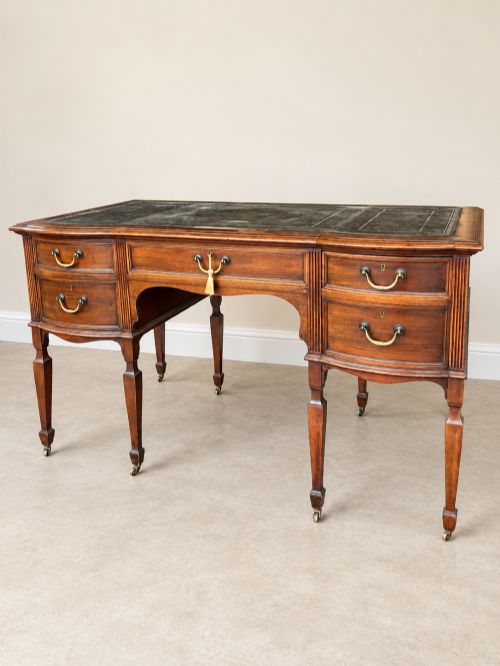
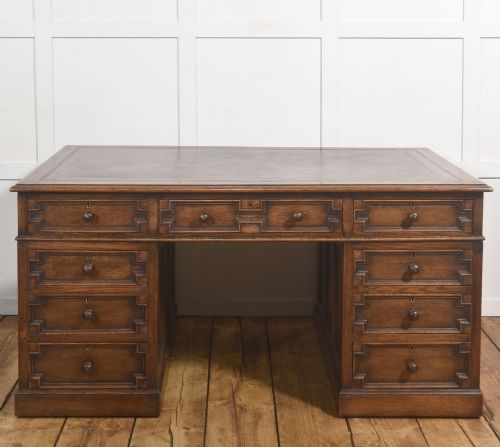
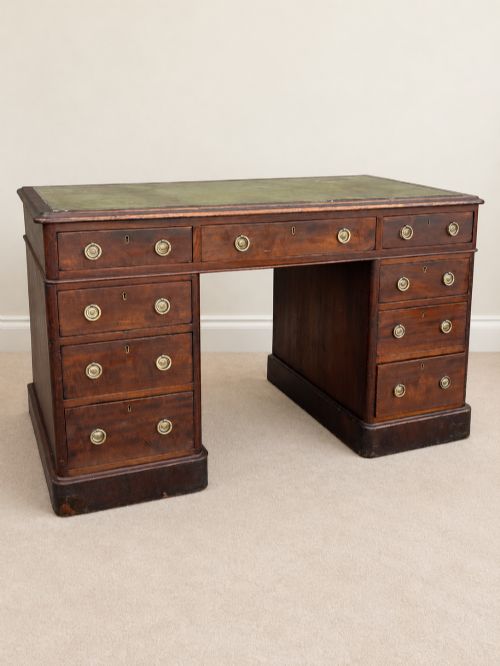
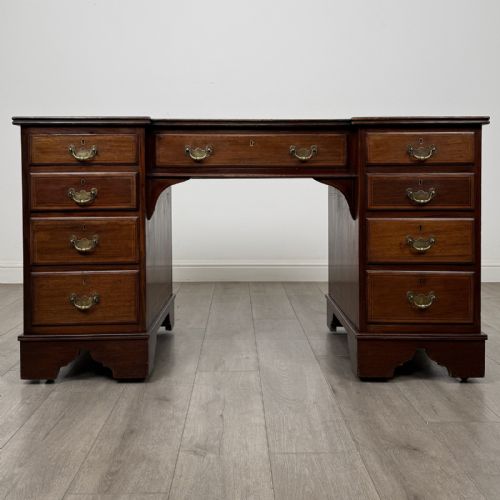
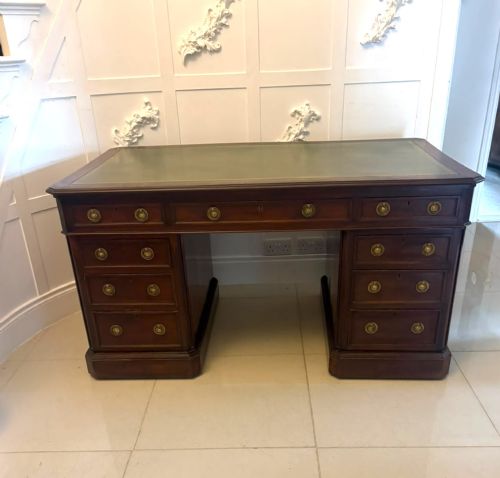
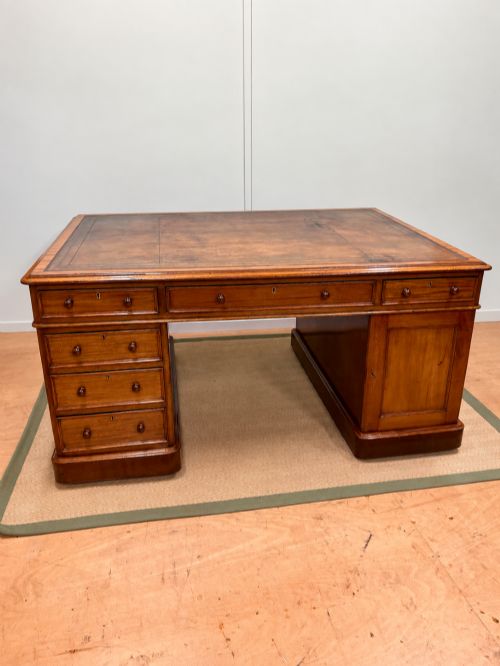
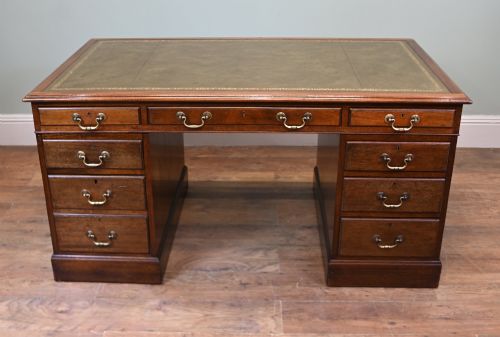
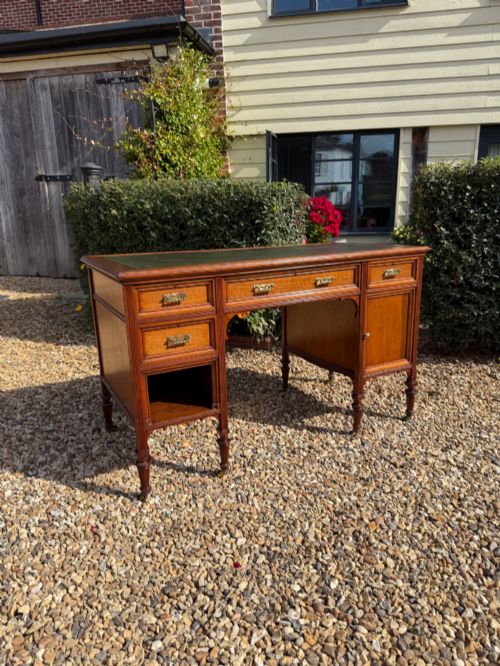
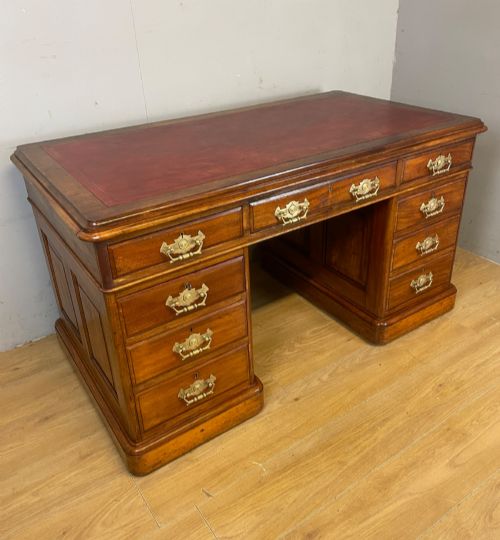
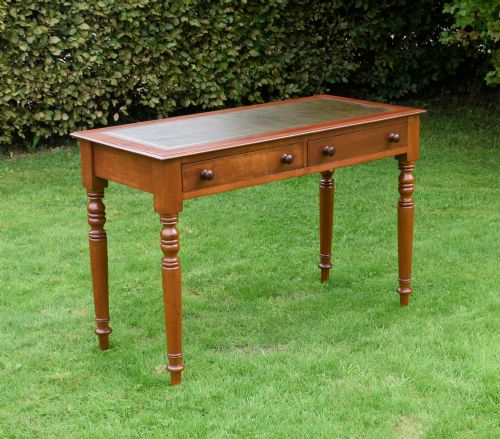
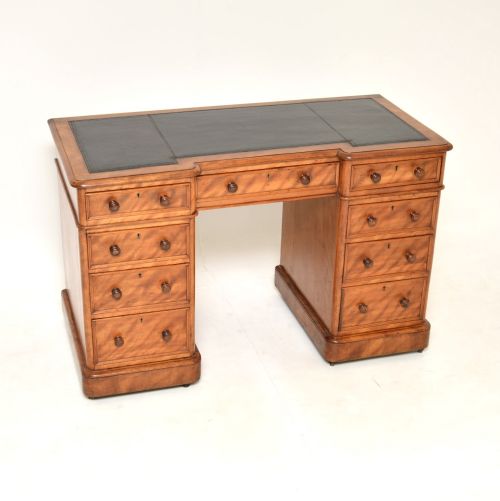
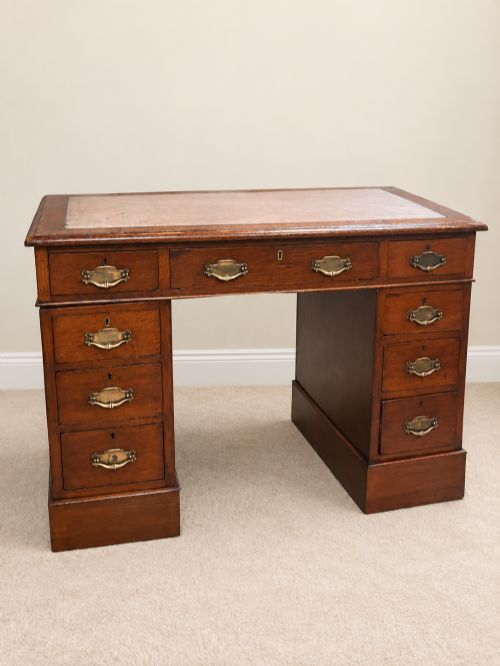
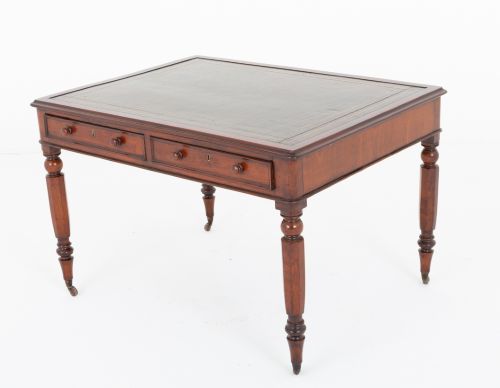
A traditional leather writing desk is a functional workspace designed with a flat writing surface inset with leather, set above drawers or pedestals. These pieces span several centuries, with particular representation from the Victorian and Edwardian eras.
The most common forms on this page include pedestal desks, kneehole desks, and partners desks, alongside bureau tables and writing tables. They emerge from periods such as the nineteenth century, nineteen hundred, and nineteen thirty, drawing on styles from Georgian to Queen Anne.
Makers utilise timber frames to support the inset leather panels, creating robust stations intended for study, correspondence, and daily administration. Each form reflects the domestic and professional demands of its original period.
How they were made
Makers built these desks primarily using solid woods and veneers, selecting mahogany, oak, walnut, burr walnut, and satinwood inlay. Timber construction provided the structural rigidity needed for heavy pedestals and multi-drawer units.
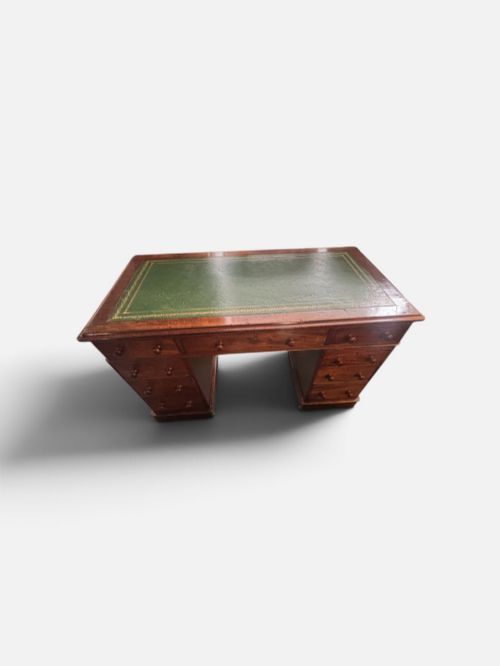
Topped surfaces received tailored inserts of leather, frequently enhanced with tooled borders in gold leaf or blind stamping. Brass hardware, handles, and locks completed the functional assembly of drawers, writing slides, and drop flaps.
Periods represented span the eighteenth century, the Victorian era, the Edwardian period, and the early twentieth century up to nineteen thirty.
What varies in quality
Quality rests in the selection of timber figures, such as burr walnut or figured mahogany, and the precision of cabinet joints. Finer desks display careful matching of wood grain across drawer fronts and pedestals.
The refinement of brass fittings, the execution of inlay work, and the handling of internal stationery drawers separate standard utilitarian pieces from exceptional examples.
Trollope & sons·Wylie & Lochhead Glasgow
The Traditional Leather Writing Desk Glossary
- Pedestal desk
- A heavy freestanding desk supported by two banks of drawers beneath the work surface. These units provide substantial storage capacity and a formal presence.
- Partners desk
- A large double-sided desk designed for two people to work opposite one another. They incorporate drawers and cupboards on both faces.
- Kneehole desk
- A compact pedestal form featuring a recessed central space for the user's legs. They typically include a central drawer above the kneehole.
- Bureau
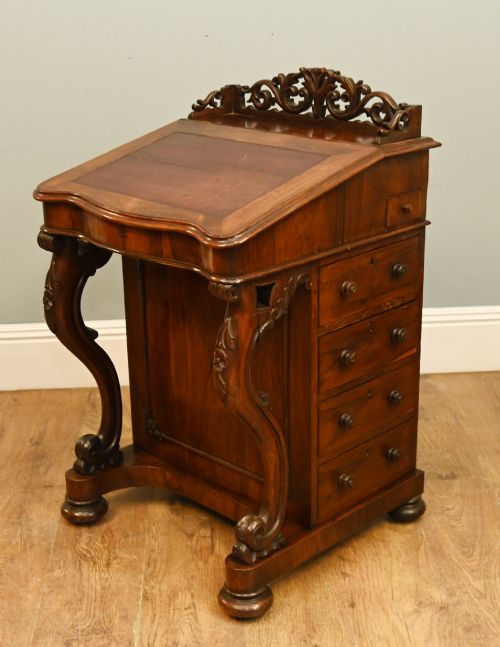
- A desk fitted with a sloping flap that opens to reveal internal compartments and a writing surface. They often stand on bracket feet or short legs.
- Writing table
- A lighter table form designed primarily for correspondence rather than heavy storage. Some variants include drop-side flaps or inset leather tops.
- Tooled leather
- Leather decorated with impressed patterns or gold leaf borders around the perimeter. This treatment defines the working area of the desktop.
Traditional Leather Writing Desk: Frequently Asked Questions
What is a partners desk?
A partners desk is a large double-sided workspace built with drawers and cupboards on both faces. This configuration allowed two individuals to sit opposite each other and work simultaneously.
Such desks are typically substantial in scale and feature prominently in libraries or large studies.
How do I care for the leather top?
The leather writing surface benefits from gentle dusting and occasional treatment with appropriate leather creams to prevent drying. Avoid placing hot cups or moisture directly onto the hide.
Keeping the surface protected preserves the gold tooling and the supple texture of the leather.
Where were these desks used?
These desks served in domestic studies, libraries, administrative offices, and institutional settings throughout the nineteenth and early twentieth centuries. They provided organised storage for correspondence, ledgers, and writing materials.
Freestanding models allowed placement in the centre of a room rather than against a wall.
How do I distinguish Victorian from Edwardian desks?
Victorian desks generally display heavier proportions, darker timbers like mahogany and oak, and robust brass hardware. They often feature intricate drawer configurations and deep pedestals.
Edwardian examples tend to exhibit lighter construction, frequent use of walnut or satinwood inlay, and influences from earlier revival styles.