


Traditional Leather Club Couch
These traditional leather club couch options bring heavyweight nineteenth and twentieth-century seating into your room.
Traditional Leather Club Couch
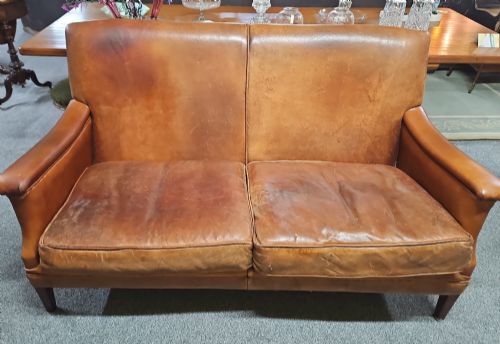
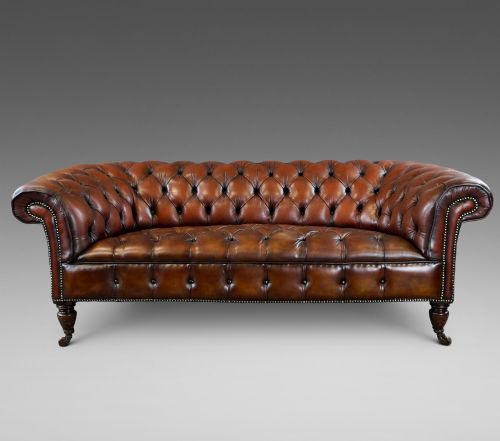
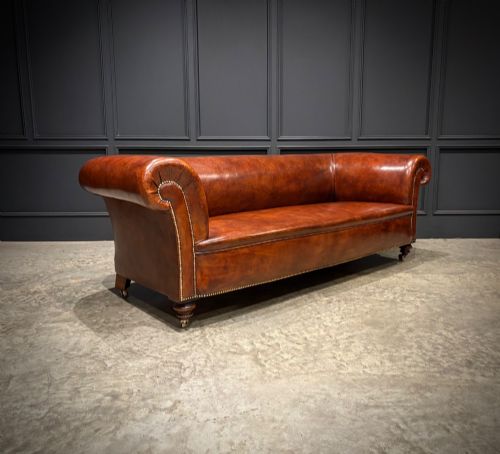
When you search for a traditional leather club couch, you are looking at substantial nineteenth and twentieth-century seating built for longevity and heavy use. The pieces appearing here span Victorian, Edwardian, and 1930s periods, taking the form of deep buttoned Chesterfields, drop arm chaise lounge sofas, and moustache back club sofas.
The version you are most likely to meet on this page is the classic Chesterfield sofa, upholstered in brown leather with deep buttoning and generous proportions. These sofas range from two-seat configurations up to three-seater models, occasionally incorporating carved wooden frames or serpentine fronts.
Origins stretch across English workshops and major London cabinet makers from the eighteen-fifties through to the mid-twentieth century. They served as foundational pieces for gentlemen's clubs, libraries, and large domestic drawing rooms, designed for prolonged comfort.
How they were made
Makers constructed the internal support using sturdy hardwood frames, often incorporating mahogany and other heavy timbers to withstand significant weight. Traditional stuffing methods utilised horsehair and linen alongside resilient metal spring systems within the seat bases.
Upholsterers applied natural leather hides, frequently hand-dyed in whisky brown, aubergine, or dark brown tones, secured with individual brass tacks. Deep buttoning techniques created the characteristic tufted upholstery pattern across the backs and arms, demanding precise tension to hold the hides securely.
Materials recorded across the inventory include horsehair fill, linen, brass tacks, and mahogany.
What varies in quality
The distinction between tiers rests upon the integrity of the internal frame construction and the original state of the hides. Untouched original leathers showing rich patination hold a different character compared to examples that have undergone re-upholstery or extensive hand-dyeing restoration.
Subtleties in cabinet work, such as hand-carved floral details on wooden show-frames and serpentine front mouldings, separate standard production models from workshop pieces bearing maker stamps. The depth of the button tufting and the resilience of the surviving horsehair filling further divide basic utility seating from high-end library sofas.
Hampton and Sons of Pall Mall·Howard and Sons·Maple and Co
The Traditional Leather Club Couch Glossary
- Chesterfield
- A large deep-buttoned sofa with arms and back of the same height. This form serves as the primary seating style found across these listings.
- Horsehair
- A traditional upholstery stuffing material gathered from horses and used to pack seat cushions and backs firmly. It provides a dense, resilient foundation that holds its shape over decades of use.
- Drop arm
- A sofa or chaise lounge mechanism allowing one arm to lower flat. This adjustable feature appeared on nineteenth-century lounging forms.
- Moustache back
- A decorative wooden or upholstered upper back rail curving outward at the edges. This distinctive shape characterises specific Victorian gentleman's club seating.
- Serpentine front
- A furniture front edge curving outward in the centre and inward at the sides. This fluid line adds architectural elegance to heavy upholstered bases.
Traditional Leather Club Couch: Frequently Asked Questions
How do I care for antique leather?
Maintain the surface using specialist leather balms or natural waxes rather than modern detergents. Keep the material away from direct heat sources and strong sunlight to prevent drying.
Regular dusting with a soft dry cloth protects the hand-dyed finish and preserves the natural suppleness of the hide over decades.
Are these sofas comfortable for daily use?
Victorian and Edwardian club seating was engineered for substantial daily sitting, employing deep suspension and supportive horsehair stuffing. The generous proportions accommodate relaxed postures easily.
Frames built from solid hardwood ensure the structure remains stable under constant use in modern living spaces.
How can I date a leather Chesterfield?
Examine the underlying woodwork, nail tack patterns, and the method of button tufting across the backrest. Victorian examples often feature hand-carved hardwood details and distinctively aged patination on the hide.
Twentieth-century pieces from the 1930s introduce different leather treatments and alternative internal framing methods compared to nineteenth-century workshop standards.
What is a drop arm sofa?
A drop arm sofa includes a hinged mechanism on one side allowing the armrest to lower into a horizontal position. This nineteenth-century innovation created an adaptable surface for reclining.
Such designs combined the formal upright seating of a club couch with the extended lounging capacity of a chaise.