

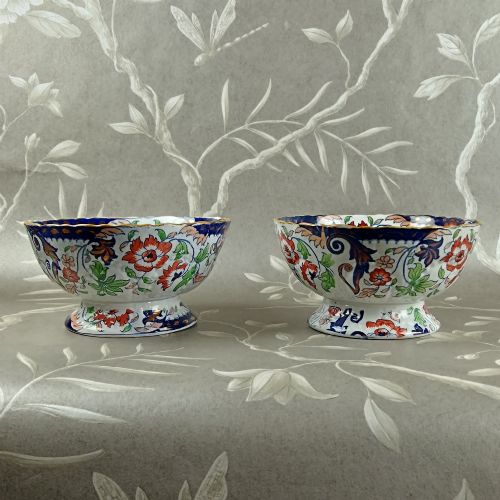
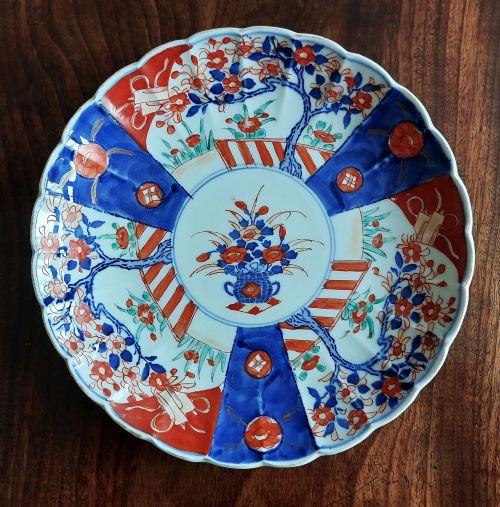
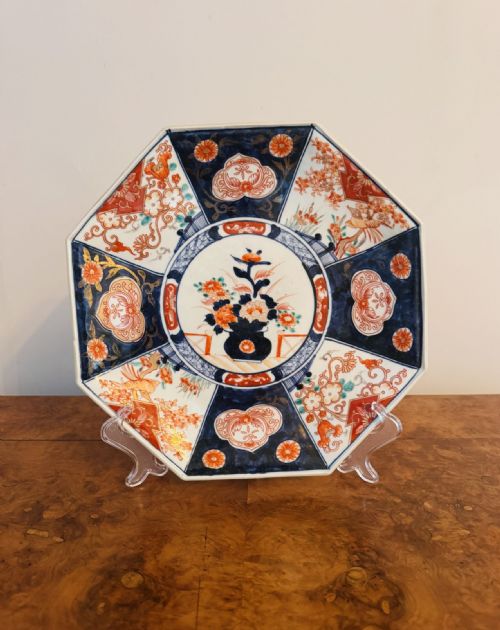
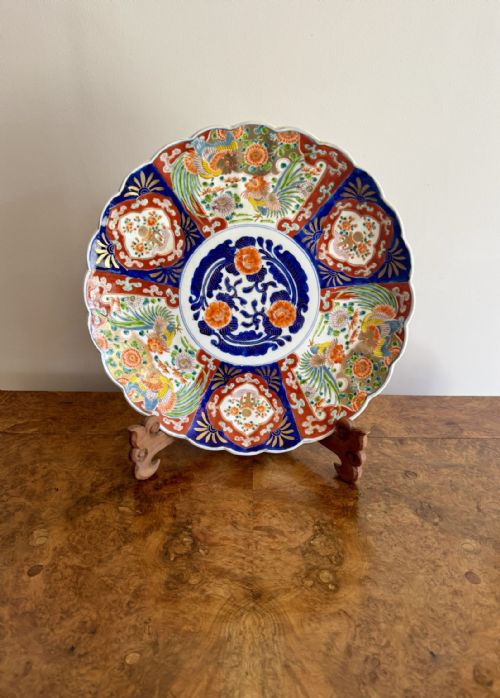


Traditional Imari Dishes
Traditional imari dishes bring rich cobalt blue, enamel colours and gold leaf to tables and walls, spanning Japanese, Chinese export and Victorian tastes.
Traditional Imari Dishes
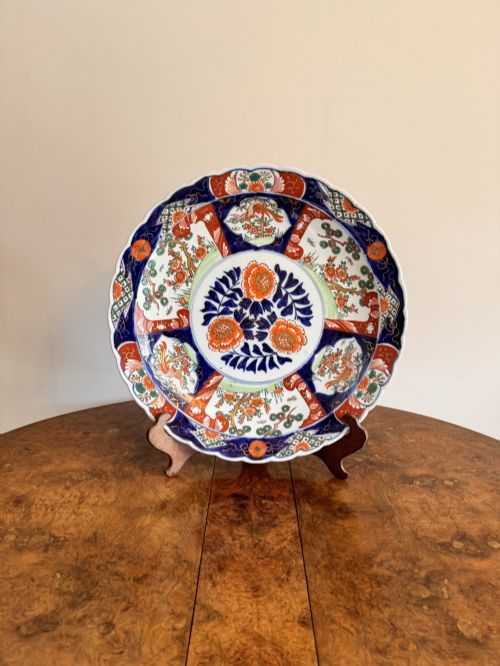
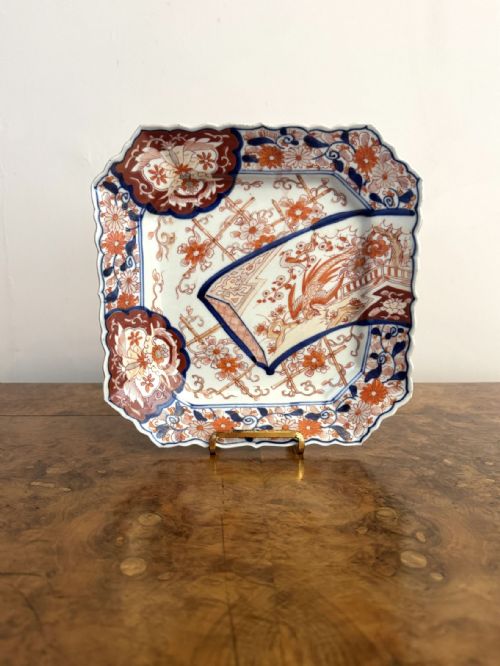
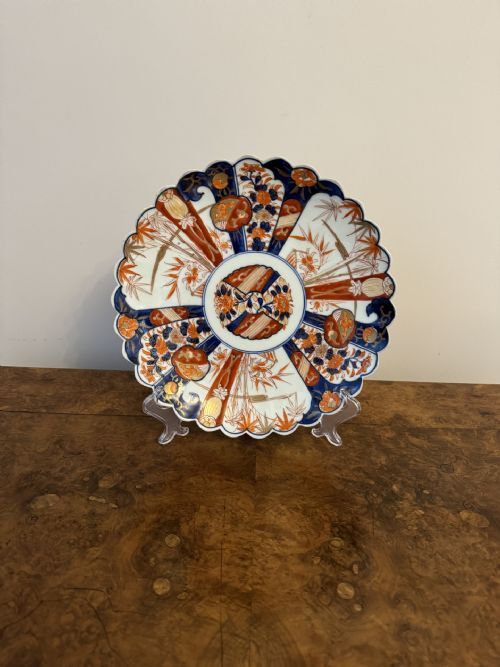
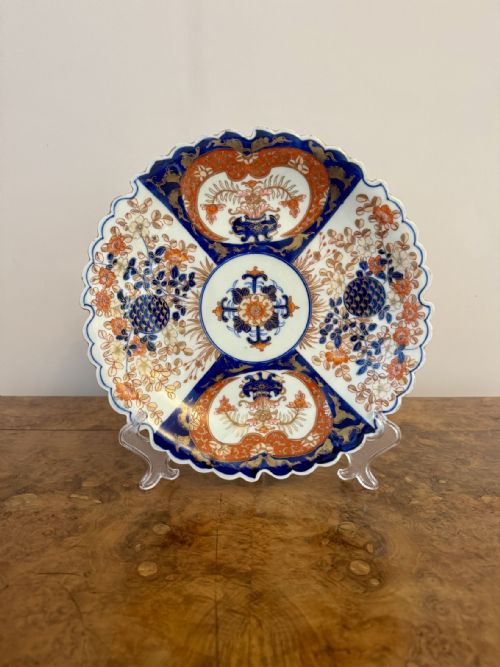
Traditional imari dishes encompass plates, chargers, bowls and platters made in various shapes including hexagonal, square and scalloped edges. These ceramics arrive from periods spanning the seventeenth century, the Victorian and Edwardian eras, and the Meiji period.
The pieces most frequently met on this page are Japanese plates and chargers originating around nineteen hundred and the nineteenth century. Buyers also encounter Chinese export porcelain and British iterations such as Royal Crown Derby alongside Asian porcelain forms.
What varies in quality
Quality rests in the precision of the cobalt underglaze painting and the richness of the enamel and gold leaf application. Finer pieces display crisp detailing on forms such as scalloped, hexagonal or square shaped edges.
Larger formats like chargers and fruit display plates show greater complexity in composition compared to standard plates and bowls. The crispness of the porcelain body and the vibrancy of the remaining gilding separate standard examples from finer works.
Traditional Imari Dishes Retail Price Guide 2026
Typical asking prices for traditional imari dishes among the pieces listed under this phrase on Sellingantiques today, from the lower quarter to the upper quarter. They describe what is for sale here now, not the wider market.
The listings span periods from the seventeenth century through to the nineteen twenties, with the majority centred around nineteen hundred and the Meiji period.
The Traditional Imari Dishes Glossary
- Imari
- A style of ceramic originating in Japan, characterised by a palette of cobalt underglaze blue, iron red and gold leaf. The style was widely copied in Europe and China.
- Charger
- A large decorative plate or platter used traditionally for service or display rather than daily dining. These pieces command attention on walls or tables due to their scale.
- Meiji Period
- The era in Japanese history spanning from eighteen sixty-eight to nineteen twelve, associated with extensive export of decorative arts to Western markets. Pieces from this time often feature elaborate enamel work.
- Cobalt Underglaze
- A blue pigment applied to the ceramic body before glazing and firing, ensuring the colour remains permanent and protected beneath the glass surface. This technique provides the deep blue foundation of imari design.
- Gilding
- The application of gold leaf or gold paint to highlight specific motifs within the ceramic pattern. Wear on this surface often indicates the age and handling history of the dish.
Traditional Imari Dishes: Frequently Asked Questions
How do I display a charger?
Chargers are large decorative plates suited for mounting on walls using proper plate hangers or resting securely on sturdy display stands in a cabinet.
Their substantial size and intricate enamel patterns allow them to function as focal points in a dining room or study.
Can I use these bowls for food?
Antique ceramic and porcelain dishes are typically reserved for display and decorative collections rather than everyday dining use.
Hand washing in warm water without harsh detergents preserves the delicate enamel and gold leaf decoration over time.
What is the difference between Edo and Meiji pieces?
Edo period items date from earlier centuries and reflect traditional domestic Japanese aesthetics, whilst Meiji pieces often align with the surge in international export trade.
Both periods utilise the signature cobalt and enamel palette, though Meiji items appear most frequently in these listings.
Why are some plates shaped as hexagons?
Potters utilised geometric moulding alongside traditional round circles to create visual variety in table settings and decorative displays.
Hexagonal and square shaped edges required precise craftsmanship during the ceramic shaping and glazing processes.