





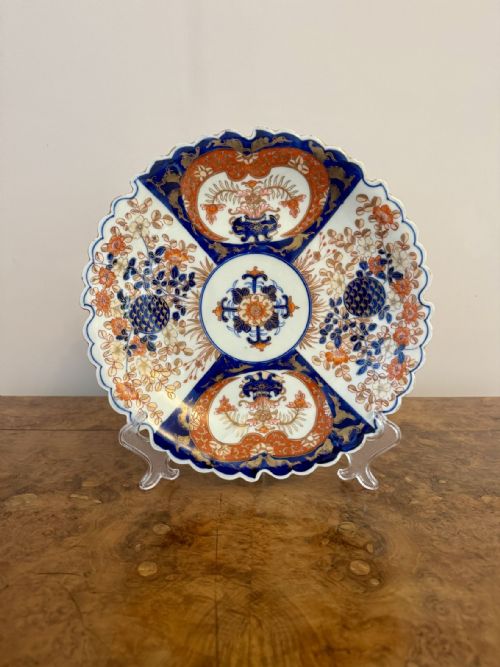


Traditional Imari Dish
A traditional imari dish brings rich cobalt underglaze and enamel colours to a table, offering centuries of ceramic artistry.
Traditional Imari Dish
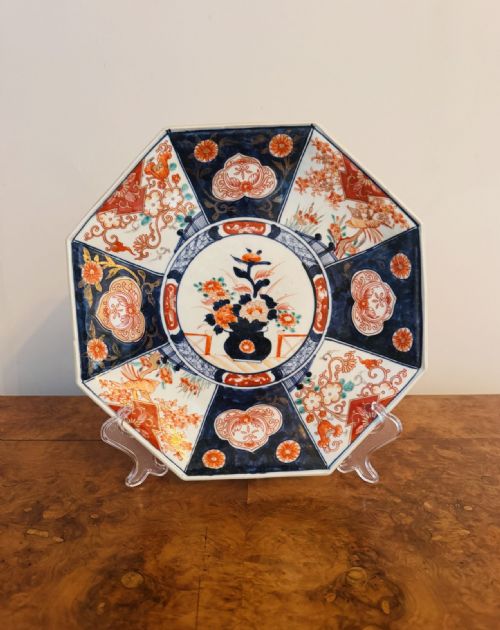
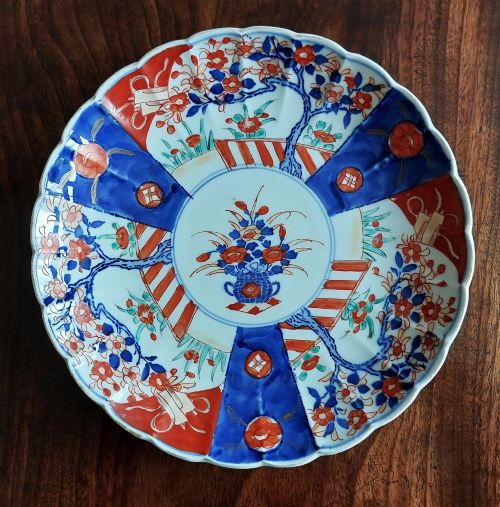
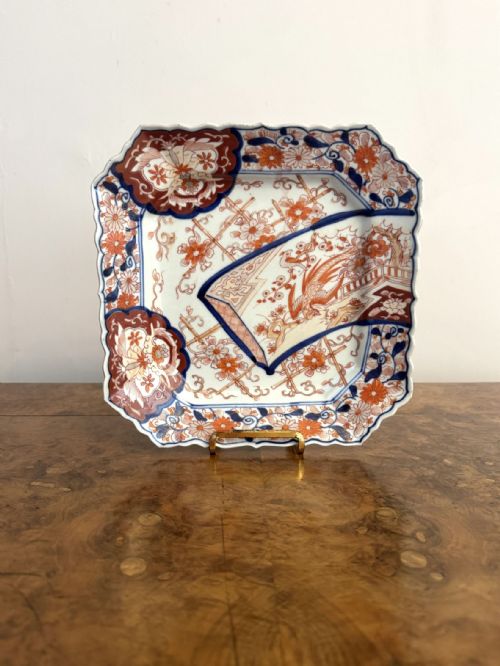
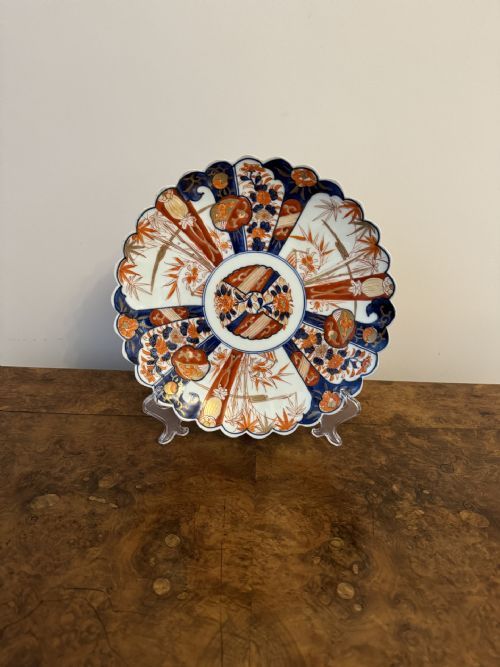
A traditional imari dish encompasses porcelain and ceramic tableware created across various periods, including the Victorian era, Edwardian times, and the Meiji period. Buyers searching this phrase primarily encounter decorative plates, chargers, bowls, and shaped dishes originating from Japan and China.
The selection ranges from individual hexagonal and scalloped plates to large chargers and multi-piece collections. These items reflect traditional Japanese Imari styles alongside Chinese export wares and British adaptations like Royal Crown Derby.
The forms serve both display and functional roles, frequently featuring distinct geometric boundaries such as square or hexagonal shapes alongside traditional round profiles.
How they were made
The construction relies heavily on porcelain and ceramic bodies finished with glaze and cobalt underglaze pigments. Artisans applied enamel and gold leaf or gilding details over the glaze to build up the characteristic layered palette.
Techniques varied from traditional Japanese Arita firing methods to later Victorian and Edwardian production standards. The combination of underglaze blue and contrasting overglaze enamel required multiple kiln firings to set the rich surface decoration.
Traditional Imari Dish Retail Price Guide 2026
Typical asking prices for traditional imari dish among the pieces listed under this phrase on Sellingantiques today, from the lower quarter to the upper quarter. They describe what is for sale here now, not the wider market.
Some chargers are so substantial they demand their own dedicated wall hooks just to stay out of mischief.
What varies in quality
Quality rests in the crispness of the cobalt underglaze painting and the precise application of enamel and gold leaf. Superior pieces display finely detailed patterns across plates, chargers, and bowls without blurring or pooling in the glaze.
The handling of form also dictates distinction, seen in neatly executed scalloped edges, well-defined hexagonal or square shapes, and balanced weight in larger chargers. The depth of the colour saturation and the refinement of the ceramic body separate standard wares from finer examples.
Royal Crown Derby
The Traditional Imari Dish Glossary
- Cobalt Underglaze
- A blue pigment applied to raw ceramic before glazing and firing, producing a deep tone beneath the glassy surface. It forms the stable foundation for traditional imari colour schemes.
- Imari
- A style of ceramic originating from the Japanese port of Imari, traditionally characterised by cobalt blue, iron red, and gold. These pieces draw on centuries of East Asian firing traditions.
- Charger
- A large decorative plate used historically for service or display on a sideboard. They provide an expansive surface for complex painted motifs.
- Meiji Period
- The era in Japanese history spanning from 1868 to 1912, noted for significant craft output directed at international markets. Pieces from this time often exhibit refined enamel work.
- Scalloped Edge
- A decorative rim shaped into a series of curving scallops rather than a straight circle. This contour frequently appears on plates and bowls from various eras.
Traditional Imari Dish: Frequently Asked Questions
How do I display a traditional imari dish?
Larger chargers suit wall mounting or display stands on heavy furniture where their rich patterns draw the eye. Smaller plates and bowls fit well within cabinets or arranged in collections on sideboards.
Ensure any wall fixings or stands securely support the weight of the ceramic without putting undue stress on the rim.
Are these pieces safe for daily dining?
Most antique items of this age function best as decorative objects rather than active tableware. The overglaze enamel and gold leaf can wear down with frequent washing and cutlery use.
Gentle hand washing in lukewarm water preserves the surface decoration if occasional use is preferred.
How do I tell an earlier piece from a later one?
Dating relies on examining the weight of the ceramic, the clarity of the cobalt underglaze, and the style of the enamel work. Victorian and Edwardian iterations often reflect distinct decorative preferences compared to 17th-century or Meiji period outputs.
Comparing the potting style and foot ring construction helps clarify the likely production era.
What is the difference between a plate and a charger?
Chargers are substantially larger in diameter than standard plates and were traditionally designed for ceremonial service or decorative display. Plates were proportioned for functional dining or smaller presentations.
Both forms share similar decorative vocabularies involving cobalt underglaze and enamel highlights.