




Traditional Imari Bowl
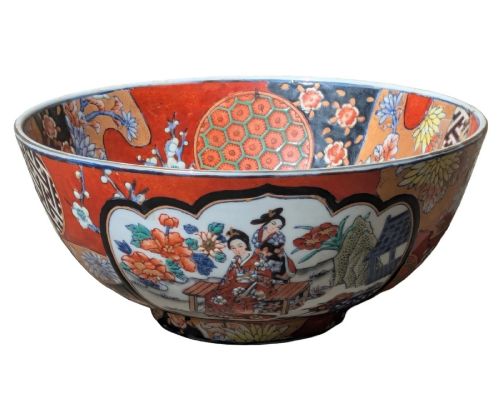
These traditional imari bowl pieces bring rich cobalt blue and iron red palettes into a room, offering both Japanese export craftsmanship and British interpretations.
Traditional Imari Bowl
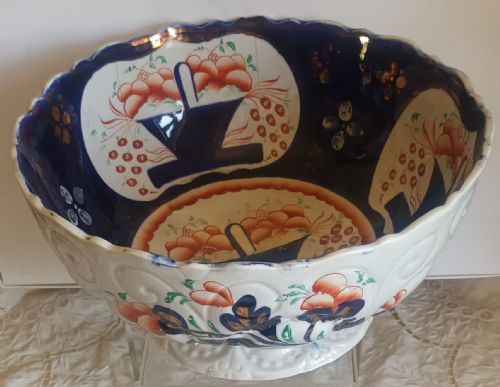
A traditional imari bowl search reveals a diverse mix of genuine Japanese export pieces and British pottery adaptations inspired by the distinctive aesthetic. The selections span from seventeenth century Arita wares and Meiji or Showa period Japanese vessels to nineteenth century ironstone pedestal bowls and earthenware tea services.
Forms range from large footed decorative bowls and pedestal centrepieces to smaller scalloped dishes and sugar basins. Buyers encounter both classic Japanese porcelain painted with iron red and blue and British interpretations utilising copper lustre or bone china.
Materials and construction methods
Potters built these vessels using porcelain, ironstone, and earthenware bodies, shaping them into pedestal forms, deep basins, and scalloped dishes. Surface decoration relied on underglaze cobalt blue combined with overglaze enamels in iron red, occasionally highlighted with gold leaf.
Japanese pieces utilise high fired porcelain characteristic of the Arita kilns, while British adaptations employ durable ironstone and bone china bodies. Glazing seals the painted designs, creating a durable surface across both Eastern and Victorian works.
Traditional Imari Bowl Retail Price Guide 2026
Typical asking prices for traditional imari bowl among the pieces listed under this phrase on Sellingantiques today, from the lower quarter to the upper quarter. They describe what is for sale here now, not the wider market.
The inventory records diverse forms including pedestal bowls, tea services, shaped dishes, and wash sets.
Judging the quality of a traditional imari bowl
Quality rests in the crispness of the hand-painted cobalt blue and the vibrancy of the enamel palette applied over the glaze. Finer examples display precise brushwork and balanced compositions, whether produced in an Edo period Japanese workshop or a nineteenth century British pottery.
The weight and refinement of the ceramic body also distinguish the pieces, with delicate porcelain contrasting against heavy ironstone pedestal bowls. Depth of colour and the careful integration of gold leaf separate the standard production wares from the superior examples.
The Traditional Imari Bowl Glossary
- Imari
- A style of Japanese porcelain originating from Arita and shipped through the port of Imari, traditionally characterised by a palette of underglaze blue, iron red, and gold. British potteries later adopted this distinct decorative scheme.
- Ironstone
- A dense, durable type of earthenware patented in the nineteenth century, used by British makers to produce heavy pedestal bowls and large service pieces.
- Aka-e
- A Japanese term meaning red pictures, referring to iron red overglaze enamelling used prominently on early porcelain dishes.
- Pedestal Bowl
- A vessel raised on a foot or stem, frequently utilised for display or centrepiece arrangements in dining and drawing rooms.
- Enamel
- Opaque glass used as a coloured overglaze applied to fired porcelain or pottery before a secondary low temperature firing.
Traditional Imari Bowl: Frequently Asked Questions
Are these bowls Japanese or British?
The selection includes both genuine Japanese export wares from various periods and British interpretations made by factories using the distinct aesthetic.
Examination of the ceramic body, whether fine porcelain or heavier ironstone, usually clarifies the origin.
How do I date a traditional imari bowl?
Dating relies on the ceramic material, weight, and stylistic traits associated with specific periods like the Meiji era or the Victorian nineteenth century.
Japanese pieces often show distinct kiln marks or potting techniques, while British examples utilise ironstone or bone china bodies.
Can I use these bowls for serving food?
Many of these antique vessels function well for dry service or display, though older overglaze enamels require gentle hand washing.
Heavier ironstone pedestal bowls offer robust utility, whereas delicate seventeenth or eighteenth century porcelain demands careful handling.
What colours define this style?
The palette centres on deep underglaze cobalt blue combined with iron red enamel, frequently accented by gold leaf details.
This high contrast combination creates the vibrant visual impact shared by both Japanese originals and British adaptations.