





Traditional Hunt Dog Artwork
Traditional hunt dog artwork captures the energy of the field through nineteenth-century oil paintings and sporting watercolours.
Traditional Hunt Dog Artwork
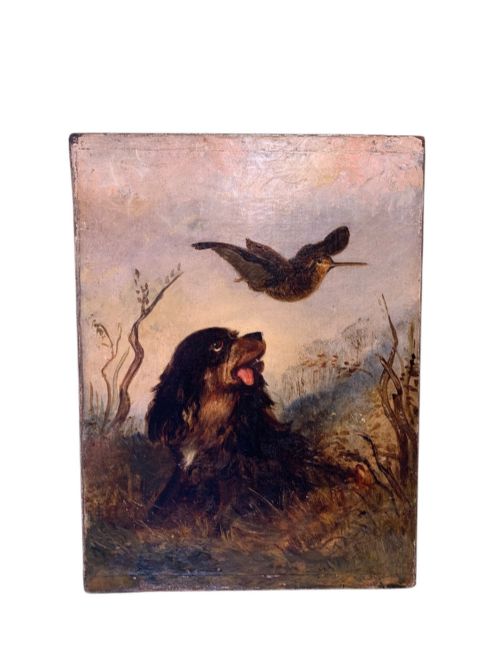
Traditional hunt dog artwork records the central role of hounds, spaniels, setters, and terriers in British sporting life. These works focus on the intense movement of fox hunting, rabbit shooting, and moorland scenes.
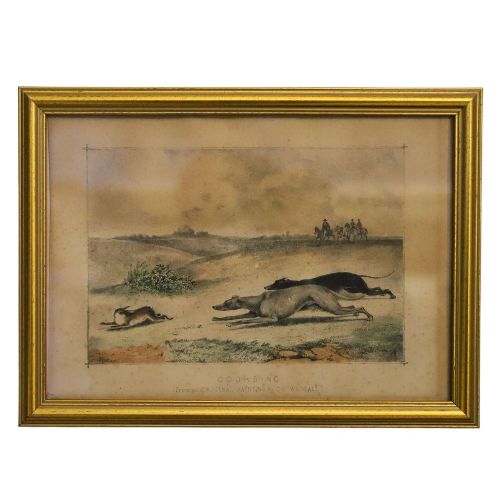
Most pieces on this page emerge from the nineteenth century, taking the form of oil paintings on canvas or board alongside framed lithographs and watercolours.
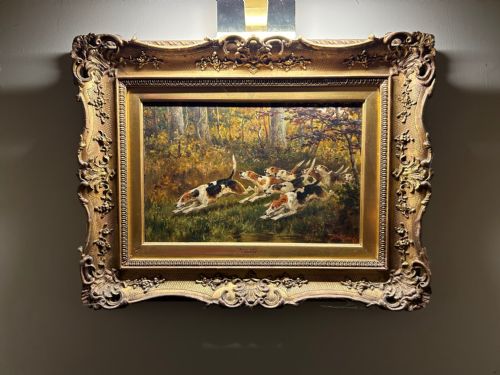
Subjects range from solitary gun dogs and terriers to large packs in winter snow or woodland clearings, reflecting the diverse traditions of British field sports.
How traditional hunt dog artwork was made
Artists built these scenes using oil paint on canvas or board, layering pigments to capture the texture of dog coats and the light of outdoor landscapes. Watercolours on paper provide a lighter, more immediate record of sporting subjects.
Many works incorporate period frames constructed from wood and finished with gilt or gilded surfaces, enclosing the canvas or paper support.
Several sporting dogs share the canvas with top hats, damp spaniels, and the occasional day's bag.
What varies in quality in traditional hunt dog artwork
Quality rests in the anatomical accuracy of the animals and the artist's ability to render the tension of the hunt. Stronger works convey muscle, expression, and movement with confident brushwork rather than rigid detail.
The integration of the dog with its landscape setting dictates the success of a composition. Superior pieces balance the atmosphere of the moor or woodland with the character of the sporting subject.
Fannie Moody·Colin Graeme Roe·Henri Schouten·Thomas Blinks·James Ward·Dean Wolstenholme
The Traditional Hunt Dog Artwork Glossary
- Sporting art
- Depictions of rural pursuits, including shooting, hunting, and the animals associated with them. This genre flourished in Britain throughout the nineteenth century.
- Oil on canvas
- A painting technique using pigments suspended in drying oils applied to a woven fabric support. It allows for rich colour blending and textured brushwork.
- Lithograph
- A print made from a flat stone or metal plate on which an image is drawn with a greasy substance. It permits multiple impressions of detailed line work.
- Gilt wood
- Wood decorated with gold leaf or a gold-coloured metallic finish. It frequently frames nineteenth-century paintings to enhance their visual weight.
- Watercolour
- A paint consisting of colorants suspended in a water-soluble vehicle, usually applied to paper. It yields transparent washes well suited to rapid studies.
Traditional Hunt Dog Artwork: Frequently Asked Questions
What periods do these paintings come from?
The works on this page date primarily from the nineteenth century, alongside examples from the early twentieth century. Artists worked within established British sporting traditions.
Subjects reflect the hunting and shooting practices of these periods, executed in oils and watercolours.
How were these sporting artworks displayed?
Owners typically housed these paintings and prints in wooden frames, often finished with gilt to complement country house interiors. They hung in libraries, halls, and dining rooms.
Frames protect the edges of the canvas or paper while providing a formal boundary for the landscape scene.
What dog breeds appear most often?
Spaniels, pointers, setters, terriers, and foxhounds dominate the compositions. Painters recorded the specific physical traits required for different field sports.
Breeds are shown working alongside sportsmen or resting after the day's hunt in moorland and woodland settings.
Are these works originals or prints?
The selection includes both original oil paintings on canvas or board and period watercolours, alongside original nineteenth-century lithographs. Each medium offers a distinct visual texture.
Listings specify whether a piece is a unique painted work or a printed edition.