

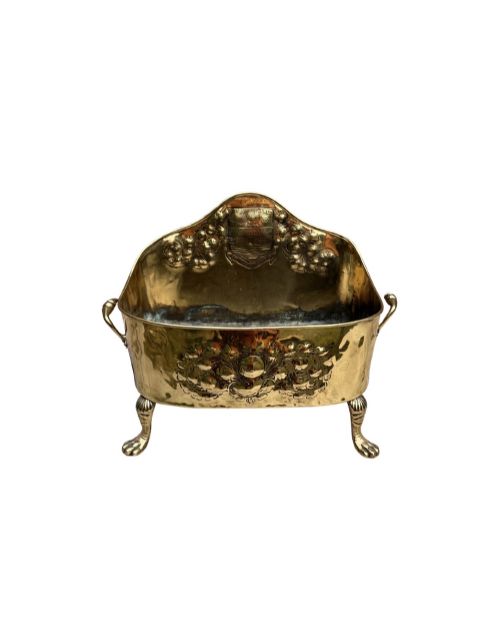
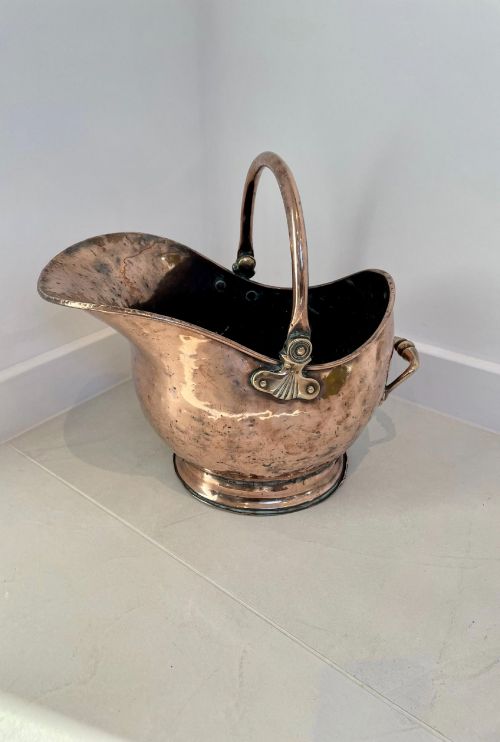
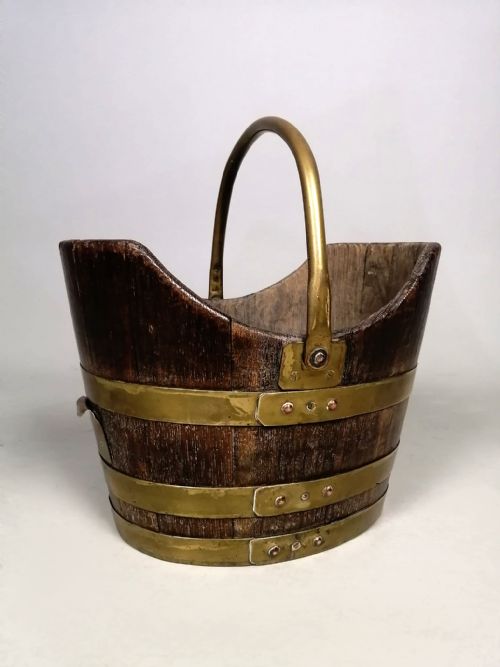


Traditional Hearth Log Container
These traditional hearth log container pieces keep timber tidy beside the fire, bringing heavy metal and timber craft directly to the grate.
Traditional Hearth Log Container
When you search for a traditional hearth log container, you are looking at practical fireside storage spanning oak, walnut, copper, brass, and iron. These pieces range from coopered fire buckets and sturdy bins to helmet-shaped scuttles designed to hold fuel near the grate.
The versions you are most likely to meet on this page hail from the Victorian and Edwardian eras, alongside earlier Georgian and 18th Century examples. They appear in styles such as rustic country, English traditional, Arts and Crafts, and French provincial.
Object types stretch across log boxes, log bins, coal buckets, and coal scuttles used as hearth accessories. Each item served a daily domestic purpose, carrying heavy loads of wood or coal into the living spaces of older homes.
How they were made
Coopers built wooden log bins and boxes from oak and walnut using traditional stave and banding methods. Metal versions relied on heavy sheet copper and brass, often beaten by hand and joined with secure rivets.
Iron and wrought iron supplied the foundational strength for fireside accessories, featuring swing handles and reinforced rims. Makers combined these metals with timber bases and lids to withstand the rough handling of daily fuel storage.
Traditional Hearth Log Container Retail Price Guide 2026
Typical asking prices for traditional hearth log container among the pieces listed under this phrase on Sellingantiques today, from the lower quarter to the upper quarter. They describe what is for sale here now, not the wider market.
Several helmet scuttles arrive accompanied by their original matching shovels, surviving centuries of hearthside service together.
What varies in quality
The distinction between standard domestic items and finer pieces lies in the weight of the metal and the selection of the timber. Heavier copper gauges, solid brass bands, and tightly grained oak or walnut separate robust specimens from lighter utility vessels.
Detailing in the handle attachments, riveted construction, and the crispness of the shaping define the upper tier of these hearth accessories. Well-balanced proportions and retained original patination on the metal surfaces elevate an ordinary container into a superior example.
The Traditional Hearth Log Container Glossary
- Coopered
- Built from wooden staves bound together with metal hoops, much like a traditional barrel. This technique provided the waterproof strength needed for holding rough timber and coal.
- Helmet scuttle
- A coal bucket shaped with a high back and a sloping front lip resembling a helmet. This profile allowed easier pouring of fuel directly onto the fire.
- Patina
- The surface sheen and colour developed through years of handling, polishing, and exposure to hearthside heat. It indicates genuine age and use.
- Stave
- One of the narrow vertical strips of wood fitted together to make the curved sides of a bucket or bin. Skilled woodworkers shaped each piece to ensure a tight, durable cylinder.
Traditional Hearth Log Container: Frequently Asked Questions
What is a traditional hearth log container used for?
These vessels served to store and transport timber and coal close to the fireplace for daily refuelling. They kept hearth areas tidy by containing bark, dirt, and debris associated with firewood.
Today, they continue to hold logs beside active fires or serve as decorative storage baskets in living rooms.
How do I tell a Georgian log bucket from a Victorian one?
Georgian and 18th Century pieces often feature heavier timber construction with distinct brass banding and hand-forged fittings. They tend to display simpler, robust proportions reflecting utilitarian Georgian design.
Victorian and later Edwardian examples frequently embrace decorative helmet shapes and polished copper surfaces, reflecting industrial manufacturing shifts and changing domestic fashions.
Are these containers waterproof inside?
Many wooden log boxes and coopered buckets contained metal liners or were built tightly enough to hold damp wood. Over centuries, however, interior linings may show wear or moisture damage from direct contact with logs.
Modern owners often place a protective inner layer inside older wooden bins if storing particularly damp timber.
How do I clean copper and brass log bins?
Maintenance depends on whether you prefer a bright, polished metallic shine or an aged, dark historical patination. Gentle dusting and occasional wiping with a soft cloth preserve the surface without stripping character.
Avoid harsh abrasive compounds that remove the underlying skin of the metal and erase signs of age.