



Traditional Hallway Storage Bench
A traditional hallway storage bench provides practical seating and concealed storage, anchoring an entryway with period character.
Traditional Hallway Storage Bench
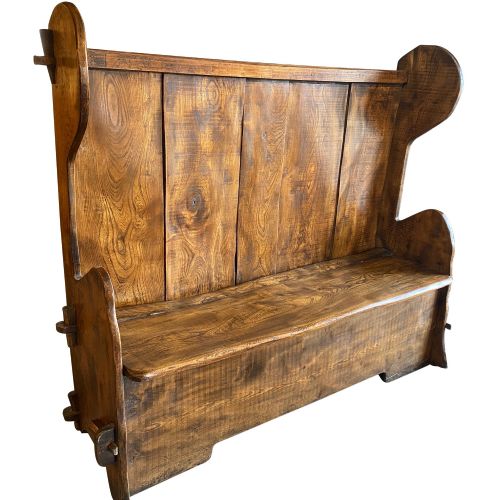
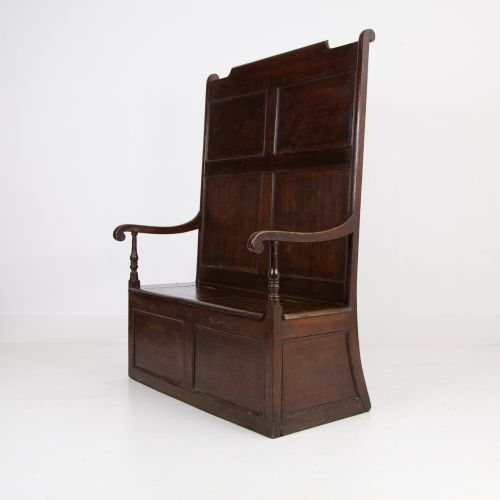
A traditional hallway storage bench encompasses forms such as settles, box settles, hall seats, and mule chests spanning the Georgian, Victorian, and Edwardian periods.
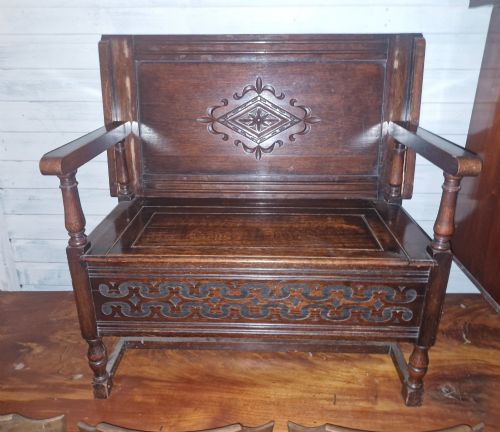
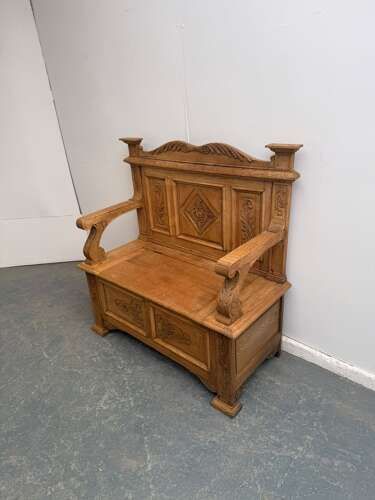
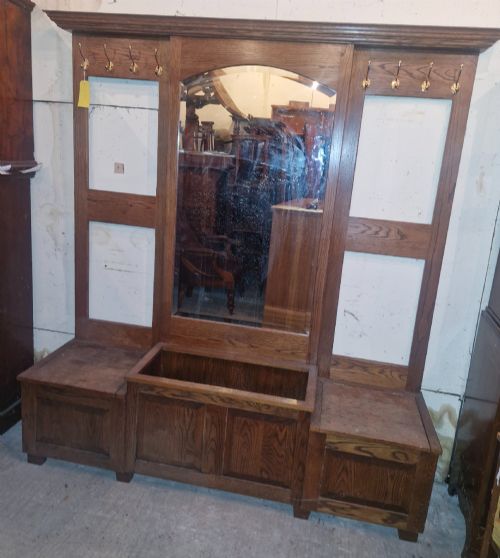
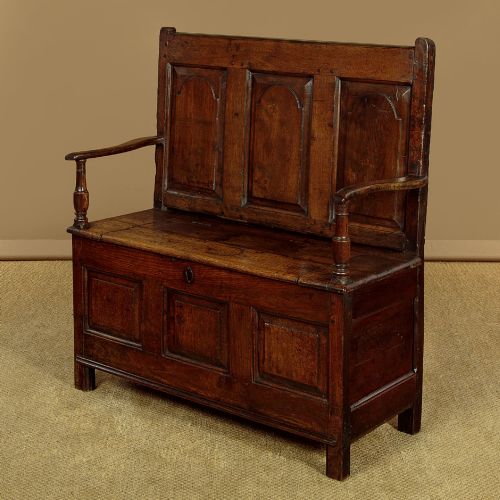
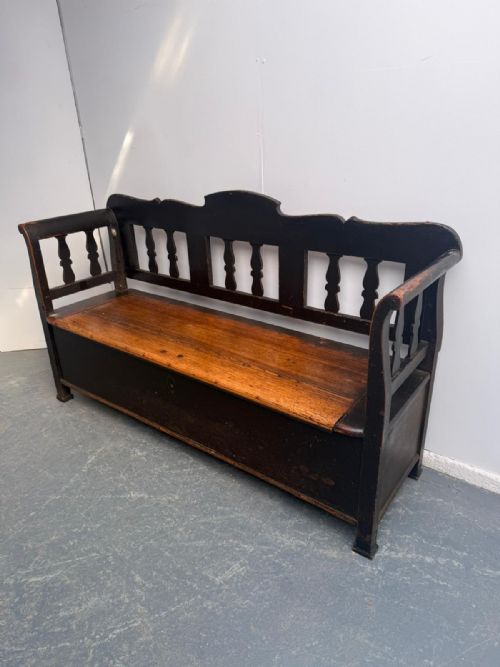
The most common examples on this page are oak and pine box settles and hall benches offering lift-up seats or compartment storage.
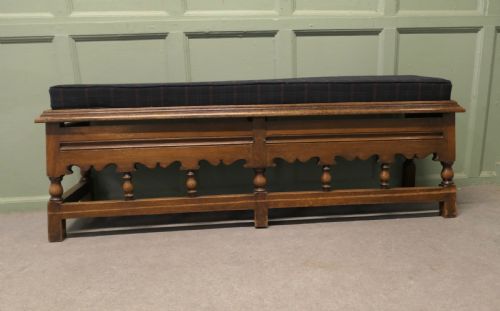
These pieces originate from English country houses and taverns alongside European country workshops, often displaying rustic farmhouse or Jacobean revival styles.
Materials and construction methods
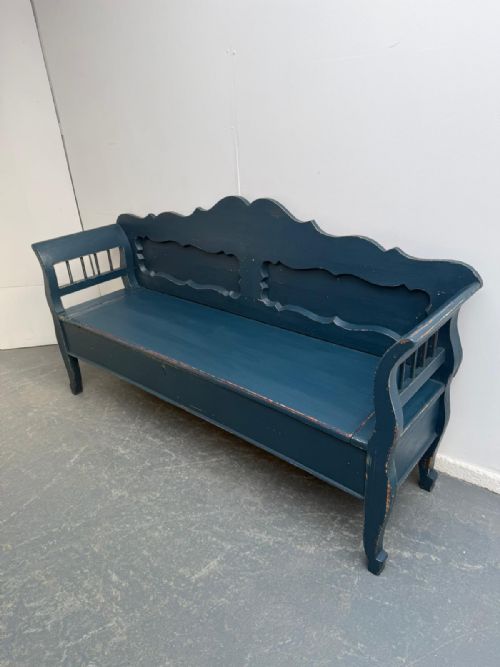
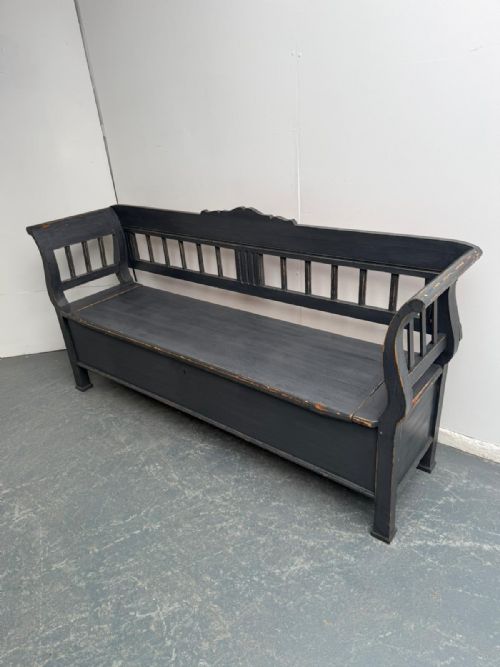
Makers utilised solid timbers including oak, elm, and pine, frequently finished with wax or historical paint treatments in black, blue, and grey.
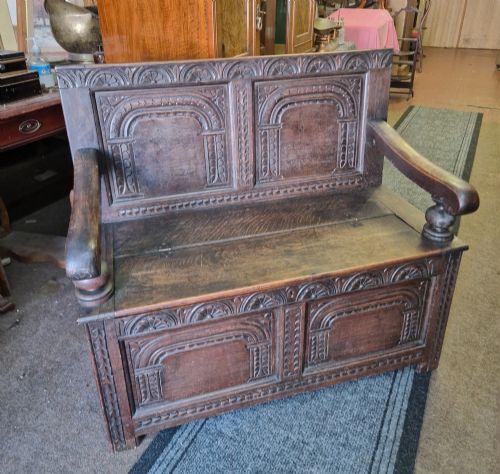
Joinery techniques involve panelled construction for high backs and box bases, sometimes augmented with carved ornamentation and iron or brass hardware.
Several pine benches double nicely as window seats when your boots finally take a rest.
Distinctions in quality and execution
Quality rests upon the selection of timber, such as solid figured oak or dense structural elm, and the integrity of the original joints.
Higher quality pieces exhibit crisp, deliberate carving and well-preserved original painted surfaces rather than later surface alterations.
The Traditional Hallway Storage Bench Glossary
- Settle
- A wooden bench with a high back, solid arms, and a box seat designed to keep draughts away from the sitter. This form dates back centuries and remains central to hallway seating.
- Box settle
- A specific settle variation featuring a hinged seat that lifts to reveal a deep storage compartment beneath. It combines utility with traditional seating.
- Mule chest
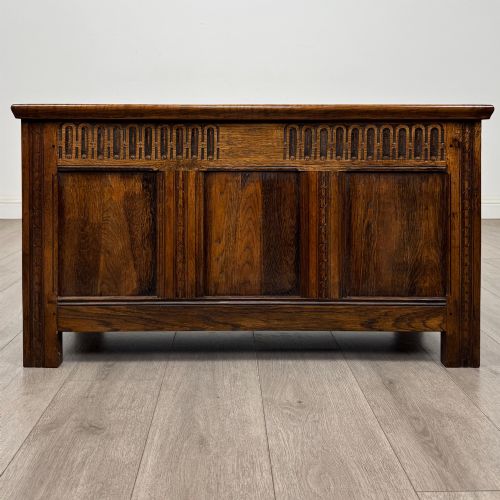
- A chest of drawers or storage coffer raised on legs, often fitted with a hinged lid. It bridges the gap between a blanket chest and a functional hall bench.
- Monks bench
- A convertible piece of furniture featuring a folding back that transforms from a high-backed seat into a flat table top. These appear frequently in 20th-century oak.
Traditional Hallway Storage Bench: Frequently Asked Questions
How were these benches used historically?
These benches served primarily as seating near entry points where occupants could remove footwear or wait out draughts. The integrated compartment underneath provided secure storage for blankets, boots, or everyday garments.
In tavern and farmhouse settings, high-backed variants also acted as windbreaks against cold hallways. They functioned as multi-use household furniture long before dedicated hallway storage systems existed.
Are painted finishes original?
Many pine examples feature original painted surfaces in historic shades like blue, grey, and black. Examining the wear patterns and pigment layering helps determine whether the finish dates to the period of manufacture.
Waxed pine and oak finishes are equally common, showing the natural grain developed through decades of handling. Professional inspection of the underlying timber helps verify surface age.
How do I fit a bench in a small hallway?
Selecting a compact hall seat or a short two-seater box settle prevents narrow corridors from feeling overcrowded. Measuring both floor clearance and the arc of any lift-up lid ensures daily accessibility.
Low-profile oak benches and narrow elm settles provide functional seating without dominating limited architectural spaces.
What periods do these pieces cover?
The selection spans from Georgian and 19th-century examples through to Edwardian and mid-20th-century revivals. Earlier pieces often display vernacular country styling, while later items incorporate Jacobean revival carvings.
Stylistic markers such as panel thickness, joinery style, and hardware help distinguish Georgian forms from later Victorian and Edwardian interpretations.