

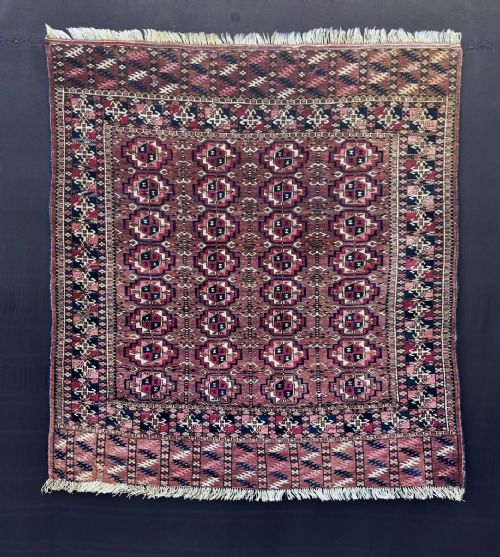
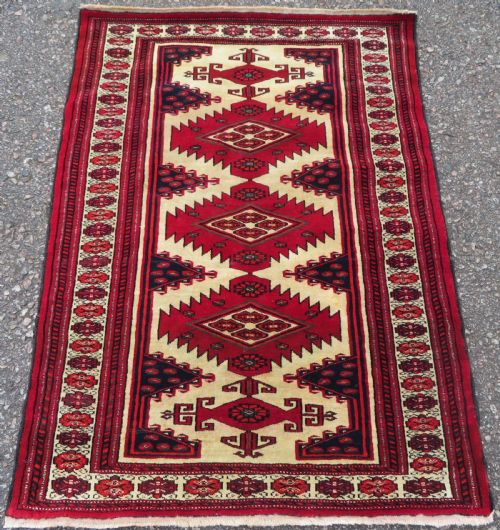


Traditional Gul Pattern Carpet
These traditional gul pattern carpet pieces are tribal floor coverings offering geometric motifs and rich wool textures, prized for authentic Central Asian character.
Traditional Gul Pattern Carpet
A traditional gul pattern carpet brings together tribal Central Asian weaving traditions, featuring distinctive octagonal motifs known as guls. Buyers searching for a traditional gul pattern carpet encounter examples originating from Turkmenistan, Afghanistan, and surrounding regions.
The pieces available span from the mid nineteenth century into the early twentieth century, encompassing major carpets, village rugs, and dowry pieces. Tribal groups such as the Tekke, Ersari, Yomut, Kizyl Ayak, and Baluch produce the foundational designs seen across these listings.
What varies in quality
Quality rests upon the crispness of the gul drawing, the saturation of the natural dyes, and the density of the hand-knotted pile. Finer examples display precise geometry and complex border arrangements executed with exceptional technical control.
Foundation materials also differentiate the weaving, with sturdy goat hair or horsehair structures adding substantial weight to major tribal carpets. The integrity of the wool pile and the depth of colour separation dictate the standing of individual pieces.
Design attributions across the inventory include Tekke Turkmen, Ersari, Yomut, Kizyl Ayak, and Baluch tribal traditions.
The Traditional Gul Pattern Carpet Glossary
- Gul
- An octagonal medallion motif repeated across Central Asian carpets. Each tribal group utilises distinct gul variations to identify lineage and origin.
- Main carpet
- A large format floor covering traditionally woven for domestic or ceremonial use within the tribe. These substantial pieces require months of labour.
- Tekke
- A prominent Turkmen tribe renowned for finely knotted rugs featuring orderly rows of guls. Their weaving displays exceptional symmetry and deep madder red colour palettes.
- Ersari
- A Turkmen tribal group known for large scale carpets with spacious gul arrangements and varied secondary motifs. Their work frequently incorporates bold geometric structures.
- Foundation
- The underlying grid of warp and weft threads that supports the knotted wool pile. Materials range from standard wool to durable goat hair and horsehair.
Traditional Gul Pattern Carpet: Frequently Asked Questions
Where do traditional gul pattern carpet pieces come from?
These carpets originate from Central Asia, specifically regions spanning Turkmenistan and Afghanistan. Tribal groups such as the Tekke, Ersari, Yomut, and Baluch traditionally weave them.
The geographical influences appear in the distinct wool types, natural dye palettes, and specific geometric gul motifs employed by each tribe.
How do I identify different tribal designs?
Distinguishing tribes relies on the specific shape and arrangement of the repeating gul medallions, alongside the border patterns. Tekke weavers tend to use precise, closely spaced guls, whereas Ersari designs often appear larger and more open.
Examining the secondary ornaments and the colour combinations provides further clues to the specific Central Asian origin of the rug.
What materials are used in these carpets?
The pile consists primarily of wool, frequently hand-spun to create varied textures and light absorption. Natural dyes provide the underlying red, gold, and dark tones.
Foundation threads utilise wool, and occasionally horsehair or goat hair, which contributes substantial weight and durability to the finished main carpet.
How should I live with an antique carpet?
Placing a quality underlay beneath the carpet prevents slipping and reduces friction against hard flooring. Regular gentle vacuuming without a beater bar keeps the hand-spun wool pile clean.
Keeping the piece away from direct, harsh sunlight preserves the integrity of the natural dyes over decades of domestic use.