



Traditional Glass Chandelier Pair
These traditional glass chandelier pair selections bring symmetric illumination and period presence to a grand interior space.
Traditional Glass Chandelier Pair
A traditional glass chandelier pair consists of matching hanging light fixtures designed to balance illumination across large rooms or high-ceilinged hallways. Buyers searching for a traditional glass chandelier pair encounter matched multi-arm fixtures and smaller lantern forms dating from the nineteenth century through the early twentieth century.
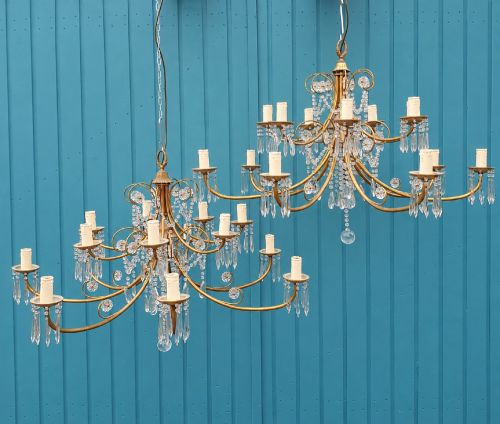
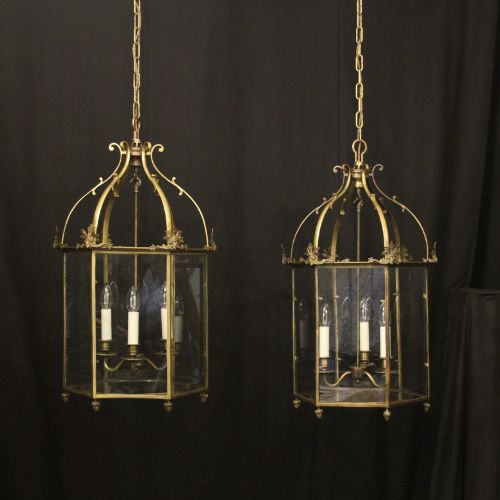
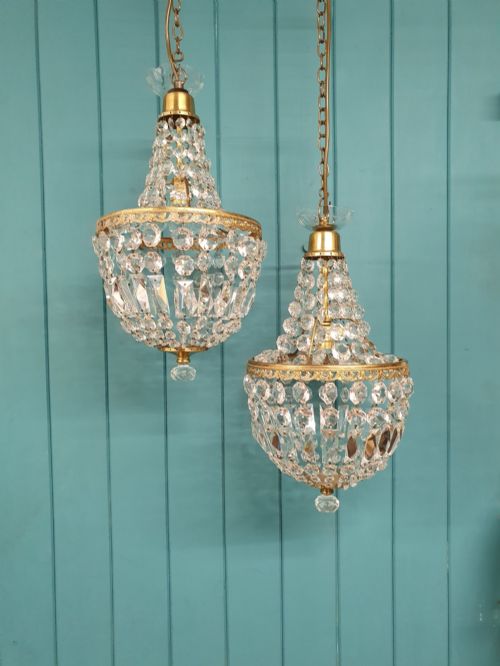
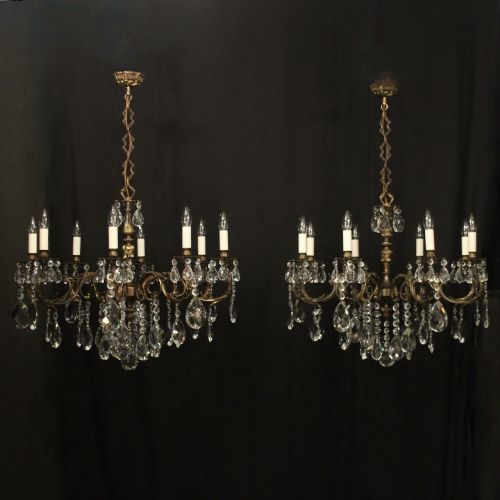
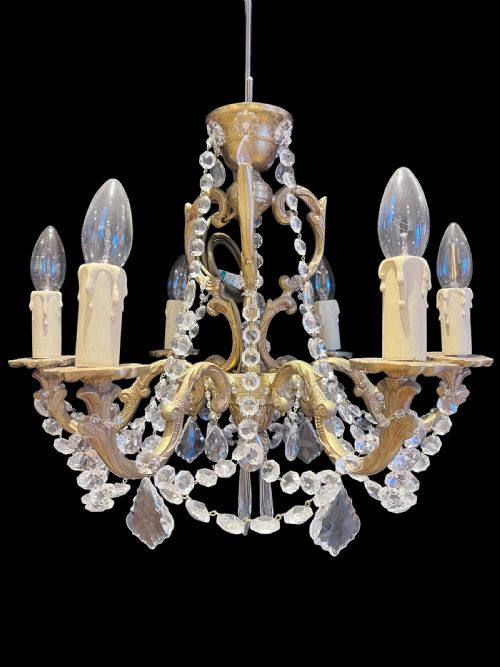
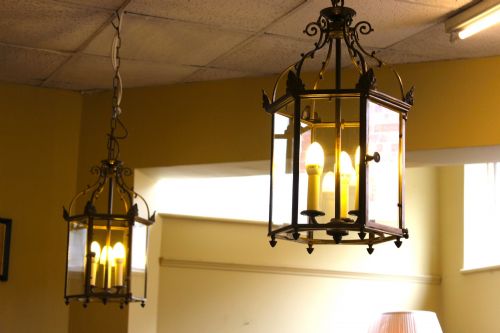
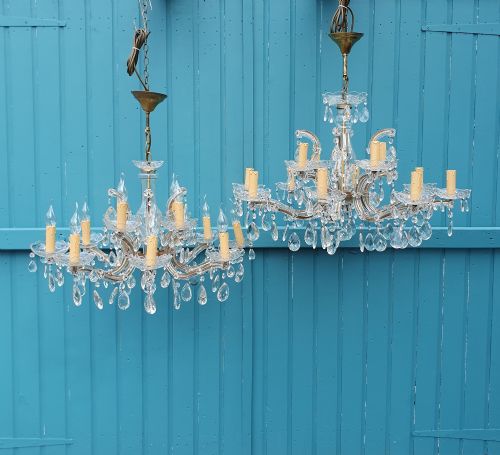
The listings on this page include Edwardian and early twentieth-century examples alongside nineteenth-century French and English designs. Forms range from tent and waterfall configurations to twelve-arm brass fixtures and hexagonal hall lanterns.
Stylistic influences span French Empire, French Rococo, Neoclassical, Florentine, Grand Regency, and Victorian aesthetics. These lighting fixtures serve to anchor period reception rooms, ballrooms, and entrance halls with coordinated brilliance.
How they were made
Construction relies on structural frameworks of brass, gilded bronze, gilt metal, and bronze that support extensive arrangements of glass and crystal elements. Metal components are cast and joined to form robust crown rings, arms, and lantern cages.
Crystals and glass drops are hand-cut, polished, and suspended from the metal armatures using wire loops or pins. Lead crystal elements provide high refractive qualities, while plain and cut glass sections shape the diffusion of light from multiple candles or early electric bulbs.
Traditional Glass Chandelier Pair Retail Price Guide 2026
Typical asking prices for traditional glass chandelier pair among the pieces listed under this phrase on Sellingantiques today, from the lower quarter to the upper quarter. They describe what is for sale here now, not the wider market.
The listings span the nineteenth century, the Edwardian era, and the 1900s through the 1930s, utilising brass, bronze, and lead crystal.
What varies in quality
The degree of hand-cutting and the clarity of the crystal components distinguish finer examples from simpler commercial production. Lead crystal prisms display sharper facets and deeper light refraction than standard pressed glass.
Metalwork quality shows in the weight and detail of the brass or gilded bronze castings, particularly in chased mounts and secure arm joints. Matched pairs also depend on the consistency of surviving glass drops and uniform patination across both fixtures.
The Traditional Glass Chandelier Pair Glossary
- Tent and waterfall
- A lighting configuration where upper glass beads form a conical tent shape above a cascading lower fringe of drops.
- Gilded bronze
- A copper alloy treated with a gold leaf or mercury gilt finish to provide a durable and lustrous metallic surface.
- Lead crystal
- Glass containing lead oxide which increases weight, clarity, and the dispersion of light through cut facets.
- Hall lantern
- An enclosed hanging light fixture designed specifically for corridors, vestibules, and entrance spaces.
- Tent chandelier
- A lighting fixture featuring an upper canopy of gathered glass drops arranged in a triangular profile.
Traditional Glass Chandelier Pair: Frequently Asked Questions
How do I hang a heavy pair?
These fixtures require professional installation into structural ceiling joists using rated steel fixings to support the combined weight of metal and crystal.
Electricians should verify internal wiring safety and integrate appropriate hanging loops or chains suited to each drop height.
Can these be wired for modern electricity?
Most surviving early twentieth-century examples have been adapted for modern electrical supplies during their history.
Any rewiring must respect historic lamp holders while meeting current domestic safety standards.
How do I clean the crystal drops?
Regular maintenance involves dusting with a soft brush and washing individual glass elements using a mild soapy solution while supported.
Keeping the fixture in place during cleaning requires care to avoid straining the brass arms and connecting wires.
What rooms suit large pairs?
Large matched pairs work best in high-ceilinged spaces such as ballrooms, formal dining rooms, and expansive entrance halls.
Symmetrical placement creates balanced focal points and even illumination across wide floor plans.
How do I spot a matched pair?
A true pair shares identical dimensions, arm counts, mounting construction, and matching glass or crystal drop configurations.
Minor variations in hand-cut crystal facets often confirm period manufacture rather than modern replication.