
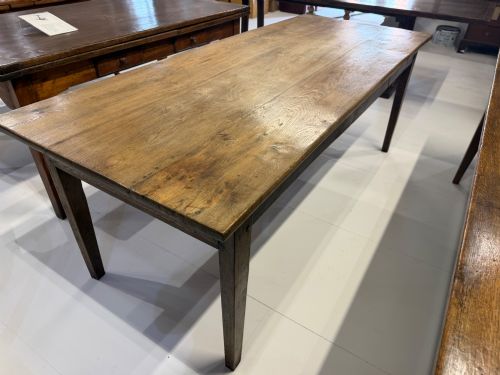
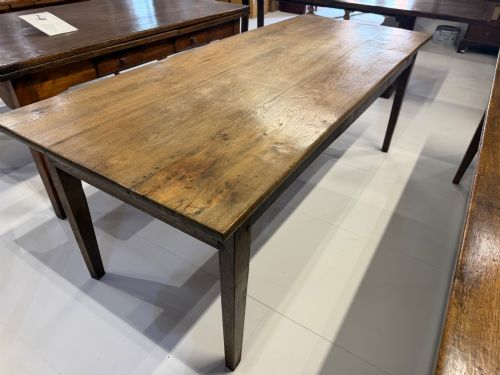
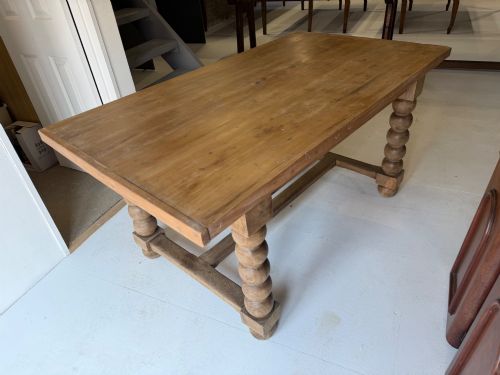
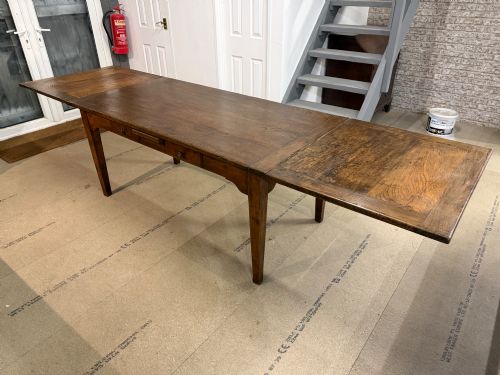
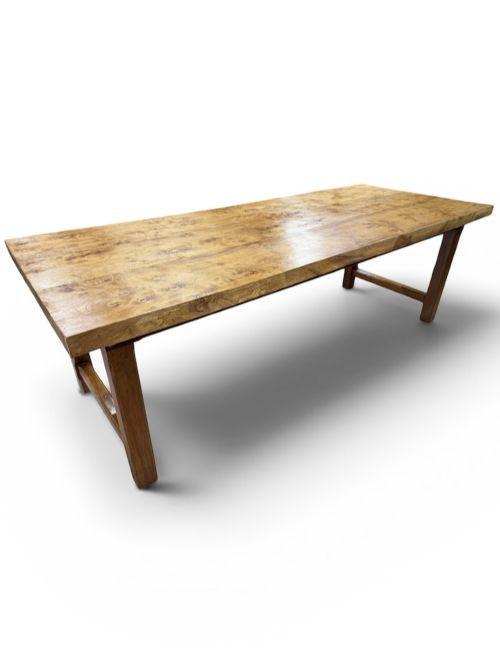
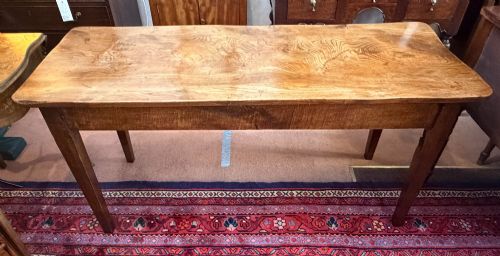
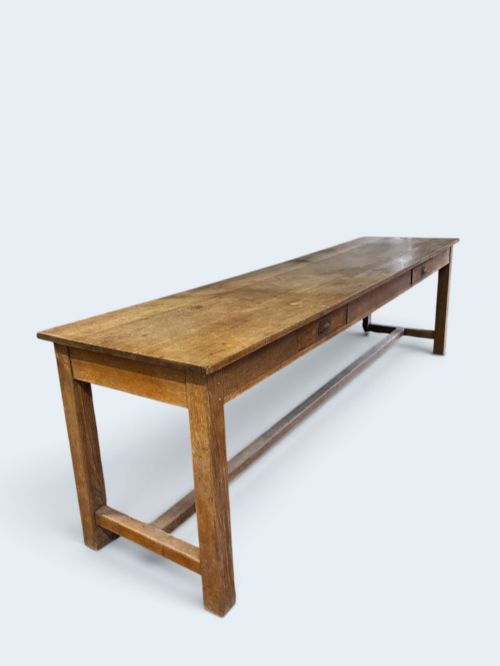
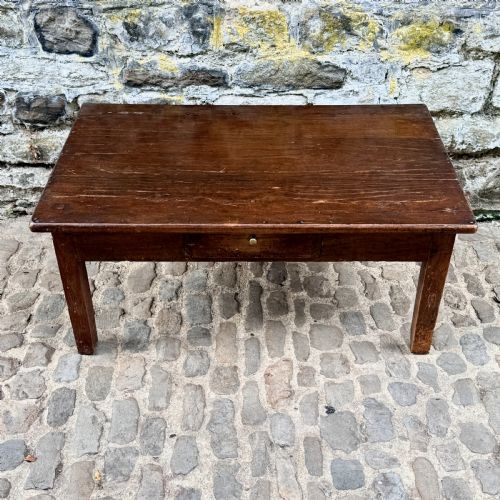
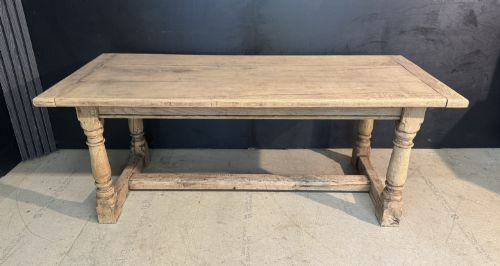
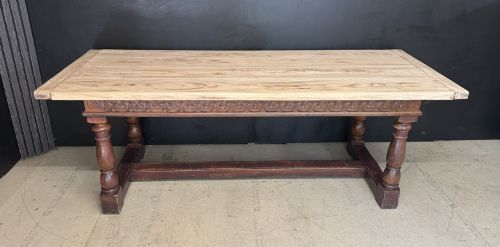
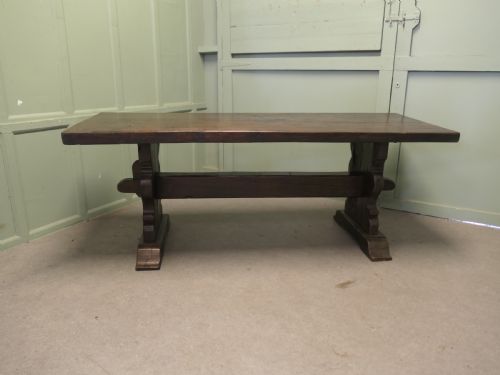
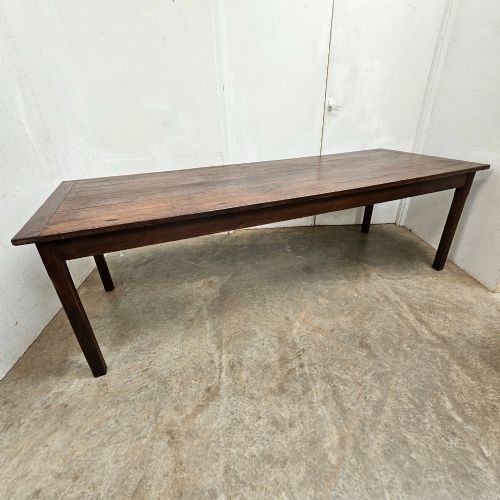
Traditional French Oak Table
A traditional french oak table brings centuries of practical utility and heavy timber character straight into a modern kitchen or dining room.
Traditional French Oak Table
A traditional french oak table encompasses sturdy utilitarian forms built to handle daily work and family dining across generations. Buyers searching this phrase meet robust dining tables, refectory boards, and country house workbenches rooted in rural traditions.
The selections span from nineteenth-century farmhouse and rustic country styles down to specific iterations like double extending dining tables, coffee tables, and folding vineyard tables. Solid oak forms dominate, frequently paired with beech, pine, or iron components depending on the workshop origin.
Most pieces show straightforward construction designed for heavy domestic or artisan use rather than delicate parlour display. Proportions range from modest low tables to large eight-foot dining surfaces built to seat twelve people comfortably.
How they were made
Makers relied primarily on solid oak and timber frameworks, sometimes integrating chestnut, fruitwood, or beech for specific structural elements like legs and stretchers. Plank tops joined with simple joinery formed the main work and dining surfaces.
Metal components such as iron vices, brass fittings, and structural brackets appeared on functional artisan workbenches and extending dining mechanisms. Finishes ranged from natural bleached oak surfaces to untreated heavy timbers shaped by decades of use.
Some historic workbenches still retain their original wooden vices, ready for unexpected workshop duties.
What varies in quality
Quality rests in the integrity of the timber selection and the honesty of the construction, distinguishing solid oak plank tops from lesser secondary woods. Heavier refectory frames and substantial farmhouse proportions demonstrate superior structural ambition.
The presence of period joinery details, original working mechanisms like double extending frames or functional vices, and untouched surface patination elevate individual examples. Variations in timber bleaching and timber grain density also alter the visual depth of each piece.
The Traditional French Oak Table Glossary
- Refectory table
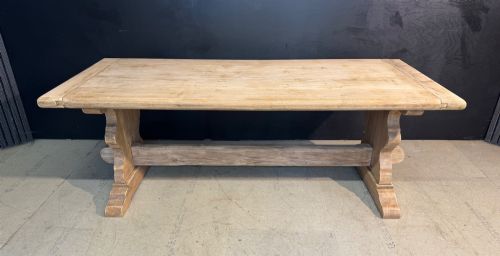
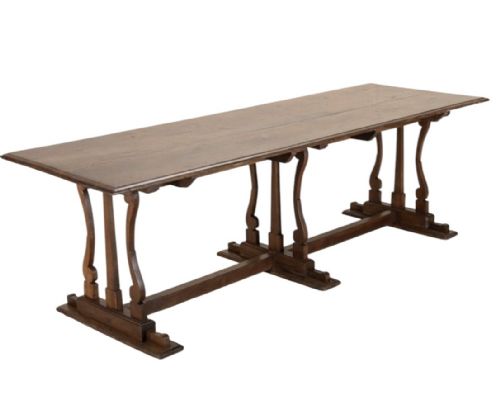
- A long, narrow dining table traditionally built for communal dining halls and monastic refectories. These pieces usually feature substantial timber legs connected by long floor-level stretchers.
- Parquetry
- A geometric mosaic of wood pieces used for decorative surfaces on tables. This technique creates patterned tops utilising contrasting timber tones.
- Worktable
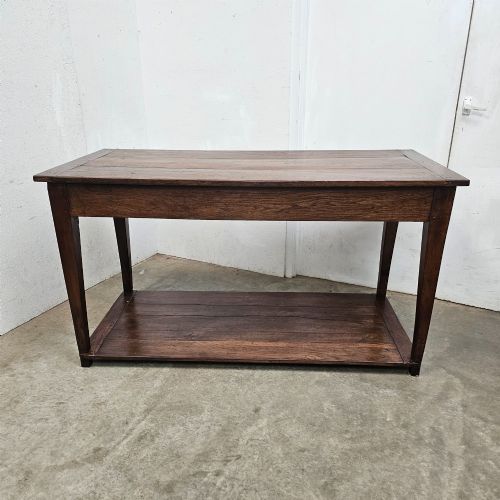
- A utilitarian table designed for practical tasks rather than formal dining. Many examples include integrated drawers, lower tiers, or heavy vices.
- Bleached oak
- Timber treated to lighten its natural dark tone. This process reveals the underlying grain structure while softening the overall colour of the wood.
Traditional French Oak Table: Frequently Asked Questions
How do I clean a traditional french oak table?
Wipe surfaces using a damp cloth without harsh chemical detergents to preserve the natural timber grain and historic patination. Avoid soaking the wood to prevent warping the historic plank construction.
Apply natural beeswax periodically to nourish dry oak timbers and protect the surface from daily moisture and staining.
Are these tables suitable for everyday family dining?
These pieces were originally built for heavy domestic work, making them exceptionally durable for daily meals and kitchen use. Their robust oak construction handles normal household wear without losing structural integrity.
Use protective mats under hot dishes and liquids to safeguard the historic timber surfaces from permanent marks or ring stains.
What is the difference between a farmhouse table and a refectory table?
Farmhouse tables typically feature simpler four-leg configurations designed for casual kitchen environments. They frequently incorporate practical additions like drawers for storage.
Refectory tables are longer and narrower, characterised by heavy central legs or trestles linked by continuous floor stretchers built for communal dining halls.
How do I date an antique oak table?
Examine the construction methods, tool marks on the underside of the plank top, and the type of secondary woods used in the frame. Hand-cut joinery and heavy timber shrinkage indicate nineteenth-century or earlier origins.
Compare the leg style, such as tapered legs, bobbin turnings, or barrel legs, against established period manufacturing traits.