
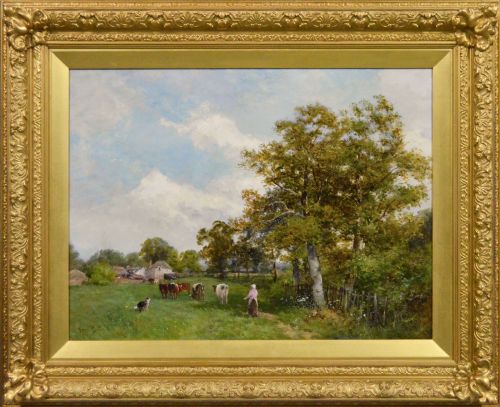
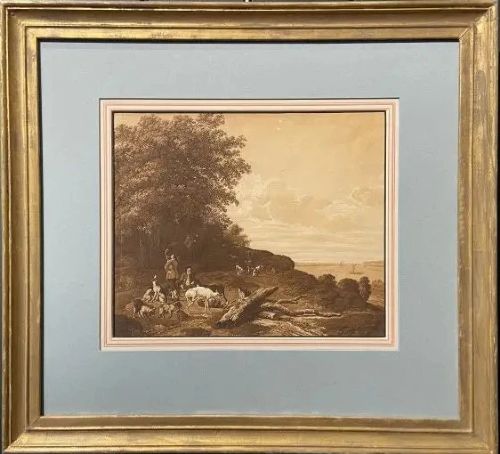
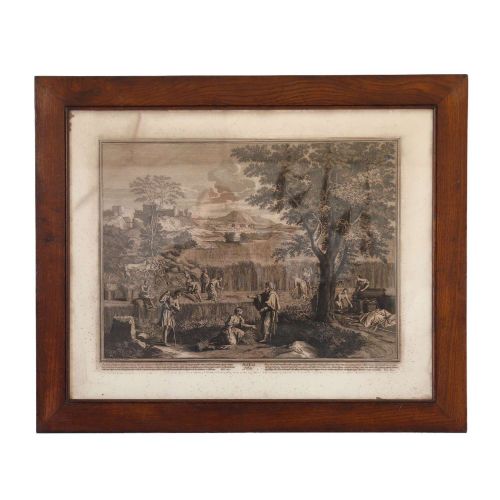
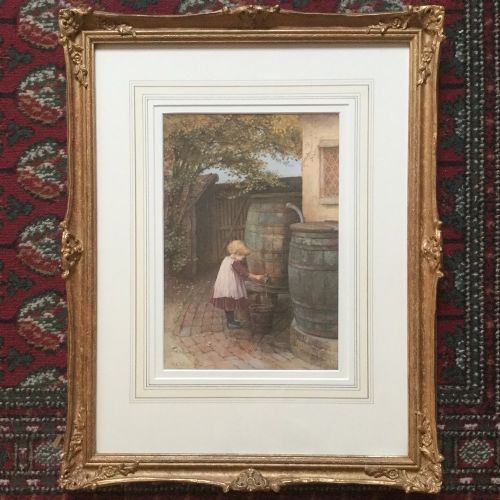


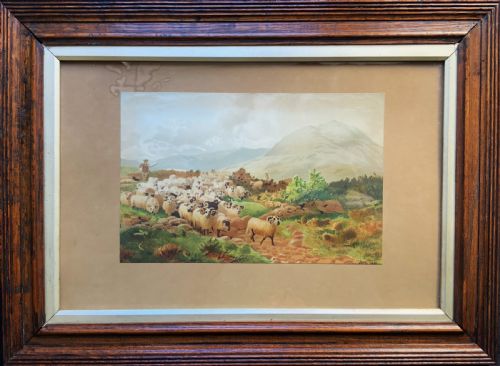

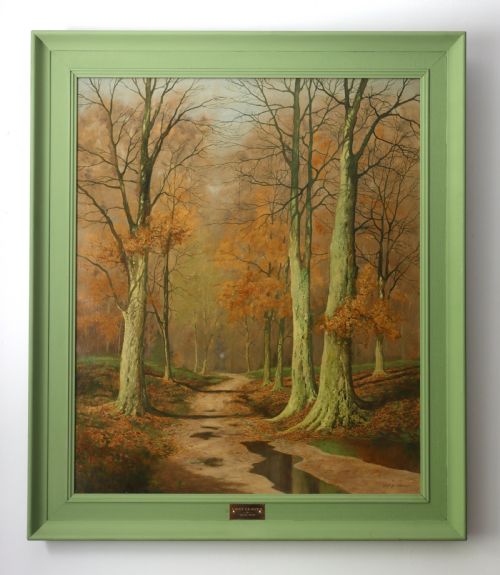
Traditional Framed Landscape Print
A traditional framed landscape print brings the quiet scale of the countryside indoors behind protective glass and within polished wooden moulding.
Traditional Framed Landscape Print
A traditional framed landscape print captures rural scenes, pastoral valleys and coastal views across paper and canvas formats. When searching for a traditional framed landscape print, buyers encounter works spanning the nineteenth century, the Edwardian era and the twentieth century, alongside earlier interpretations.
The subjects range from Scottish school vistas and Welsh castles to serene woodland pools and agricultural countryside scenes. These pieces frequently arrive ready to hang, set within period wood, gesso and gilded frames that complement the artwork.
Originating from diverse British and international traditions, the selection balances intimate watercolours with larger oil paintings and detailed engravings. Each piece preserves a distinct historical view of natural topography through the eyes of period artists.
Materials and construction
Works are executed on paper, canvas and woodblock, utilising oil paint, watercolour, lithography, etching and pen and ink. Pigments are applied with skilled brushwork or printed through traditional plate and block methods.
Framing utilises wood, often finished with gesso and gold leaf to create ornate or simple protective borders. Glass is regularly fitted over paper works and watercolours to safeguard the delicate mediums from atmospheric moisture.
Mounts and backing boards provide structural rigidity to paper prints and watercolours, while canvases are stretched over wooden frames before receiving their outer decorative moulding.
The inventory encompasses diverse regional views, including Scottish coastal scenes, Welsh castles, and nineteenth-century English country cottages.
Assessing quality and craftsmanship
Quality reveals itself in the fidelity of the composition and the handling of light, shadow and atmospheric depth within the scene. Superior works display confident line work or nuanced paint application that conveys texture in foliage, water and stone.
The construction of the framing offers another measure of distinction, where hand-carved gesso, genuine gold leaf and sound joinery elevate the presentation. Period frames that complement the age and aesthetic of the central artwork denote thoughtful curation.
The preservation of the underlying paper, canvas or pigments dictates the enduring visual impact of the piece. Strong contrast, stable surfaces and minimal intervention distinguish the finest examples from heavily restored counterparts.
David Bates·Johannes Lingelbach·Charles Edward Wilson·Kunisada·Hendricus Joseph Dillens·John Atkinson·William Russell Flint·Samuel Sidley·Henry Birtles·Jane Utley·H. Alken·Edward Lloyd·William Mellor·Lilian Stannard·Lois Wilton
The Traditional Framed Landscape Print Glossary
- Lithograph
- A printmaking process based on the repulsion of oil and water on a flat stone or metal plate. This technique allows artists to produce multiple reproductions that closely resemble original drawings.
- Gesso
- A plaster-like mixture applied to wood frames as a base for moulding and gilding. It provides a smooth surface for intricate decorative relief work.
- Woodblock print
- An image carved into a block of wood, inked, and pressed onto paper. This Japanese and European method yields bold lines and distinct graphic textures.
- Watercolour
- A paint consisting of pigment suspended in a water-based solution, typically applied to paper. It offers translucent washes and delicate tonal gradations.
- Gilded wood
- Timber treated with a thin layer of gold leaf or metallic powder. It adds a reflective, luminous border to traditional artwork.
Traditional Framed Landscape Print: Frequently Asked Questions
How do I hang a heavy framed landscape?
Ensure the wall fixings engage directly with wall studs or utilise appropriate hollow-wall anchors rated for the weight of the wood and glass. Heavy frames benefit from two suspension points to distribute the load evenly and maintain a level display.
Check that the hanging wire or brackets on the back of the frame are securely fastened to the wooden moulding before lifting the piece into place.
What is the difference between an oil painting and a print?
An oil painting is a unique, hand-painted work created with pigments suspended in oil on canvas or panel, showing visible brush texture. A print is a mechanical or hand-pulled reproduction of an original image onto paper.
Examining the surface under magnification reveals the flat ink dots of a print versus the raised impasto ridges of applied oil paint.
How should I clean the glass on a framed print?
Apply a mild glass cleaner to a soft microfibre cloth rather than spraying the liquid directly onto the frame. This prevents moisture from seeping under the moulding and damaging the paper or mount within.
Gently wipe the glass surface and dry it immediately with a clean cloth to avoid streaks and protect the surrounding wooden frame from water marks.
Can I display these pieces in direct sunlight?
Direct sunlight causes fading in watercolours, paper prints and organic pigments over time. Position artworks away from south-facing windows or harsh direct beams to preserve their original colouration.
Using specialised UV-filtering glass provides an extra layer of defence for delicate nineteenth-century works and paper-based prints.