

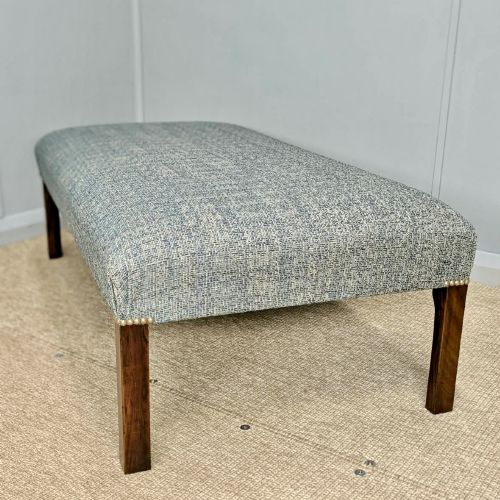
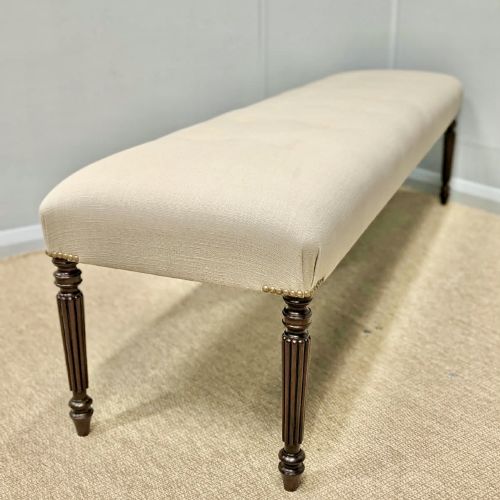
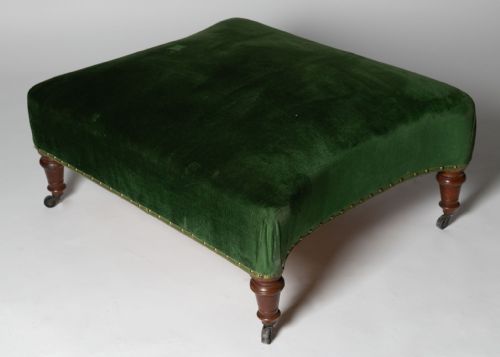

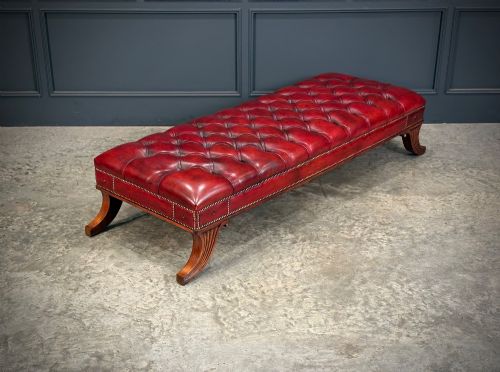



Traditional Footstool Bench
A traditional footstool bench grounds a room with solid timber and tactile upholstery, offering a practical surface to rest tired feet or provide extra seating.
Traditional Footstool Bench
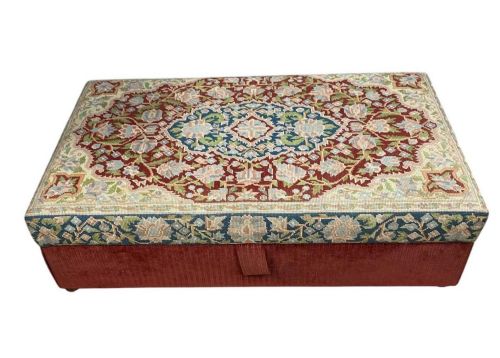
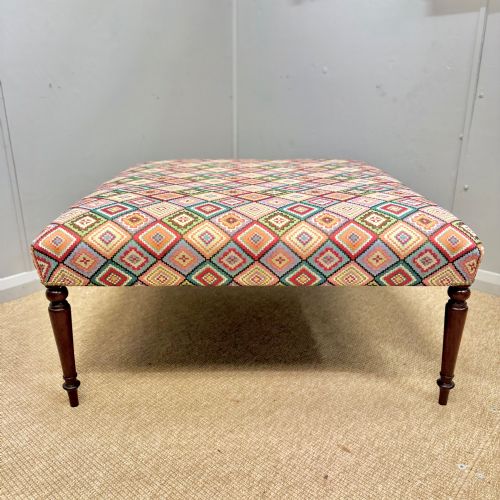
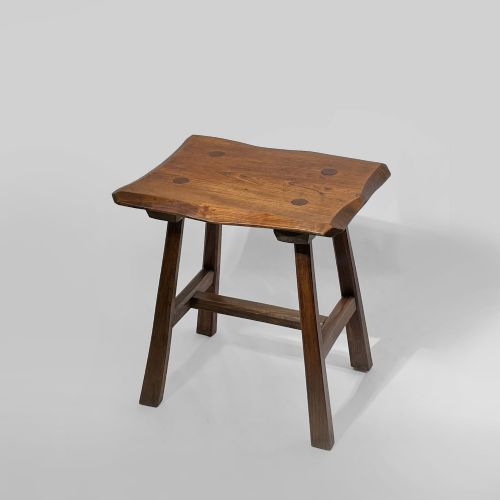
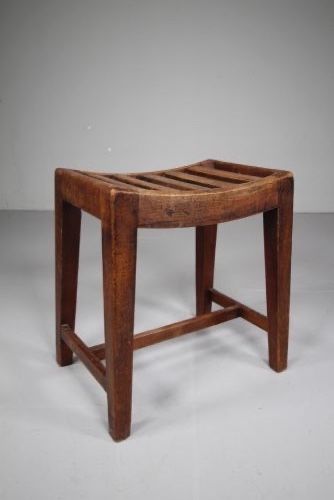
A traditional footstool bench brings together low seating and footrests in forms ranging from compact vernacular pieces to substantial centre ottomans. When exploring a traditional footstool bench, expect to encounter low wooden frames paired with upholstered tops or woven surfaces designed for daily use.
The selections span centuries of cabinetmaking, featuring pieces from the Georgian and Victorian eras alongside early twentieth-century revivals. Makers of the past constructed these items to serve dual purposes as foot rests, dressing table seats, or low centre tables.
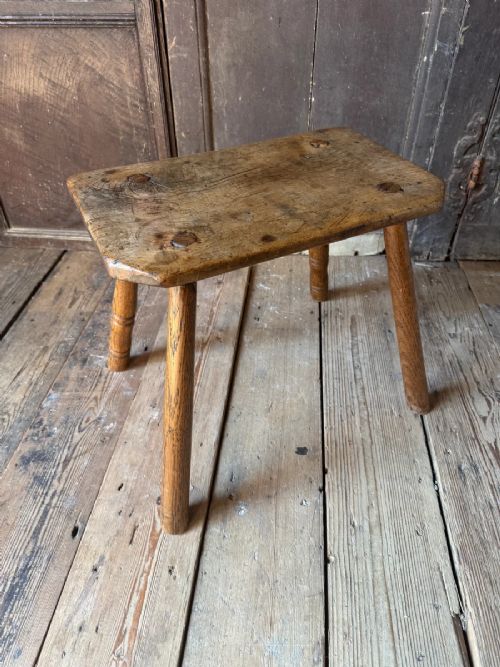
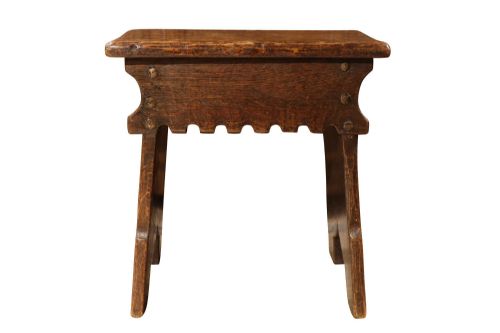
Originating largely from British and European workshops, these forms include long ottomans, piano stools, and pegged joint stools. Each piece reflects the domestic habits of its period, whether through hinged storage seats or low cabriole legs.
Materials and construction methods
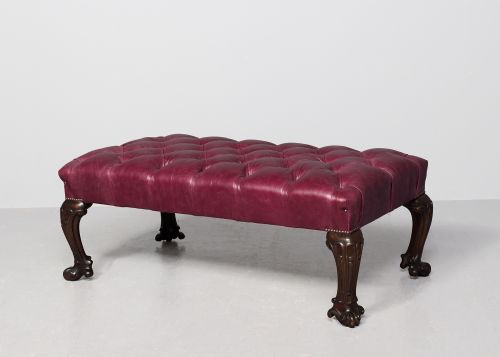
Carpenters relied heavily on dense hardwoods such as mahogany, oak, walnut, and rosewood for the structural frames. These timbers were joined using traditional pegged construction, mortise and tenon joints, or hand-carved cabriole legs with ball and claw details.
Upholstered versions make use of durable textiles, wool kilim, buttoned red hide, and hand-dyed leather pulled tight over padding. Alternative surfaces incorporate woven rattan, cane work, or slatted wood to create varied textures.
Traditional Footstool Bench Retail Price Guide 2026
Typical asking prices for traditional footstool bench among the pieces listed under this phrase on Sellingantiques today, from the lower quarter to the upper quarter. They describe what is for sale here now, not the wider market.
Current selections span the eighteenth, nineteenth, and early twentieth centuries, featuring timbers such as mahogany, oak, walnut, sycamore, ash, and rosewood.
Judging the standard of execution
Quality rests upon the selection of timber and the precision of the joinery rather than mere ornamentation. Superior examples display dense, well-figured mahogany or quarter-sawn oak with tight, stable joints that withstand heavy downward pressure.
The standard of upholstery and secondary details further separates fine pieces from simpler vernacular items. Hand-carved elements, substantial brass castors, and robust webbing reveal the care invested by the original maker.
The Traditional Footstool Bench Glossary
- Joint stool
- A sturdy wooden seat built with pegged mortise and tenon construction during the medieval and revival periods. These low benches served multiple household tasks before upholstered stools became common.
- Ottoman
- A large, fully upholstered seat or footstool lacking a back and arms, often featuring internal storage beneath a hinged lid. They frequently occupy the centre of a room or sit at the foot of a bed.
- Cabriole leg
- A furniture leg that curves outward at the knee and tapers inward toward the foot, inspired by animal limbs. This design appears frequently on eighteenth-century and revival seating.
- Kilim
- A flat-woven textile produced in the Middle East and Central Asia, utilised as a decorative and durable upholstery fabric on nineteenth-century footstools.
- Caned top
- A seating surface woven from peeled rattan strips in an intricate open mesh pattern. This technique provides a lightweight, flexible platform that remains cool during warmer months.
Traditional Footstool Bench: Frequently Asked Questions
How do I use a footstool bench in a living room?
Place a long upholstered footstool in front of a sofa to create a comfortable place to rest feet while maintaining an open line of sight across the room. They also function as impromptu coffee tables when topped with a sturdy wooden tray.
Smaller variants can sit beside armchairs or serve as extra low seats when guests visit. Their modest height keeps rooms feeling spacious compared to bulky armchairs.
Are these benches sturdy enough for daily seating?
Solid hardwood frames built with pegged or mortised joints are designed to bear weight reliably over generations. Oak joint stools and mahogany frame benches handle regular sitting without structural strain.
Pieces with delicate caned tops or intricate carved details require slightly more care regarding weight distribution. Checking the tightness of the frame ensures long-term stability in busy households.
How do I distinguish a Victorian stool from an 18th-century piece?
Eighteenth-century examples often display restrained Georgian proportions, straight mahogany legs, or early expressions of Chippendale styling with subtle carving. Timber choice tends to focus on rich mahogany or walnut with hand-cut joinery.
Victorian pieces frequently introduce heavier upholstery, buttoned leather hides, or turned rosewood legs fitted with brass castors. Revival pieces from the Edwardian era often copy these earlier proportions using quarter-sawn oak.
What is the difference between an ottoman and a footstool?
Ottomans typically offer a larger surface area designed to accommodate multiple feet or serve as a centre table replacement. Many period examples include hinged seats that open to reveal storage space inside.
Footstools are generally smaller, lighter, and focused specifically on supporting the feet of a single seated person. Their compact scale makes them easy to move between rooms as needed.