

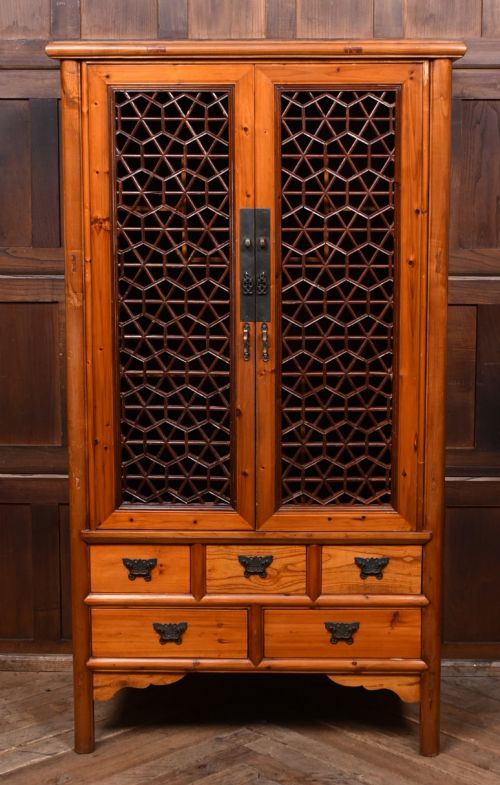
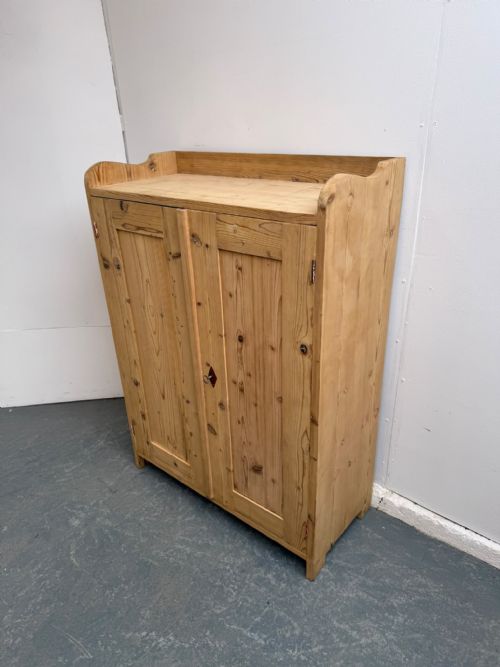


Traditional Food Larder Cupboard
A traditional food larder cupboard provides essential kitchen storage with period character, offering deep shelving and ventilated compartments built to keep provisions fresh.

Traditional Food Larder Cupboard
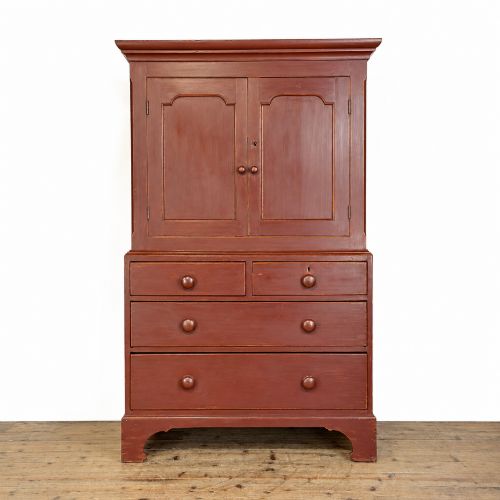
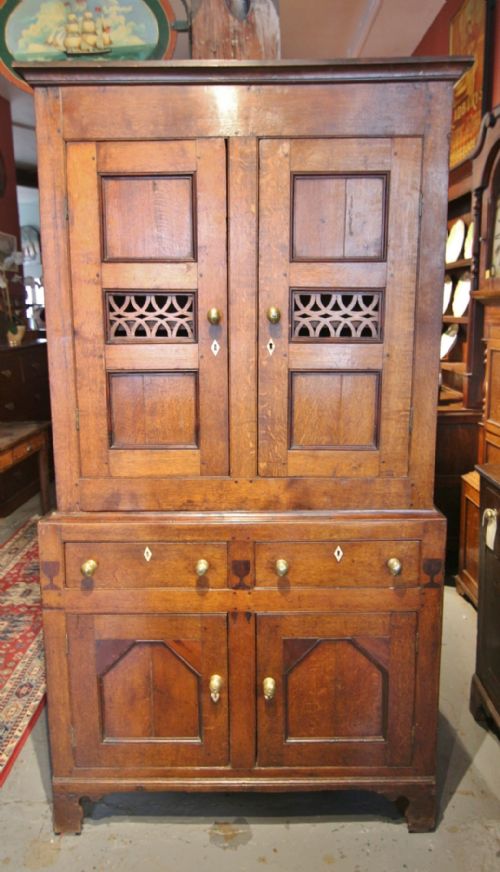
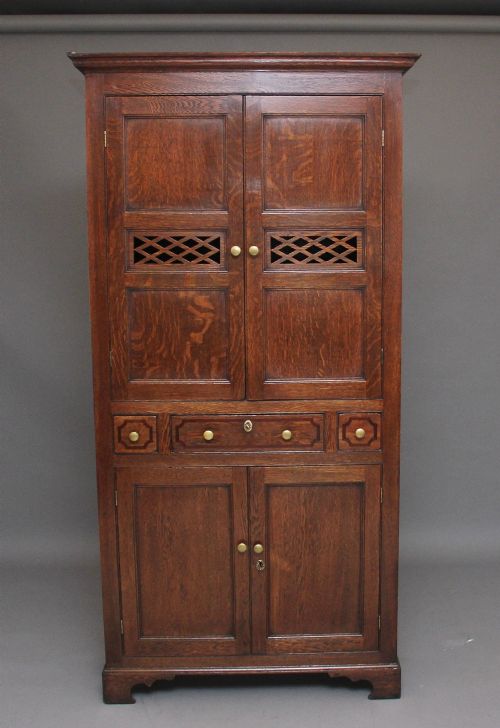
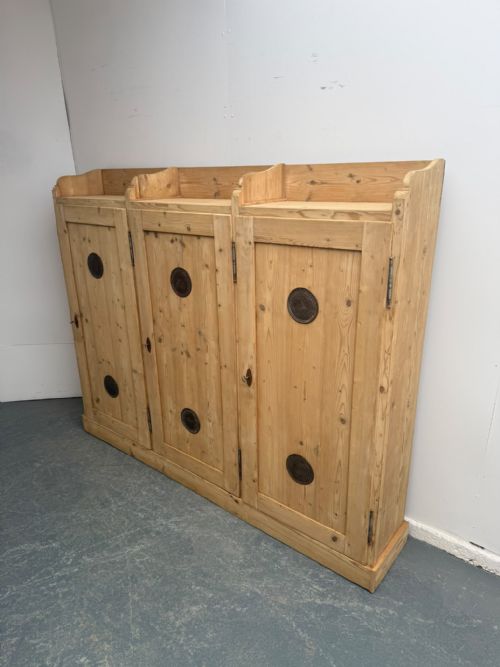
A traditional food larder cupboard is a sturdy storage cabinet designed for keeping provisions, featuring deep shelving and frequently incorporating ventilated panels for air circulation. The pieces appearing in this category span the nineteenth century and the early twentieth century, reflecting practical domestic storage needs of past eras.
Buyers will encounter various regional forms on this page, including Welsh vernacular pieces, Eastern European items, and Japanese examples alongside standard Victorian pine storage cabinets. These items often go by alternative names such as pantry cupboards, housekeeper cupboards, or bread and cheese cupboards depending on their specific historic function.
The materials utilised in these pieces lean heavily towards solid timber construction, principally pine and oak, often paired with iron and brass hardware. Whether presented in bare waxed pine, old paint, or inlaid wood, each item showcases the utilitarian craftsmanship of its period.
Construction and materials
Construction relies on solid timbers like pine and oak, assembled to create robust cabinetry capable of bearing heavy domestic provisions. Joinery methods prioritise durability, utilising traditional joints that keep the large framework stable over centuries of use.
Hardware elements such as brass and iron hinges, latches, and handles secure the heavy doors while adding functional detail. Surfaces are often finished simply with wax or historic paint, preserving the natural grain and texture of the wood.
Traditional Food Larder Cupboard Retail Price Guide 2026
Typical asking prices for traditional food larder cupboard among the pieces listed under this phrase on Sellingantiques today, from the lower quarter to the upper quarter. They describe what is for sale here now, not the wider market.
Some historic cupboards bear the evocative name bread and cheese, recalling simpler times when dairy and baked goods demanded their own dedicated timber sanctuary.
Judging quality in historic storage furniture
The integrity of the construction and the depth of the timber grain determine the visual weight and longevity of the cabinet. Pieces featuring subtle decorative details like inlaid wood or careful vernacular styling stand apart from purely utilitarian workshop builds.
The Traditional Food Larder Cupboard Glossary
- Bread and cheese cupboard
- A specific regional storage piece traditionally used in farmhouses for keeping dairy and baked goods. These items often feature distinctive panel designs or internal partitions.
- Housekeeper cupboard
- A large storage cabinet historically used for linen, dry goods, and household provisions. They typically offer extensive shelving behind full-length doors.
- Vernacular style
- Furniture designed and built by local craftsmen using regional traditions and readily available materials rather than following high-fashion metropolitan designs.
- Pine
- A soft timber widely utilised for domestic furniture throughout the nineteenth century. It takes wax finishes well and forms the basis for many painted country cupboards.
Traditional Food Larder Cupboard: Frequently Asked Questions
What is a traditional food larder cupboard?
A traditional food larder cupboard is a vintage storage cabinet built to hold kitchen provisions, dry goods, and dairy items before modern refrigeration.
These pieces typically feature deep shelves and enclosed compartments designed to keep food organised and protected within the home.
How were these cupboards used historically?
Historically, households relied on these cabinets in the kitchen or pantry to store perishables, bread, cheese, and household linens.
Ventilated sections allowed air circulation around food items to help maintain freshness in the days before electric cooling.
What woods were used to build them?
The primary timber found in these cupboards is pine, often selected for its accessibility and durability in domestic furniture.
Other examples utilise oak or cedar, sometimes complemented by brass or iron hardware and inlaid wood details.
How do I care for a painted pine cupboard?
Caring for historic painted or waxed pine involves keeping the timber away from direct heat sources and sudden humidity changes.
Regular dusting with a dry cloth helps preserve the surface finish without stripping the historic character of the paint or wax.