


Traditional Folk Art Cupboard
A traditional folk art cupboard brings painted regional character and everyday storage into a room through regional pine, oak, and iron work.
Traditional Folk Art Cupboard
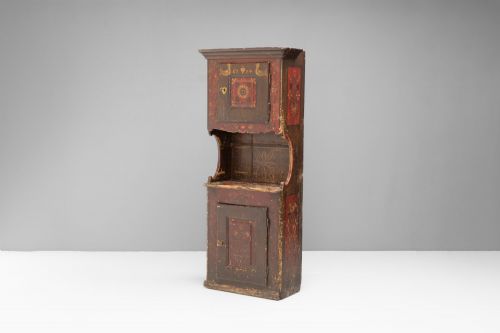
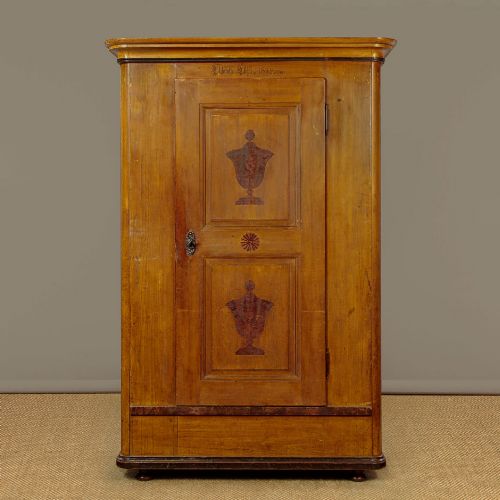
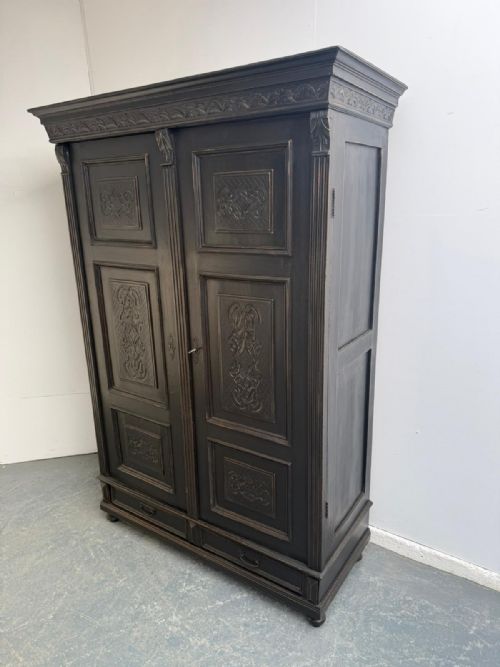
A traditional folk art cupboard is a piece of storage furniture defined by hand-applied surface decoration and vernacular construction. The examples on this page span the nineteenth century, including Georgian and Victorian periods, along with specific regional expressions from Alpine, Scandinavian, Breton, Hungarian, and Indian traditions.
Buyers encounter forms ranging from tall hall wardrobes, armoires, and housekeeper's larder cupboards down to smaller wall cabinets and kitchen dressers. Pine is the predominant wood, often paired with oak or chestnut, carrying original paint, ragwork finishes, or specific maker attribution.
How they were made
Traditional folk art cupboards rely on solid softwood construction, principally pine, combined with hardwoods like oak and chestnut for structural durability. Joinery employs traditional pegged and panelled methods suited to regional workshops rather than industrial production.
Surfaces are finished with layers of paint, decorative pigments, and ragwork techniques applied directly to the timber. Iron, brass, and metal hinges, locks, and handles complete the construction.
Listings feature pieces from the 1800s, 1850, and 1870, utilising pine, oak, chestnut, iron, brass, and paint.
What varies in quality
Quality rests in the survival of original painted surfaces and regional decorative schemes rather than applied ornamentation. Pieces retaining untouched nineteenth-century paintwork and authentic hardware sit at the upper end of the scale.
The integrity of the underlying timber construction and the clarity of regional vernacular style, whether Alpine, Swedish, or Hungarian, determine the distinction between standard utilitarian storage and fine folk art furniture.
Melissa White
The Traditional Folk Art Cupboard Glossary
- Ragwork
- A decorative paint technique using rags or cloths to apply colour and pattern to pine surfaces. This method creates textured, mottled finishes found on nineteenth-century country furniture.
- Armoire
- A large upright cupboard or wardrobe used originally for storing clothes and textiles. These pieces often feature double doors and substantial interior shelving.
- Larder cupboard
- A tall storage unit designed for food preservation and kitchen provisions. These frequently incorporate ventilation panels or deep internal shelving.
- Lit-clos
- A closed bed front originating from regions such as Brittany, where timber panels from traditional enclosed beds are repurposed into cabinets.
- Gustavian
- A Swedish neoclassical style originating in the late eighteenth century and extending through the nineteenth century. It is characterised by pale painted finishes and restrained classical detailing.
Traditional Folk Art Cupboard: Frequently Asked Questions
What is a folk art cupboard?
A folk art cupboard is a hand-painted or regionally decorated storage piece made from pine or oak during the nineteenth century. These items reflect local traditions across Scandinavia, Central Europe, and Britain.
They combine utilitarian storage functions with decorative surface paintwork unique to their geographic origin and period.
How do I date an old cupboard?
Dating relies on construction methods, timber type, and the characteristics of the surface paint. Nineteenth-century pieces often display hand- forged iron hardware and early pigment layers.
Examining the backboards, interior joints, and nail types helps distinguish Georgian and Victorian era pieces from later reproductions.
Are these cupboards made of solid wood?
Traditional country furniture relies on solid timbers such as pine, oak, chestnut, and occasionally regional softwoods. Planks are joined using historical workshop techniques suited to vernacular cabinet making.
Solid construction ensures the stability required for large wardrobes, armoires, and kitchen dressers over centuries of use.
Where were these cupboards made?
The pieces originate from various European and international regions, including Sweden, Hungary, the Austro-Hungarian Empire, Brittany, and India. Each area developed distinct painting styles and structural forms.
Alpine and Scandinavian pieces often feature pale or bright painted pigments, while British and Hungarian examples utilise deeper green or black tones.