

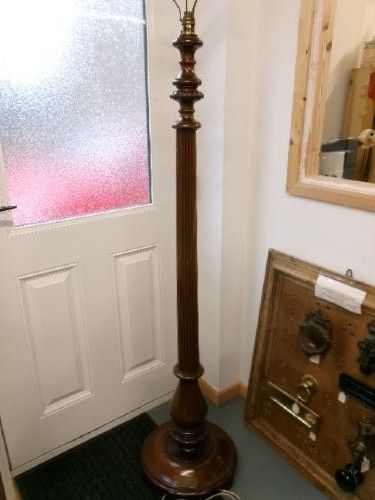
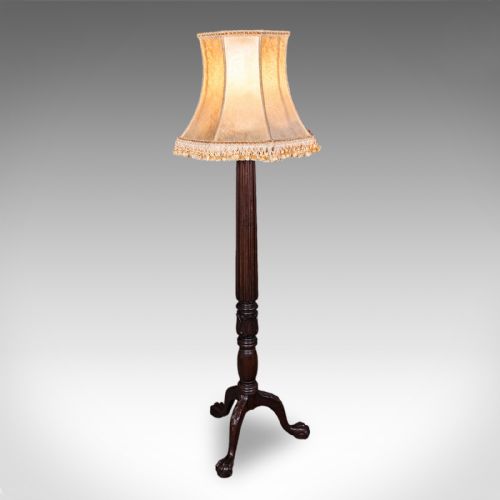
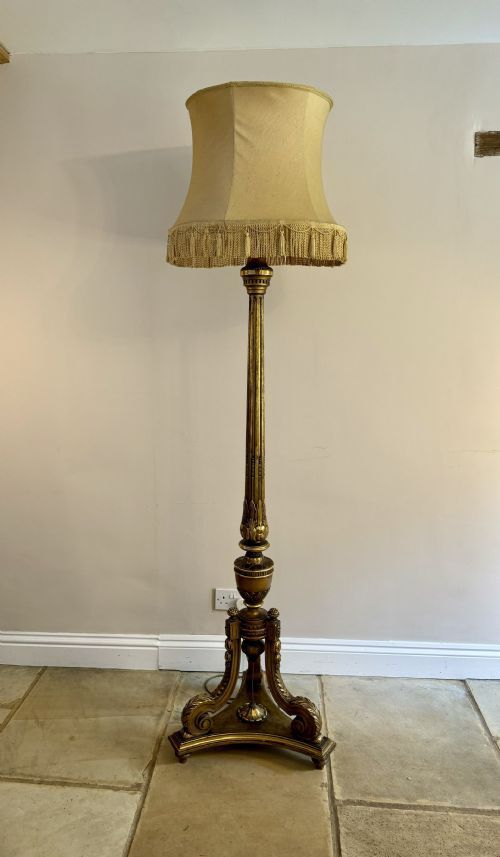
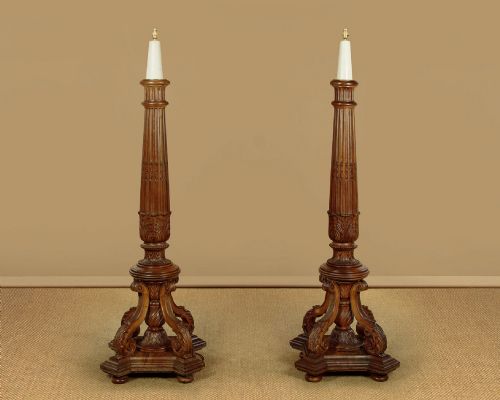



Traditional Fluted Floor Lamp
These traditional fluted floor lamp designs bring classic proportion and warm illumination to a room, offering the height and presence that standard table lighting simply cannot match.
Traditional Fluted Floor Lamp
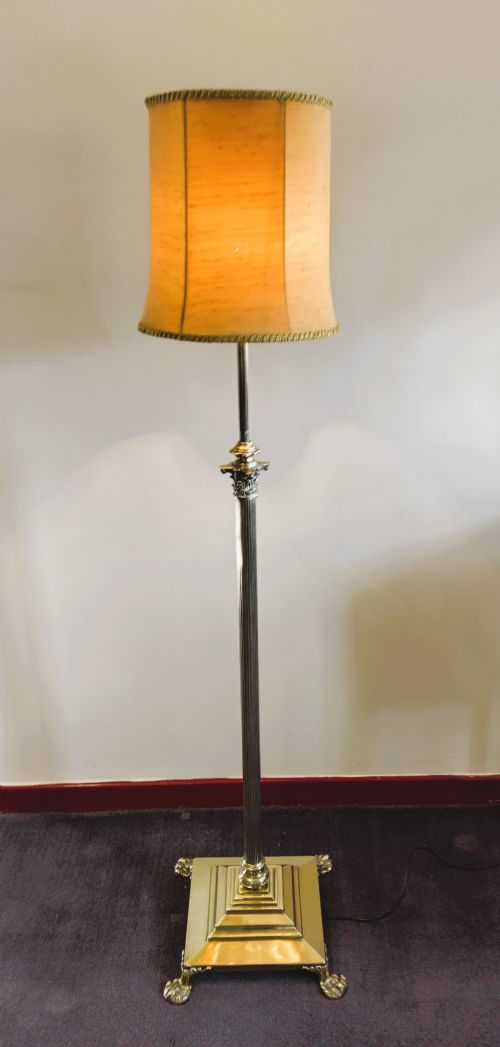
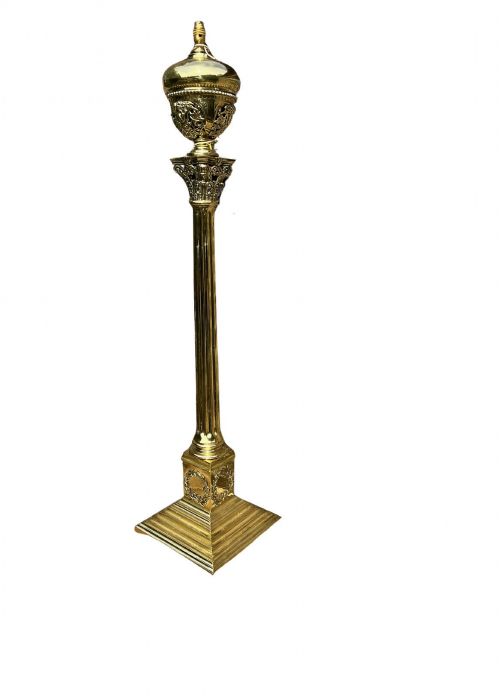
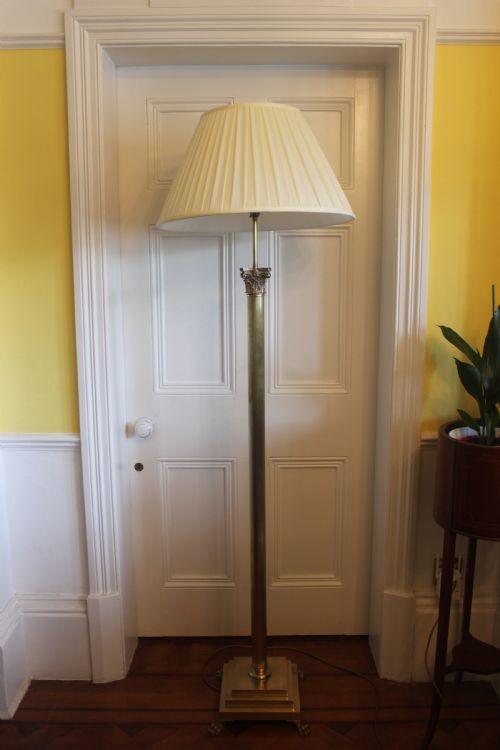
When you search for a traditional fluted floor lamp, you encounter tall upright lighting fixtures designed to stand directly on the floor. These pieces serve as both practical illumination and formal decorative objects within a room.
The examples gathered here span from the mid-Victorian era through the Edwardian period and into the early twentieth century. You will frequently find brass columns alongside carved timber stands in mahogany and walnut.
Makers of these floor lamps drew upon established architectural vocabularies, employing classical columns, reeded shafts, and gilded surfaces. The forms range from simple turned posts to heavy neoclassical designs with adjustable height mechanisms.
How they were made
Makers constructed these standard lamps using turned and carved timbers such as mahogany and walnut, or cast and spun brass components. Solid and cast brass provided the heavy bases necessary to support the height safely, while gilded wood offered decorative splendour for reception rooms.
Carpenters and metalworkers utilised classical turning lathes to create the characteristic fluted and reeded shafts seen across the period. Joinery and threading secured the upright columns firmly to weighted bases, ensuring stability for daily use.
Traditional Fluted Floor Lamp Retail Price Guide 2026
Typical asking prices for traditional fluted floor lamp among the pieces listed under this phrase on Sellingantiques today, from the lower quarter to the upper quarter. They describe what is for sale here now, not the wider market.
The listings here span timber and brass construction, featuring both fixed-column designs and adjustable neoclassical standard lamps from the Victorian and Edwardian eras.
What varies in quality
Quality rests in the weight of the metal and the crispness of the carving on the timber shafts. Heavy cast brass bases demonstrate superior substance compared to lighter spun alternatives, offering better balance and durability.
The refinement of the fluting and the quality of the gilding separate standard production pieces from finer examples commissioned for grander interiors. Details such as functional adjustable height mechanisms further distinguish the better workshops.
The Traditional Fluted Floor Lamp Glossary
- Fluted
- Having parallel shallow grooves running vertically along a shaft or column. This decorative technique originates from classical architecture.
- Standard lamp
- A traditional British term for a floor lamp. These tall fixtures were designed to hold a light source above seated height.
- Neoclassical
- A style drawing inspiration from the classical art and architecture of ancient Greece and Rome. It frequently employs columns and formal symmetry.
- Reeded
- Decorated with parallel convex mouldings that stand proud of the surface. It forms the inverse visual effect of fluting.
- Gilded
- Covered with a thin layer of gold leaf or gold paint. This finish catches candlelight or early electric illumination.
Traditional Fluted Floor Lamp: Frequently Asked Questions
Where should I place a floor lamp?
These lamps suit corners of reception rooms or beside reading chairs where height and downward illumination are beneficial.
Ensure the heavy base rests securely on level flooring away from heavy foot traffic.
How do I date a brass standard lamp?
Examine the weight of the metal, the method of assembly, and the style of the base and column. Victorian and Edwardian examples often feature heavy cast components and distinct period patination.
Wiring and interior fittings can also offer clues, though these are frequently updated for modern safety standards.
What is the difference between fluted and reeded?
Fluting consists of concave grooves cut into the surface of the timber or metal column. Reeded shafts feature raised convex ridges running along the same path.
Both treatments were utilised across various historical periods to add vertical emphasis.