


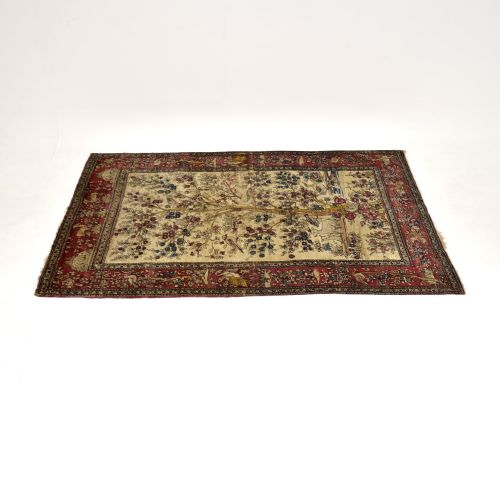
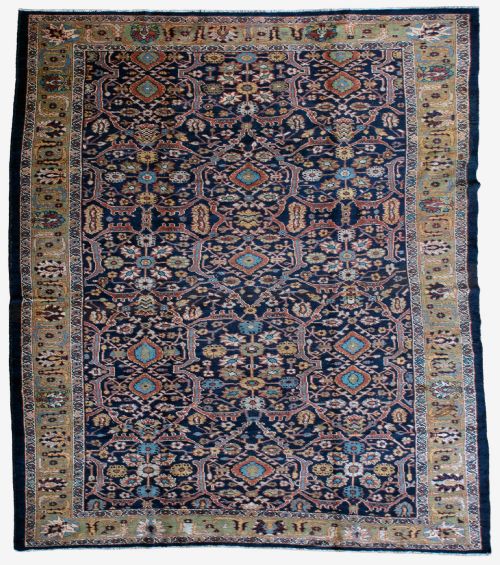
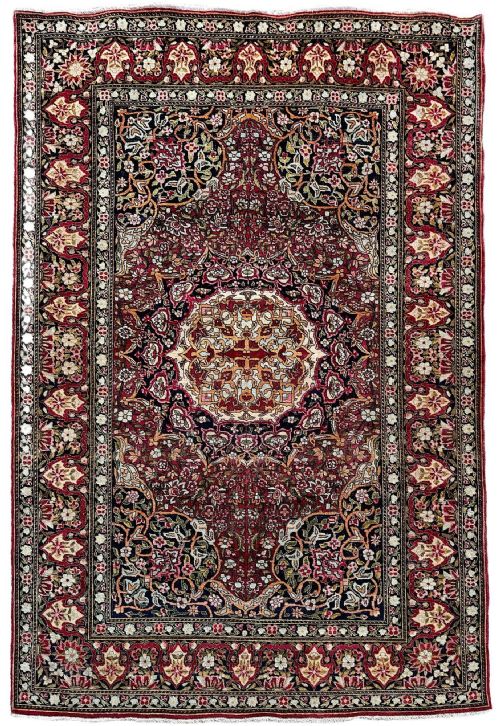
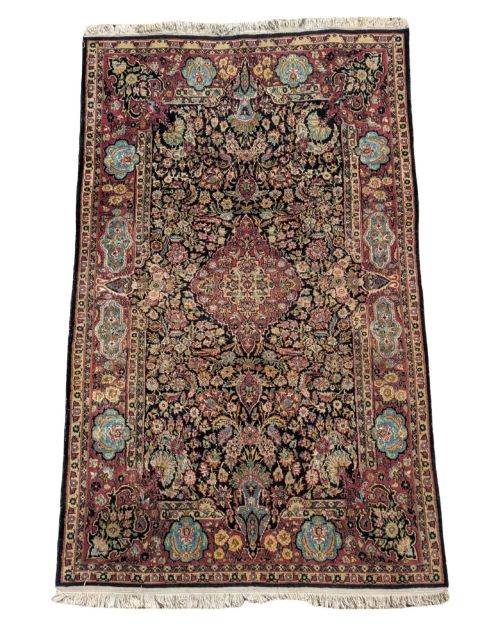
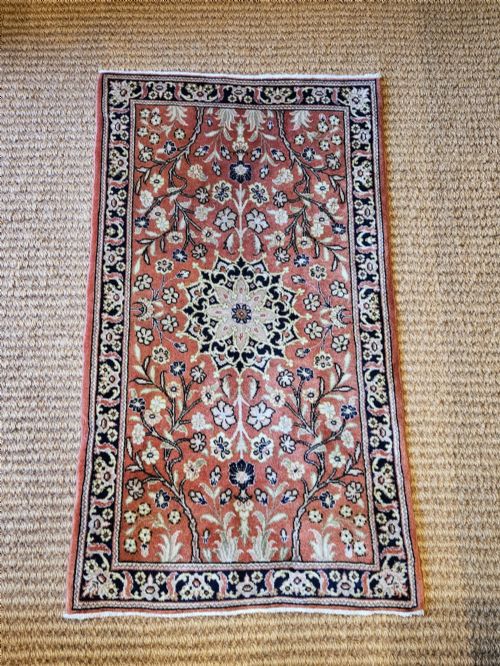
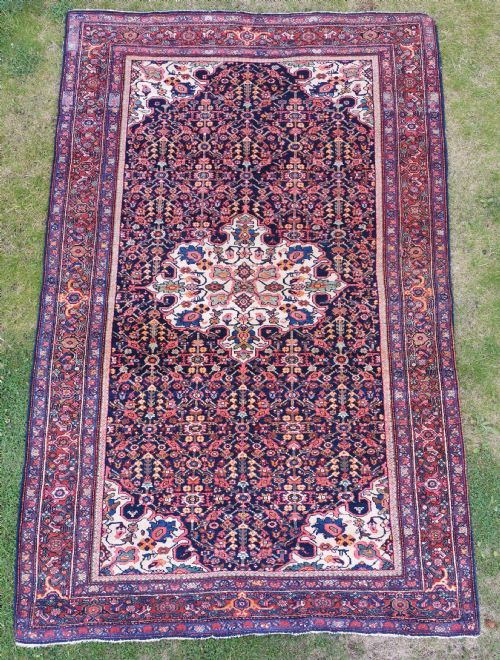
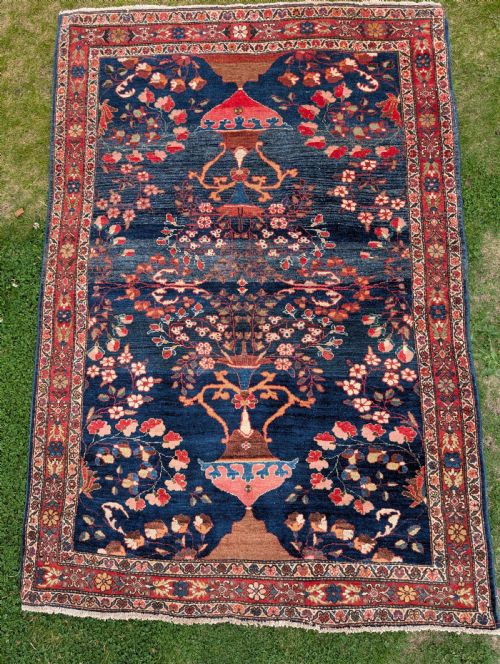
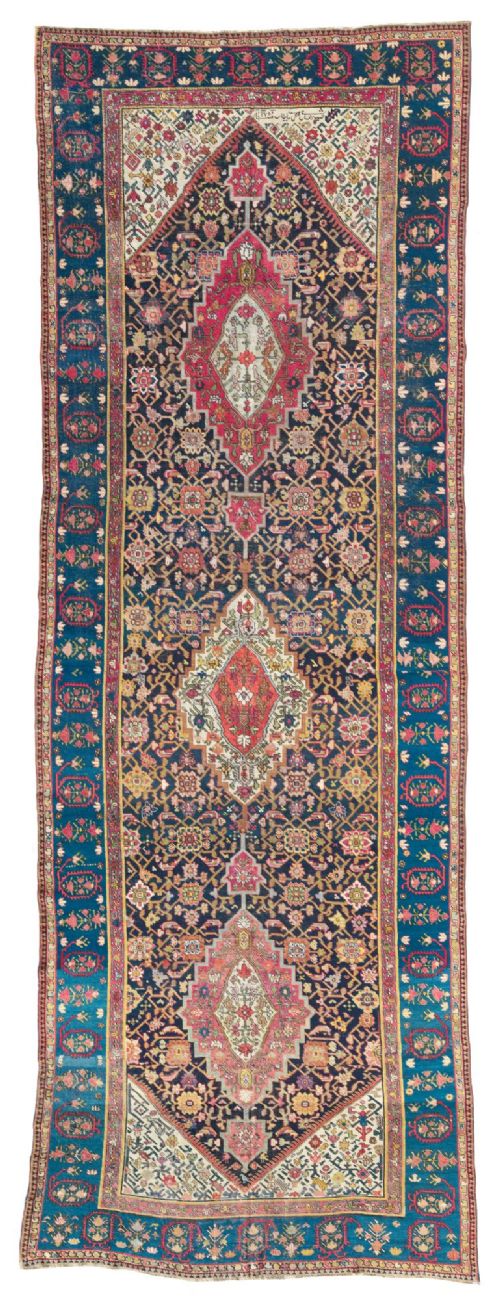
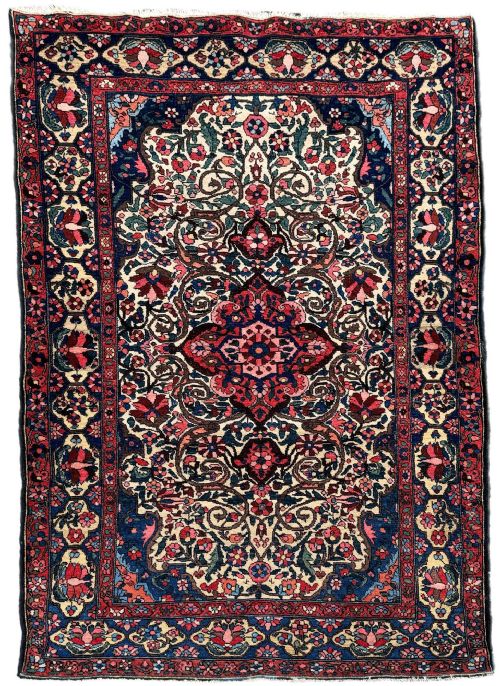
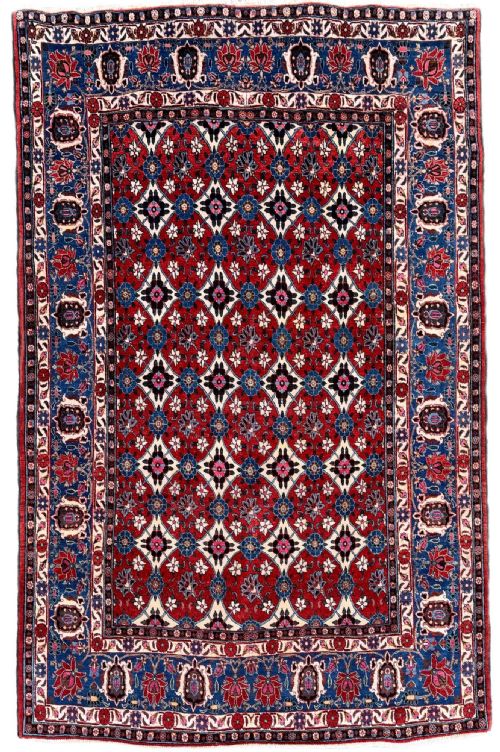
Traditional Floral Persian Carpet
A traditional floral persian carpet brings rich colour and enduring regional artistry into a room, offering deep pile warmth and complex botanical motifs.
Traditional Floral Persian Carpet
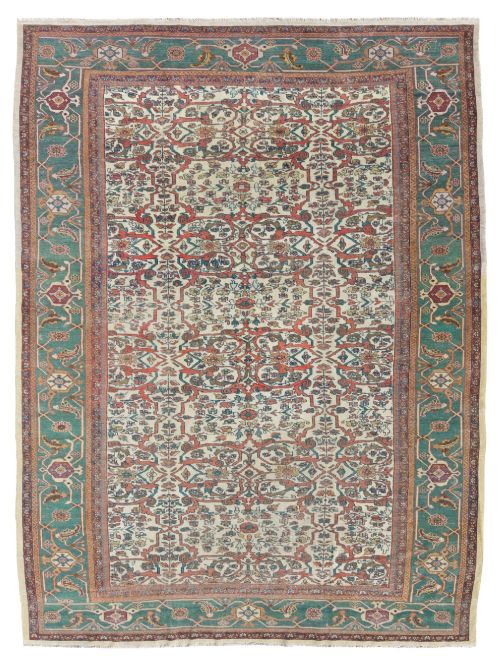
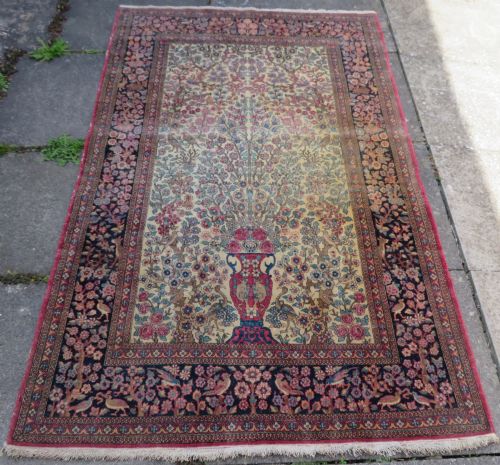
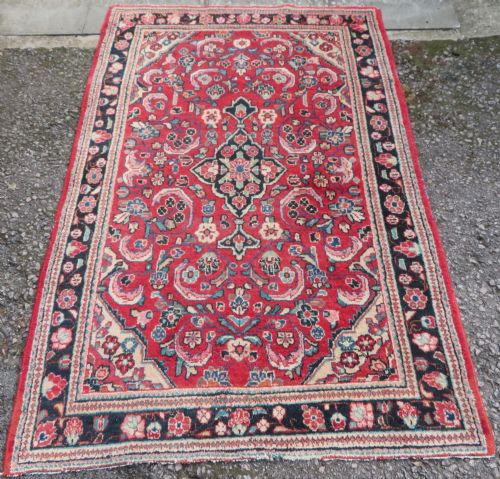
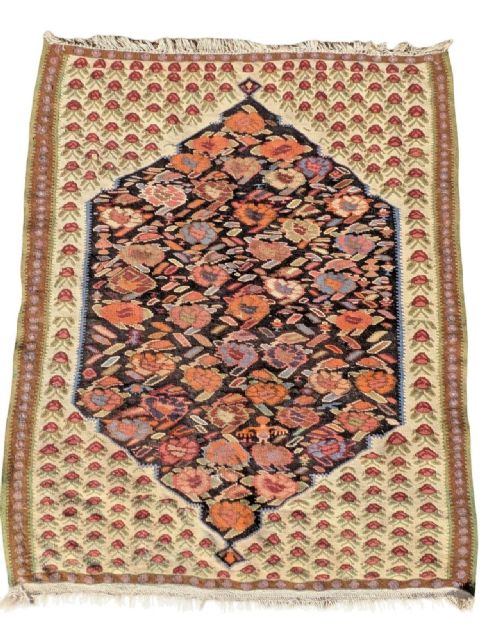
A traditional floral persian carpet is a hand-knotted textile originating from historical Persian weaving centres, featuring intricate botanical patterns, medallions, and vine scrolls. When you search for a traditional floral persian carpet, you encounter room-sized carpets, large area rugs, and smaller hearth rugs spanning various nineteenth and twentieth-century decades.
The selections on this page encompass specific regional types such as Tabriz, Heriz, Mahal, and Kashan, alongside Bakhtiar, Isfahan, Saroukh, and Sultanabad weaves. These pieces manifest diverse formats ranging from compact runner rugs to expansive country house carpets intended for principal reception rooms.
How they were made
Weavers constructed these carpets using wool, cotton, and occasionally silk foundations and piles, tying thousands of individual knots by hand. Wool provided durable resilience for the pile, whilst cotton foundations offered structural stability for the warp and weft threads.
Selected finer pieces incorporated silk highlights or utilised silk entirely to define intricate floral contours and impart a subtle sheen. Vegetable and early aniline dyes established the deep reds, indigos, and neutral tones seen across these historical examples.
Hunting carpets depict miniature animals hiding among floral vines, rewarding close inspection with unexpected wildlife.
What varies in quality
Knot density dictates much of the definition within the floral motifs and geometric borders, separating coarser village pieces from finely detailed city workshop productions. Finer knotting permits crisper rendering of curved lines, vines, and intricate central medallions.
The selection of wool grade and dye consistency influences the handle and visual depth of the pile over decades of use. Superior materials retain their supple texture and rich colouration whereas lesser examples display uneven wear or simpler construction.
Ahmadi
The Traditional Floral Persian Carpet Glossary
- Warp
- The vertical threads stretched tightly on the loom that form the structural foundation of the carpet. Fringe ends originate from these visible parallel cords.
- Weft
- The horizontal threads passed alternately over and under the warp threads after each row of knots. They bind the knots securely into place.
- Medallion
- A symmetrical ornamental design motif centred in the middle of the carpet field. This central element often dictates the surrounding floral arrangement.
- Pile
- The upright cut ends of the knotted yarn that form the usable surface of the rug. Its thickness and material determine the tactile feel underfoot.
- Kilim
- A flat-woven utility textile or rug end lacking a raised pile. These sections utilise intricate geometric weaves without knotting.
Traditional Floral Persian Carpet: Frequently Asked Questions
How do I clean a traditional floral persian carpet?
Professional specialist cleaning is essential to preserve natural wool fibres and historic dye structures. Regular gentle vacuuming without a beater bar prevents dust accumulation within the deep pile.
Avoid household chemical treatments or excessive moisture, which can cause dye bleed and weaken the cotton or wool foundation over time.
Where should I place a traditional floral persian carpet?
These carpets suit low-traffic or moderate-traffic living rooms, dining areas, and studies where their botanical designs can be fully appreciated. Placing them away from direct, harsh sunlight protects the natural dyes from fading unevenly.
Utilising a quality underlay prevents slippage and cushions the foundation against hard flooring surfaces.
How do I identify different regional styles?
Regional types are distinguished by their specific palette, medallion layout, and drawing style. Heriz carpets often present bold geometric interpretations, whereas Tabriz and Kashan pieces favour refined, curved floral compositions.
Examining the density of the knotting and the specific treatment of the border guards helps pinpoint the likely weaving district.
What is the difference between a rug and a carpet?
Carpets generally refer to larger room-sized textiles designed to cover a substantial portion of a floor space. Rugs typically describe smaller formats, runners, or hearth-sized pieces intended for specific localised areas.
Both share identical hand-knotting techniques and regional design vocabularies despite their differences in scale.