

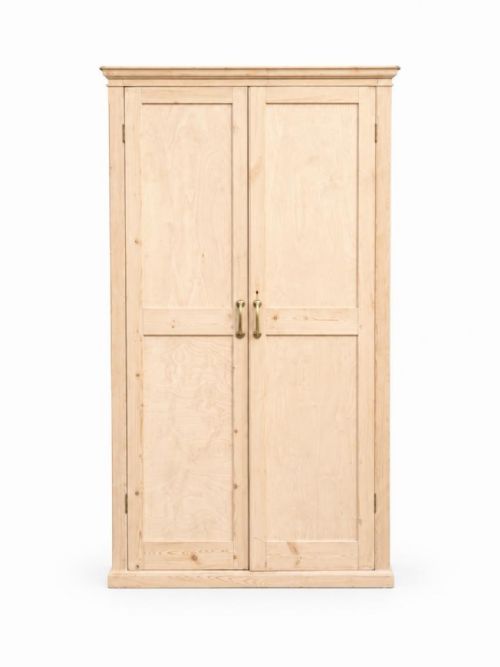
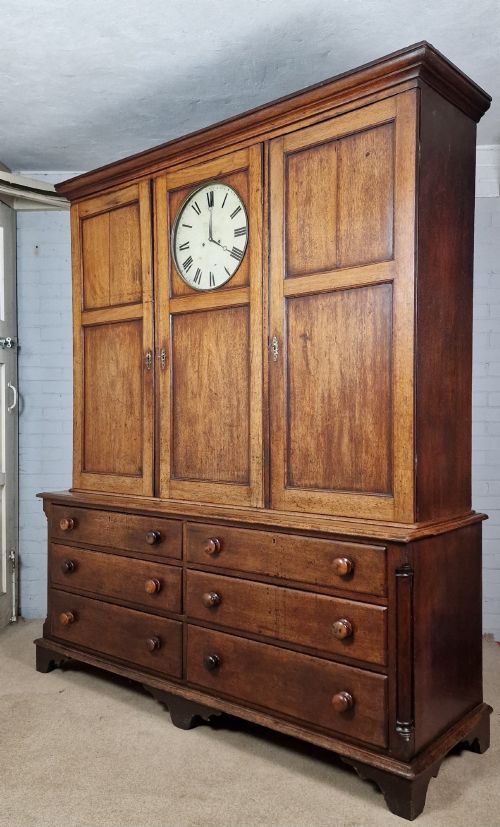
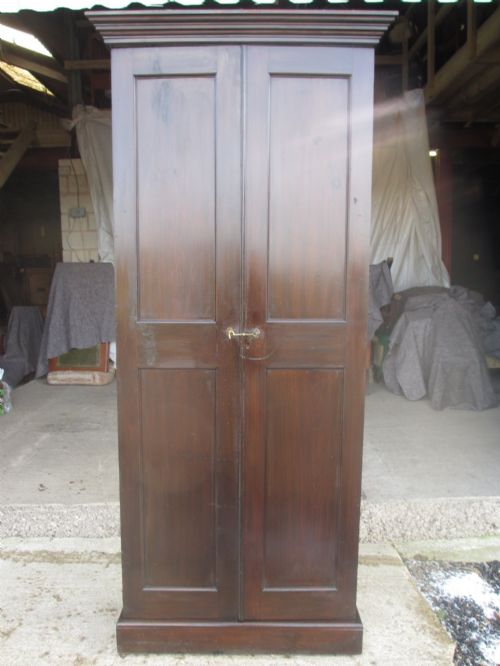
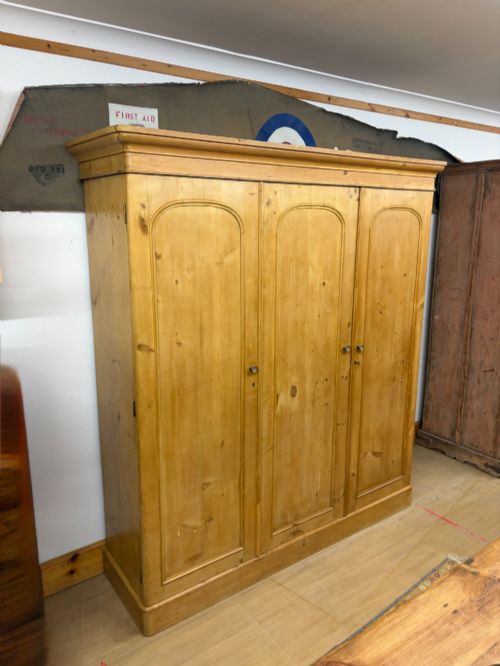


Traditional Fitted Armoire
These traditional fitted armoire pieces bring enduring timber storage to any bedroom, offering generous hanging space and deep internal drawers.
Traditional Fitted Armoire
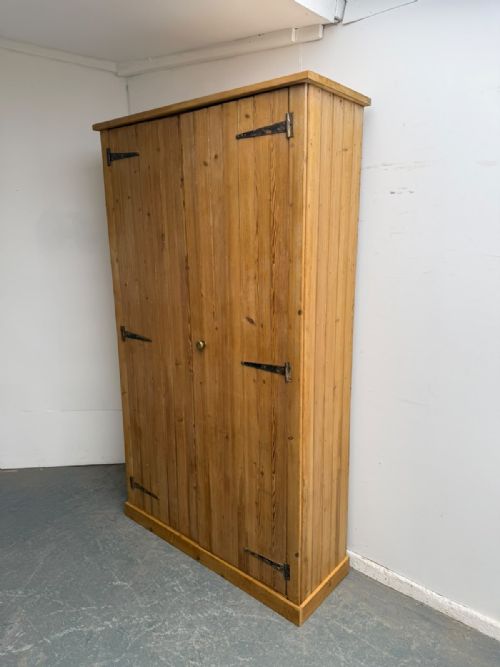
A traditional fitted armoire typically manifests as a substantial wardrobe, linen press, or housekeeper's cupboard from the nineteenth century or earlier. These large storage cabinets provide deep internal compartments for clothing and linens, often combining hanging space with banks of fitted drawers.
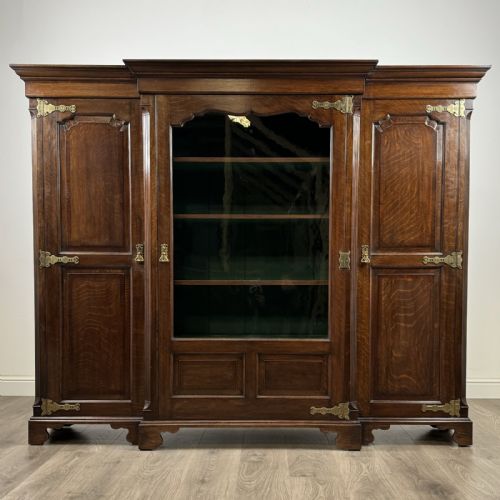
You will most frequently encounter nineteenth-century examples, including Victorian flame mahogany breakfront triple wardrobes and sturdy pine or oak country house cupboards. Styles span from Georgian Country and William IV to Victorian Gothic Revival and Edwardian Chippendale Revival.
The objects serve primarily as grand bedroom storage solutions or utility cupboards, reflecting the domestic requirements of large households through distinct regional and historical cabinet-making traditions.
How They Were Made
Construction relies heavily on solid timber foundations of oak, pine, and mahogany, frequently enhanced with decorative flame mahogany veneer or burr walnut surfaces. Cabinet makers utilised traditional joinery techniques to build breakfront triple wardrobes and multi-door compactums designed to be fitted or assembled within large rooms.
Hardware details typically include brass fittings and glass elements, alongside original painted finishes on country house pieces. These materials ensure structural stability across large pieces such as four-door wardrobes and housekeeper's cupboards.
Traditional Fitted Armoire Retail Price Guide 2026
Typical asking prices for traditional fitted armoire among the pieces listed under this phrase on Sellingantiques today, from the lower quarter to the upper quarter. They describe what is for sale here now, not the wider market.
Scullery cupboards and housekeepers' larders preserve the faint, comforting aroma of beeswax and old timber across the centuries.
What Varies in Quality
Quality separates simple utilitarian storage from high-status cabinet work through the choice of timber and the complexity of the exterior facade. Flame mahogany veneer and burr walnut finishes indicate a higher grade of manufacture compared to standard pine or oak utility cupboards.
The architectural presence of breakfront designs and the sophistication of revival styles, such as Edwardian Chippendale Revival or Victorian Gothic Revival, distinguish finer workshop output from basic country house pieces.
The Traditional Fitted Armoire Glossary
- Armoire
- A tall wardrobe or cupboard used primarily for storing clothes. Traditionally fitted with internal shelves or hanging rails.
- Linen Press
- A tall storage cabinet featuring upper shelving for textiles and lower drawers for smaller garments. These pieces date frequently from the nineteenth century.
- Compactum
- A large wardrobe combining hanging space, shelves, and multiple drawers in one unified piece of furniture. They offer comprehensive bedroom storage.
- Breakfront
- A cabinet design where the central section projects forward from the flanking outer sections. This architectural feature enhances the visual depth of large wardrobes.
- Burr Walnut
- A highly figured timber veneer prized for its swirling grain patterns. Cabinet makers applied it to decorative surfaces on high-status nineteenth-century pieces.
Traditional Fitted Armoire: Frequently Asked Questions
What is a traditional fitted armoire used for?
These large timber pieces provide substantial bedroom and household storage. They accommodate folded linens, hanging garments, and miscellaneous household items.
Historically, larger examples such as housekeeper's cupboards and triple wardrobes served major domestic roles in country houses and large Victorian residences.
How do I identify a Victorian wardrobe?
Victorian wardrobes often feature dense timbers like flame mahogany or burr walnut alongside distinct revival styles. Look for architectural elements reflecting Gothic or later revival movements.
Construction from this era typically employs solid mahogany, oak, or pine with substantial brass hardware and deep internal drawer configurations.
What timber was used for these cupboards?
Cabinet makers utilised a variety of woods including solid oak, pine, and mahogany. Finer pieces frequently display decorative veneers like flame mahogany or burr walnut.
Country and utilitarian pieces tended to rely on sturdy pine and oak, sometimes with original painted finishes applied for domestic settings.
Are these wardrobes easy to move?
Many nineteenth-century wardrobes and cupboards are exceptionally heavy and substantial structures. Larger multi-door and breakfront formats were built to be stationed permanently in large bedrooms.
Some examples were designed as fitted furniture or built in sections to assist with positioning within period properties.