


Traditional Fireplace Surround Rail
A traditional fireplace surround rail anchors a hearth with enduring metalwork and fitted leather, offering both a physical barrier and fireside seating.
Traditional Fireplace Surround Rail
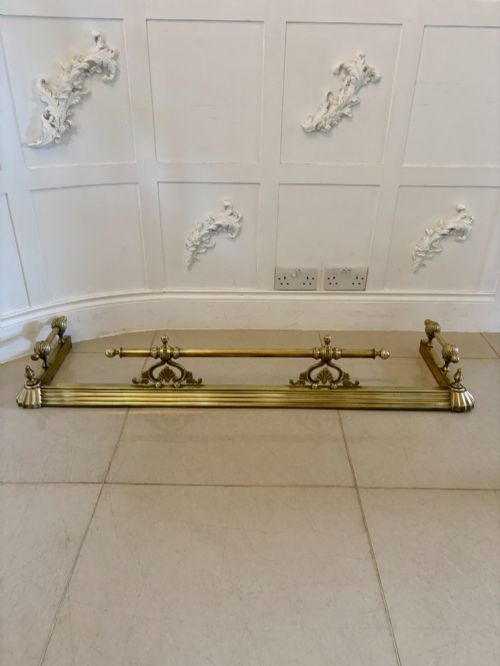
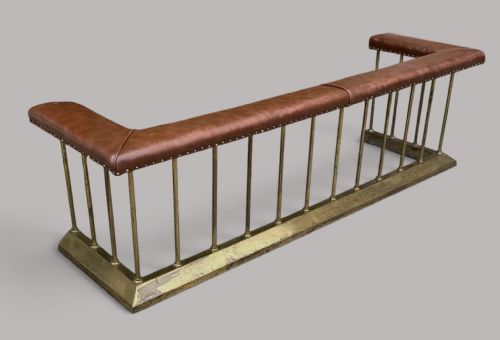
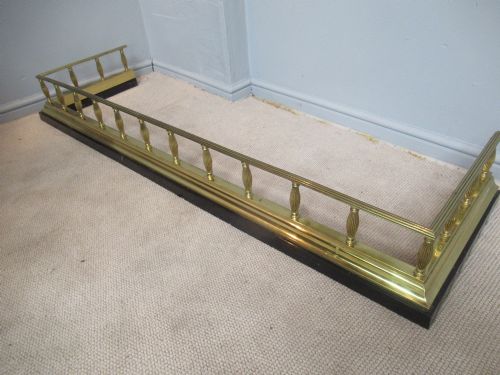
A traditional fireplace surround rail appears primarily as a club fender or standard fire fender, combining functional hearth protection with low seating. These pieces emerge chiefly from the Victorian and Edwardian eras, spanning the nineteenth and early twentieth centuries.
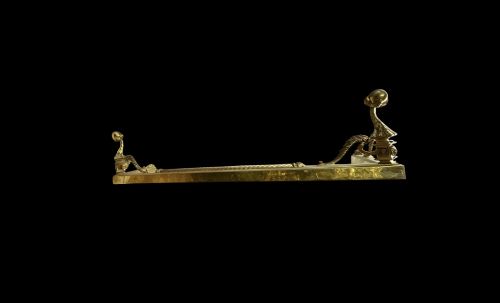
The inventory on this page showcases heavy brass, iron, and steel construction, frequently paired with upholstered leather top rails. Buyers encounter robust specimens incorporating pierced metalwork, scrolled designs, and occasional decorative figural elements like lions.
Examples range from restrained nineteenth-century brass frames to early twentieth-century Art Deco heavy iron variations. The forms maintain a consistent purpose, enclosing the hearth while offering a practical perch close to the fire.
Materials and construction methods
Makers utilised solid brass, iron, and steel to build the heavy structural frames required to withstand hearth heat and daily use. Brass components appear both polished and in natural finishes, often combined with blackened steel or iron for visual contrast.
Listings on this site span the nineteenth and early twentieth centuries, featuring brass, iron, steel, and leather across Victorian and Edwardian periods.
Distinctions in quality and execution
Quality reveals itself in the weight of the metal gauge and the substantial feel of the structural frame. Fenders utilising heavy gauge brass and thick iron stand apart from lighter productions through their sheer heft and rigid stability.
The refinement of decorative detailing, from crisp pierced metal panels to finely scrolled brasswork, separates standard items from superior pieces. Additionally, the integration of mature leather upholstery with precise stud work indicates the level of craftsmanship invested in the original piece.
The Traditional Fireplace Surround Rail Glossary
- Club fender
- A low, metal-framed hearth fender featuring upholstered leather seats along the top rails. This form became popular in gentleman's clubs and large domestic drawing rooms during the Victorian period.
- Curb fender
- A low protective barrier placed around the hearth to contain stray embers and ash. These metal frames sit directly on the floor surrounding the fireplace opening.
- Pierced metal
- Sheet metal perforated in decorative patterns to allow heat circulation and visual lightness. This technique appears frequently on nineteenth-century fender panels.
- Gauge
- The thickness of the sheet metal or tubing used in the construction of the frame. Higher weight gauges denote superior structural substance.
Traditional Fireplace Surround Rail: Frequently Asked Questions
What is a club fender?
A club fender is a specific type of hearth surround featuring a low metal frame with padded leather seats along the top. They were designed to provide comfortable seating close to the warmth of the fire.
These pieces combine functional hearth protection with domestic furniture, making them a central feature of period sitting rooms.
How do I date a brass fender?
Dating relies on observing construction methods, material combinations, and stylistic markers such as Victorian scrollwork or Art Deco lines. Heavier gauges and specific patination on the brass and leather also offer clues to the era.
Earlier nineteenth-century pieces often display hand-finished details, whereas twentieth-century examples may show more standardised industrial fabrication.
Are these fenders safe for everyday use?
These metal and leather structures are built from robust materials like iron, steel, and brass designed originally for active hearths. Their solid construction makes them durable additions to functioning fireplaces.
Buyers should ensure the dimensions align with their specific hearth space and verify the condition of the internal frame before regular use.
How do I care for the leather rails?
The leather top rails require gentle cleaning and occasional conditioning to maintain the material's suppleness and mature finish. Avoiding excessive heat exposure helps preserve the integrity of the vintage upholstery.
Regular dusting of the brass and iron framework prevents dust accumulation in intricate pierced patterns and scrollwork.