


Traditional Fireplace Companion Set
A traditional fireplace companion set brings order to the hearth, combining essential ironmongery with the warm gleam of period brass.
Traditional Fireplace Companion Set
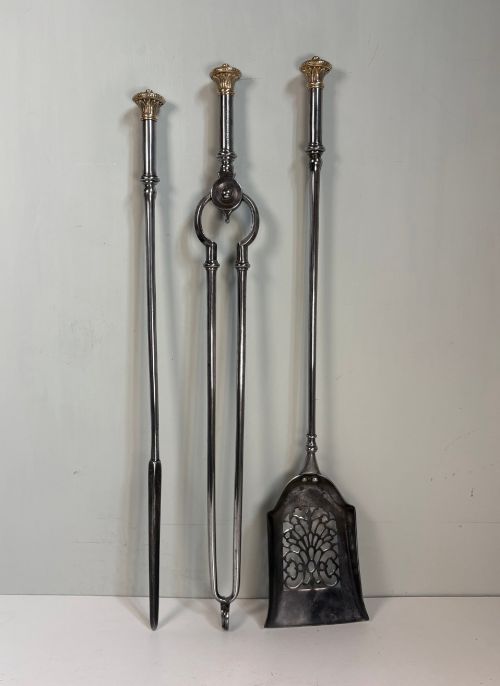
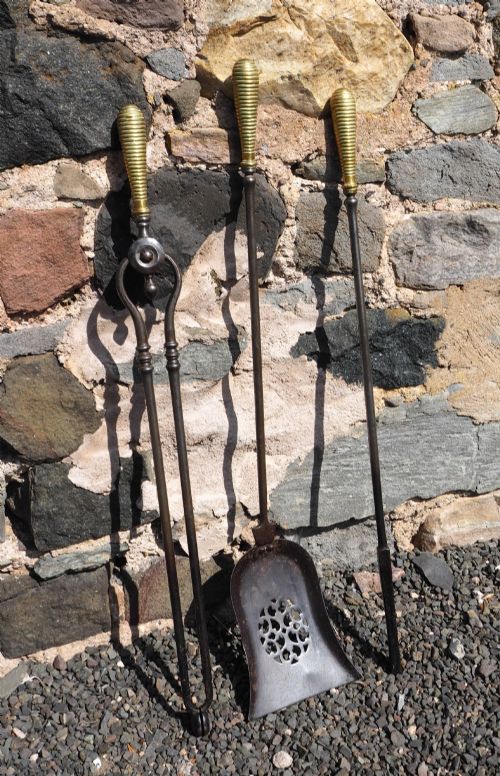
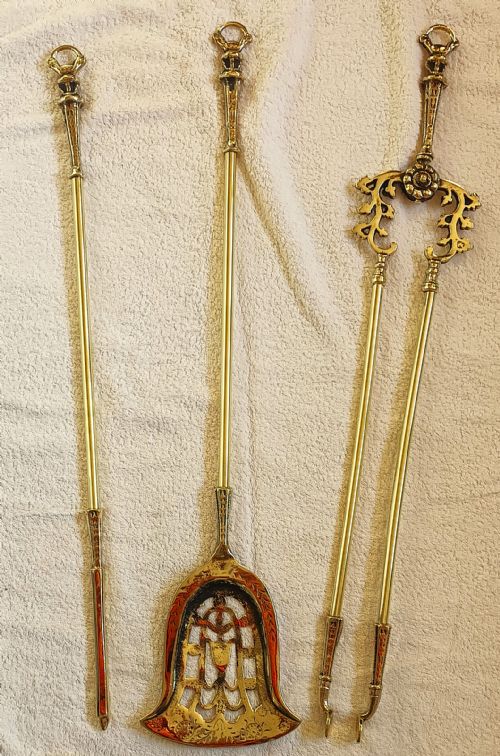
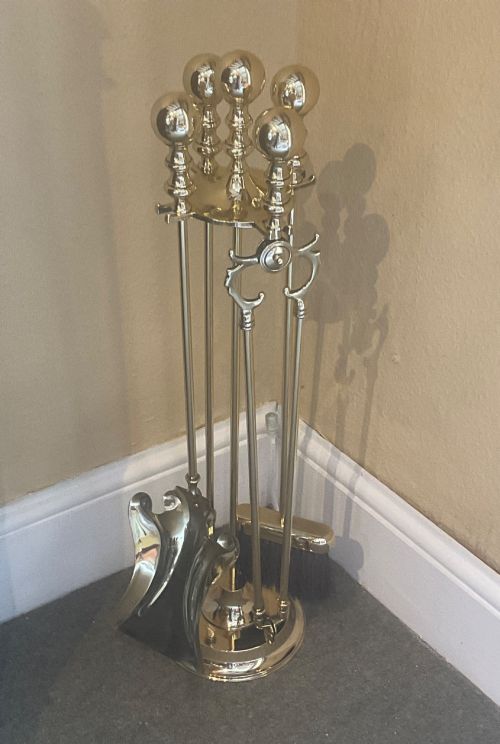
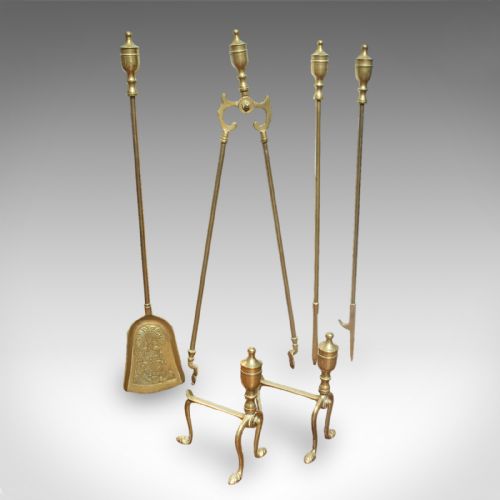
When you search for a traditional fireplace companion set, you encounter groupings of hearth implements designed to tend a coal or wood fire. These collections typically comprise a shovel, tongs and a poker, frequently housed alongside fire dogs or a fender.
The versions most commonly met on this page date from the Victorian and Edwardian eras, rendered in polished brass or robust iron. English and French country house examples dominate, reflecting domestic routines of the nineteenth and early twentieth centuries.
Sets range from simple utilitarian groupings intended for daily use in modest rooms to ornate Rococo and Gothic Revival suites designed for formal reception rooms. Each configuration serves the practical maintenance of the hearth while establishing a decorative focal point in the room.
How they were made
Smiths and founders utilised cast iron, wrought iron, steel and brass to fabricate these implements, often combining materials within a single suite. Steel and iron provided the structural strength and heat resistance required for pokers and shovels, while brass supplied decorative handles and stands.
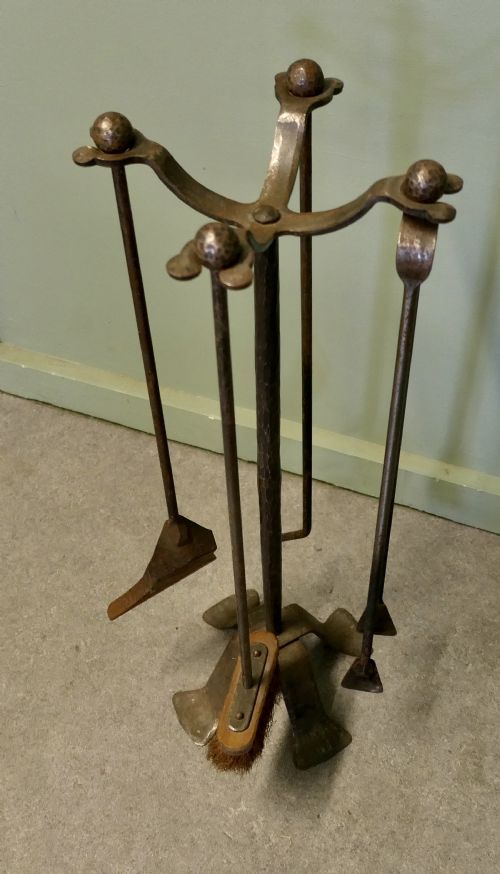
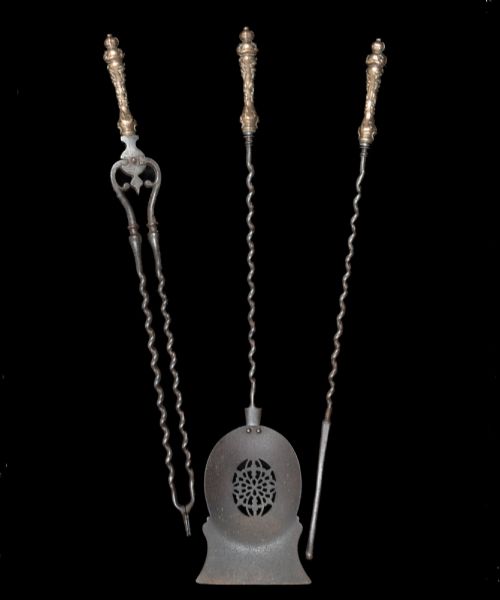
Techniques varied from hand-beaten wrought iron work to precision casting and turned metal components. Makers incorporated decorative flourishes such as rope twist handles and cast scrollwork, uniting utility with period aesthetic movements like Arts and Crafts.
Some nineteenth-century pokers have survived countless winters while their original shovels quietly retired to the scrap heap.
What varies in quality
The distinction between standard utility items and finer examples rests on the weight of the metal and the crispness of the casting. Heavier gauges of brass and solid steel provide durability and balance in the hand during regular use.
Finishing details elevate certain suites, notably the precision of rope twist turned handles, the integration of matching fire dogs, and the harmonious stylistic unity across all three tools and their companion stand.
The Traditional Fireplace Companion Set Glossary
- Companion set
- An assembled or matched grouping of fireside tools, usually comprising a poker, shovel and tongs, kept together beside the hearth.
- Fire irons
- The individual metal implements used for stoking, adjusting and clearing a coal or wood fire.
- Fire dogs
- Andirons placed horizontally on the hearth to support burning logs, frequently found accompanying period tool sets.
- Rope twist
- A decorative spiral carved or turned pattern adorning the handles of brass fire irons.
- Gothic Revival
- A nineteenth-century architectural and decorative style drawing inspiration from medieval ecclesiastical design.
Traditional Fireplace Companion Set: Frequently Asked Questions
What tools are in a companion set?
A standard set contains three primary implements: a poker for adjusting fuel, a shovel for clearing ash, and tongs for placing fresh wood or coal onto the fire. Many groupings also include a stand or pair of fire dogs to complete the hearth arrangement.
Historically, these tools were kept immediately adjacent to the fireplace for constant daily access. The specific combination varied depending on whether the hearth burned wood or coal.
How do I date a brass companion set?
Dating relies upon stylistic markers and manufacturing techniques visible in the handles and metal finishes. Victorian and Edwardian sets frequently exhibit cast brass components, rope twist details, and specific revival motifs like Rococo scrollwork.
Earlier eighteenth-century examples tend toward simpler hand-forged steel and iron construction. Examining the weight, tool shapes, and accompanying fire furniture helps establish the correct period.
Were these sets used daily?
These implements performed heavy domestic service, tending coal grates and wood fires in period homes. Sturdy construction in iron, steel and brass ensured they withstood intense hearth temperatures and frequent handling.
Despite active service, surviving sets often retain good definition in their decorative handles. Many were displayed prominently in reception rooms, combining practical utility with polished presentation.
What is the difference between iron and brass sets?
Iron and steel tools provided the rugged durability needed for heavy stoking and ash removal. Brass components offered a brighter, more decorative appearance suited to formal drawing room hearths.
Many period sets combined both metals, using steel shafts for strength and brass for handles and display stands. This dual construction balanced functional resilience with domestic elegance.