



Traditional Fire Back
A traditional fire back protects the hearth wall while throwing heat forward into the room, grounding an open fireplace with proper period weight.
Traditional Fire Back
A traditional fire back sits against the masonry at the back of an open hearth, serving both a decorative and a practical purpose in the chimney. The examples encountered on this page span the Georgian and Victorian eras, alongside later pieces from the early twentieth century.
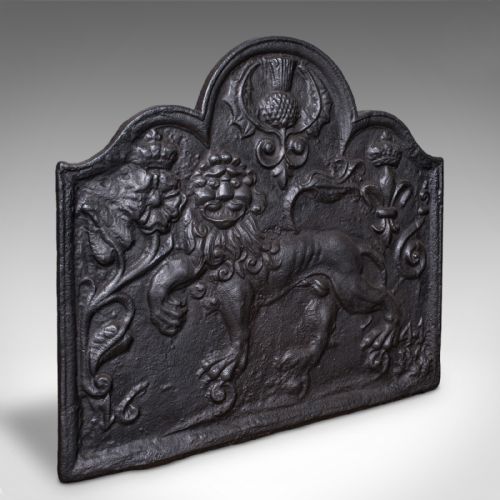
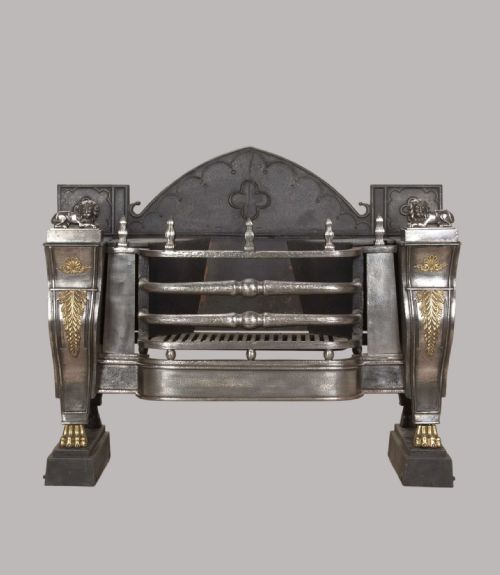
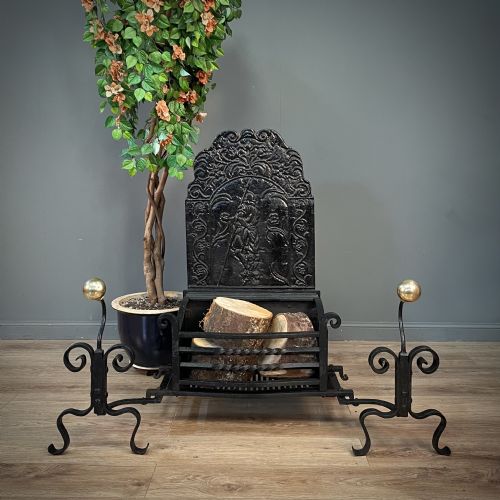
Most entries take the form of heavy cast iron plates or complete fire baskets with integrated grates, firebacks, and fenders. Designs range from plain utilitarian panels to elaborate pieces featuring relief mouldings, neoclassical motifs, and tree of life patterns.
How they were made
Foundries produced these items using traditional sand casting techniques, pouring molten metal into moulds to create thick iron panels capable of withstanding intense heat. Many incorporate wrought iron elements in associated grates, baskets, and fenders to provide structural strength alongside the cast components.
Makers occasionally utilised brass for decorative highlights on assemblies that combined grates and fenders with the main fireback. The resulting objects possess substantial physical heft designed to endure decades of solid fuel fires.
Traditional Fire Back Retail Price Guide 2026
Typical asking prices for traditional fire back among the pieces listed under this phrase on Sellingantiques today, from the lower quarter to the upper quarter. They describe what is for sale here now, not the wider market.
Listings span Victorian, Georgian, and nineteen-twenties periods, dominated by heavy cast iron and wrought iron forms.
What varies in quality
Quality rests in the crispness of the cast relief work and the thickness of the iron plate, with superior pieces displaying sharp detail in patterns such as neoclassical urns or botanical motifs. Lighter, plain panels represent utility versions made simply to shield the brickwork.
The presence of matching elements like andirons, grates, or fenders elevates the assembly from a standalone plate to a complete fireplace suite. Proportion and weight dictate the presence of a piece, distinguishing grander drawing room fittings from smaller bedroom grates.
The Traditional Fire Back Glossary
- Fire back
- A heavy metal plate placed at the back of a fireplace to reflect heat into the room and protect the rear wall from intense flames.
- Fire grate
- An iron basket or frame that holds burning fuel above the hearth floor to allow proper airflow beneath the fire.
- Andirons
- A pair of horizontal metal supports used in a fireplace to hold logs above the hearth.
- Fender
- A low metal guard placed in front of a fireplace to contain sparks and ash from spilling onto the floor.
- Neoclassical revival
- A decorative style drawing inspiration from classical Greek and Roman architecture, frequently seen in nineteenth century ironwork.
Traditional Fire Back: Frequently Asked Questions
What is a traditional fire back used for?
A traditional fire back absorbs and radiates heat back into the room while protecting the masonry behind an open fire from cracking under extreme temperatures.
Over time, these heavy iron plates became focal points of hearth decoration, carrying heraldic, floral, or classical relief designs.
How do you install a fire back?
The plate stands upright against the rear brickwork of the fireplace, usually supported by feet or tilted slightly backward for stability.
Larger specimens are exceedingly heavy and often require careful placement before any grate or basket is positioned in front of them.
Are fire backs only made of cast iron?
Cast iron is the primary material used for the main backplate due to its ability to withstand prolonged heat without warping.
Associated components like grates, fenders, and fire baskets frequently combine cast iron with wrought iron and occasional brass elements.
How do I date an antique fire back?
Dating relies on stylistic clues such as neoclassical motifs, Victorian registration marks, or simpler Georgian proportions, alongside the manufacturing texture of the iron.
Many pieces lack maker signatures, requiring comparison of their relief casting style with established period design epochs.