


Traditional Farmyard Art
Traditional farmyard art captures the daily life of the countryside through oil paintings and watercolours spanning the nineteenth and early twentieth centuries.
Traditional Farmyard Art
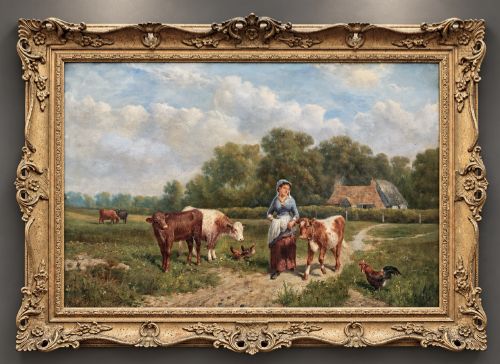
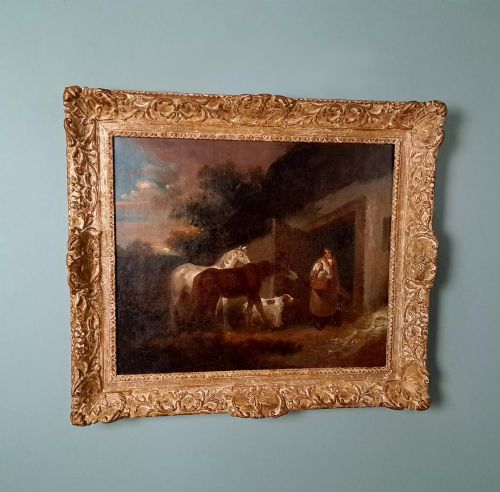
Traditional farmyard art depicts rural scenes populated by farm animals, horses, poultry and agricultural labourers at work in nineteenth and early twentieth century Britain. These works range from detailed pastoral oil paintings to atmospheric watercolours of barns, stack yards and milking times.
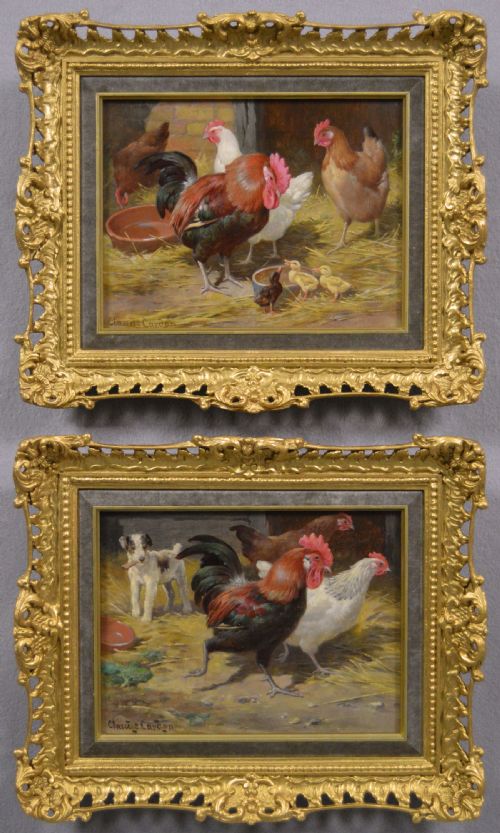
Buyers on this page encounter framed original works created during the Victorian and Edwardian periods, featuring subjects such as horses, pigs, cattle, hens and cockerels within landscape settings. The selection spans nineteenth century realism and British pastoral styles executed by established period painters.
How They Were Made
Artists painted these rural subjects primarily in oil paint on canvas or applied watercolour to paper, utilising wooden stretchers and occasionally ornate gesso and giltwood frames. The technique relies on layered pigments to build depth in landscape foliage, animal coats and rustic architectural elements like cart sheds and barns.
The physical construction typically involves stretched canvas secured to timber frames, protected by traditional framing materials that preserve the pigment and paper over decades of display.
Listings combine nineteenth century oil paintings on canvas with watercolours depicting British rural life and agricultural farmyards.
What Varies in Quality
Quality rests upon the artist's ability to render animal anatomy convincingly and capture natural light within a rural landscape, distinguishing master practitioners from competent regional painters. Compositional balance between the central livestock and the surrounding farm architecture determines the visual strength of each canvas.
The condition of the pigment, the preservation of the original canvas support and the integrity of any associated giltwood frame all influence the standing of an individual painting within the broader tradition.
William Joseph Shayer Senior·Claude Cardon·Herbert Royle·John Frederick Herring Jnr·Percival Glenfern·Pierre Emmanuel Dielmans·Julius Caesar Ibbetson·Arthur Charles Dodd·Owen Bowen·Edgar Hunt·J L VAN Leemputten·John R. K. DUFF·JOHN PERCY COOKE·Arthur Walker Redgate·Ernest Higgins Rigg·Georgina Lara·George Morland·Thomas Blinks·Fred Lawson·James William Booth·Kershaw Schofield
The Traditional Farmyard Art Glossary
- Canvas
- A heavy woven fabric used as a surface for oil painting. It is stretched tightly across a wooden frame before the artist applies ground and pigment.
- Gesso
- A plaster-like mixture applied to wood or canvas as a prepared surface for painting, or moulded to form decorative relief on traditional picture frames.
- Watercolour painting
- Works executed using water-soluble pigments on paper. This medium produces translucent washes that capture light differently from opaque oil paints.
- Pastoral
- Pertaining to rural life and scenery, particularly the idealised or picturesque depiction of agricultural landscapes, farm animals and country laborers.
Traditional Farmyard Art: Frequently Asked Questions
What subjects appear in traditional farmyard art?
These works feature farm animals such as horses, cattle, pigs, goats, ducks and cockerels gathered near barns, cart sheds and farmyards. Human figures such as milkmaids and farmers also appear alongside agricultural landscapes.
Scenes range from quiet pastoral settings to busy farmyard yards populated by poultry and working horses.
Which periods do these paintings date from?
The pieces span the eighteenth, nineteenth and early twentieth centuries, with a strong representation of Victorian and Edwardian pastoral painting.
Artists working during these eras recorded changing rural practices before mechanisation transformed the British countryside.
How do I hang and display these paintings?
Display oil paintings and watercolours away from direct sunlight and excessive humidity to protect the canvas, paper and pigments. Ensure the wall structure can support the weight of framed canvas works.
Traditional giltwood frames complement the period aesthetic and protect the edges of the canvas from physical knocks.
What is the difference between oil and watercolour farmyard art?
Oil paintings utilise oil-based pigments on stretched canvas, offering rich colour depth and a textured surface. Watercolours use water-soluble pigments on paper, producing lighter, translucent effects.
Oils were typically framed with heavy wooden or gilt surrounds, whereas watercolours require glazing to protect the paper surface.