


Traditional Fabric Shade Lamp
These traditional fabric shade lamps bring warmth and character to a room, combining period stands with soft lighting.
Traditional Fabric Shade Lamp
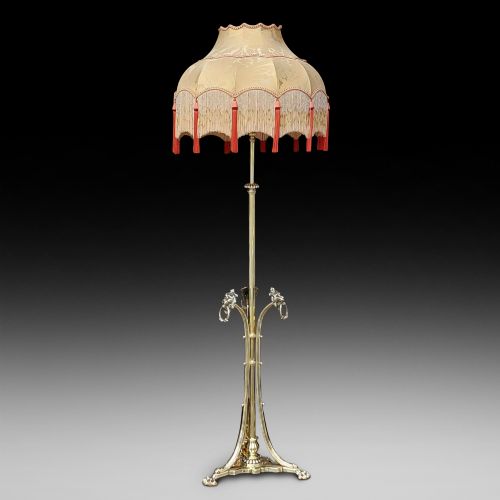
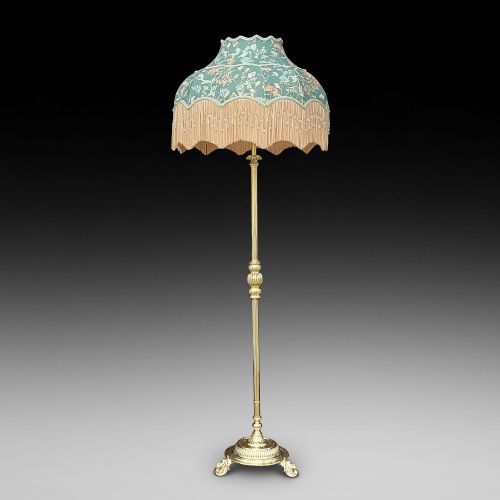
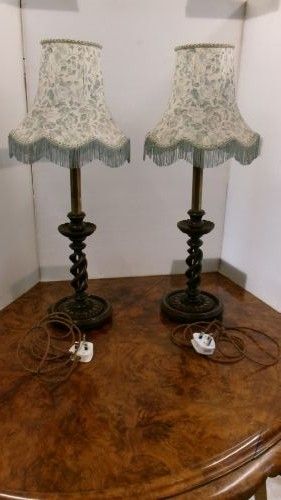
A traditional fabric shade lamp combines a period stand, such as a brass column or a carved wooden pillar, with a fabric shade to diffuse light. These pieces span from the Victorian and Edwardian eras into the early twentieth century, offering robust construction and classic proportions.
The most common examples on this page are brass table lamps and standard lamps, frequently featuring columnar designs or adjustable heights. Alongside these, wooden forms in mahogany and oak appear, often paired with silk shades, fringe details, and giltwood accents.
Makers and designers from the nineteenth and early twentieth centuries drew on neoclassical, empire, and English country styles to shape these fittings. Buyers find both floor-standing standard lamps and compact table models suitable for domestic interiors.
How they were made
Metal standards utilise cast and turned brass, often shaped into classical architectural columns such as the Doric or Corinthian orders. These heavy metal bases provide necessary stability for upright floor lamps and taller table models.
Wooden stands employ carved mahogany and oak, shaped on lathes or hand-carved with traditional decorative motifs. Giltwood variants apply thin layers of gold leaf over a prepared base to achieve a decorative surface finish.
Shades incorporate fabrics like silk and textured textiles, frequently finished with fringing and mounted over internal wire frames. These materials work together to soften the light output while maintaining period aesthetic integrity.
Listings feature items from the Victorian, Edwardian, and 1920s periods, utilising brass, oak, mahogany, and giltwood.
What varies in quality
The heft and casting quality of the brass or the density of the carved timber set the baseline for a lamp stand. Finer pieces display crisp architectural detail on column capitals and substantial weight in the base.
The Traditional Fabric Shade Lamp Glossary
- Standard lamp
- A tall floor-standing lamp designed to illuminate a room from a standing position. These pieces usually feature a sturdy weighted base to support the height.
- Columnar lamp
- A lighting stand shaped like a classical architectural column, frequently following Doric or Corinthian orders. This form is common in brass and metal designs from the Victorian and Edwardian periods.
- Giltwood
- Timber that has been coated with gold leaf or gold paint to give the appearance of solid gold. It appears on decorative floor lamps from the early twentieth century.
- Fringe
- A decorative border of hanging threads or tassels attached to the edge of a fabric shade. This textile detail softens the lower edge of the lighting fixture.
Traditional Fabric Shade Lamp: Frequently Asked Questions
What periods do these lamps come from?
The pieces span the Victorian and Edwardian eras, reaching into the 1920s and 1930s. This range covers nineteenth-century brass standards and early twentieth-century wooden designs.
Each period brings distinct stylistic choices, from heavy brass Doric columns to carved mahogany and giltwood floor lamps.
How do standard lamps differ from table lamps?
Standard lamps are tall floor-standing fittings built to rest directly on the floor and illuminate a wider area of a room. Table lamps are shorter pieces designed to sit on furniture like sideboards or desks.
Both types incorporate fabric shades, but standard lamps require heavier weighted bases to maintain balance at greater heights.
What materials make up the stands?
The stands utilise a mix of metals and hardwoods, with brass being the most prevalent material for columns and adjustable fittings. Oak, mahogany, and giltwood also appear among the wooden variations.
These durable materials provided the structural integrity needed to support lamps safely throughout the nineteenth and early twentieth centuries.
How do fabric shades fit these lamps?
Shades use internal wire frames covered in textiles such as silk, often accented with fringe or traditional trimmings. They sit atop the lamp holder or harp to diffuse the light evenly.
These shades complement the classical lines of the brass columns and carved wooden pillars beneath them.