

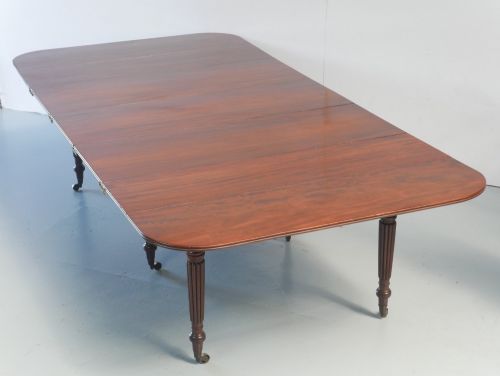
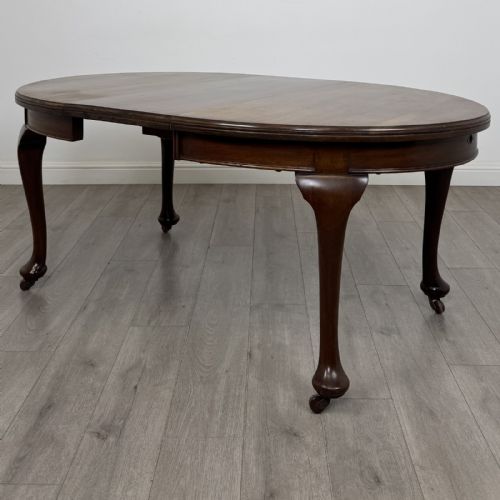
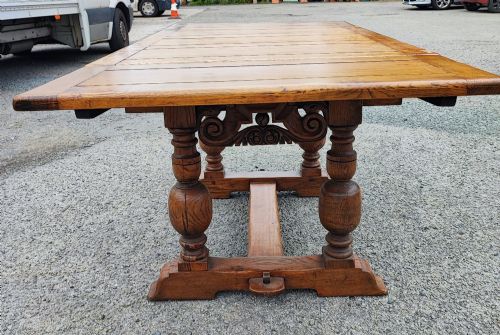
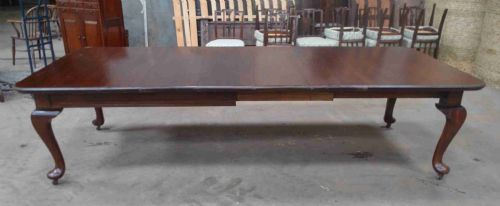
Traditional Extension Table
A traditional extension table offers the scale and timber suited to formal dining spaces.
Traditional Extension Table
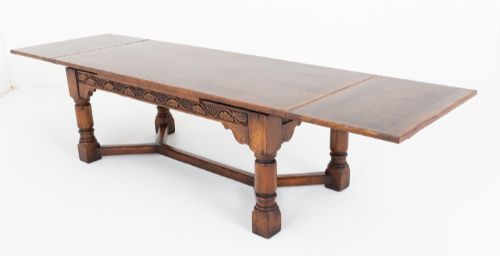
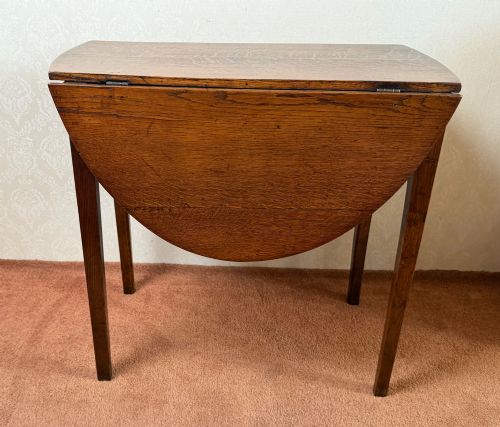
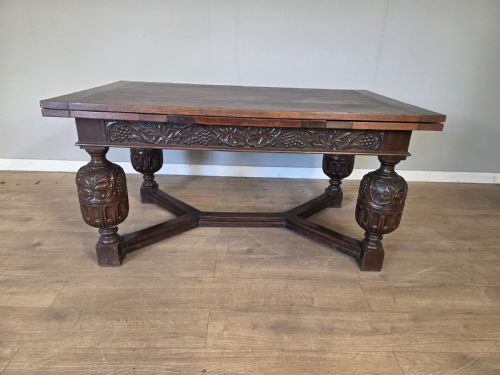
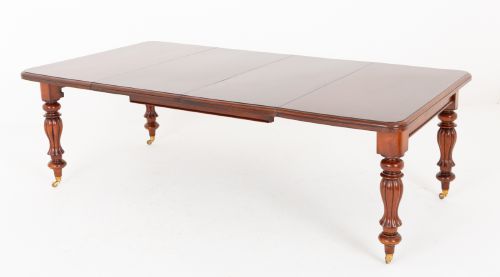
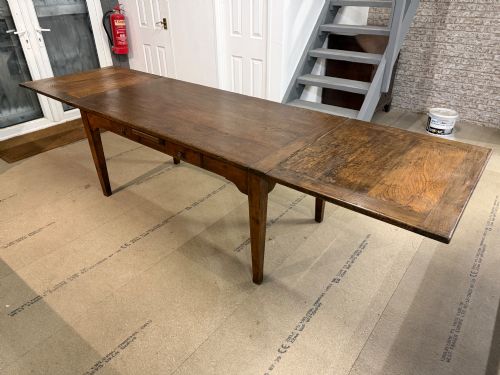
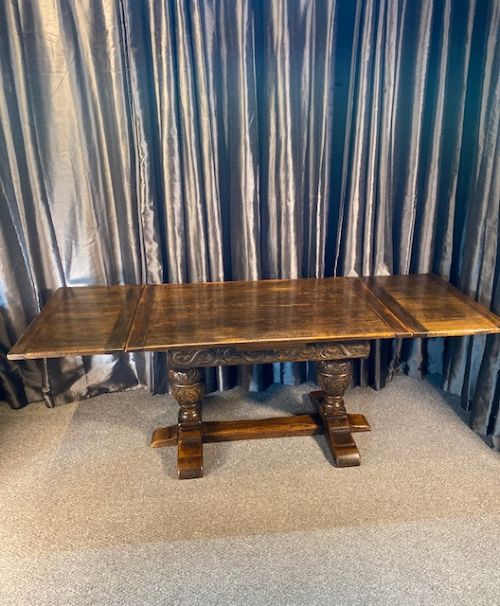
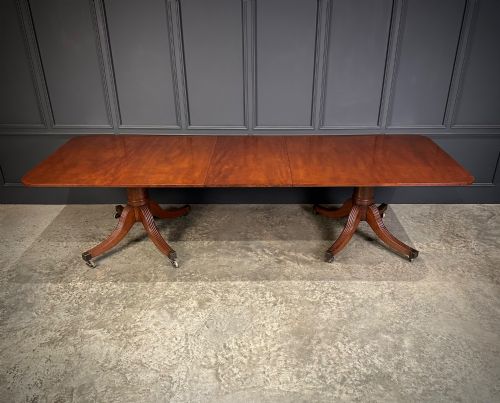
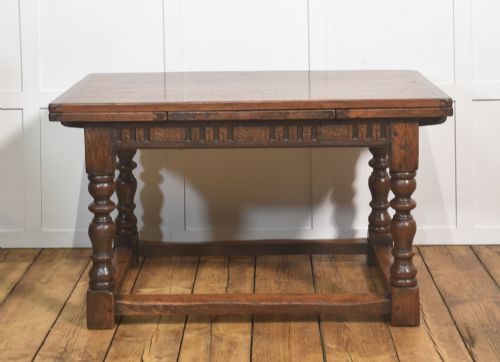
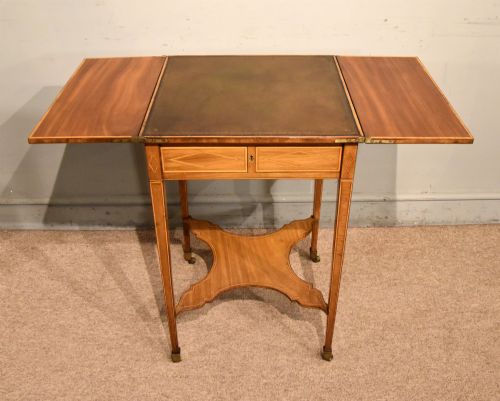
A traditional extension table provides surface area for gatherings through various mechanical systems, predominantly found in mahogany and oak across this selection. Buyers encounter forms ranging from twin-pillar dining tables to refectory draw-leaf tables and drop-leaf formats.
The periods represented span the nineteenth century into the early twentieth century, alongside revival styles including Jacobean, Chippendale, and Regency. Victorian and Edwardian examples appear frequently alongside pieces dated around nineteen-twenty.
Dining tables dominate the inventory, though writing tables and side tables also occur within the broader category of extension furniture. Dimensions vary from seating for smaller households up to monumental formats seating twenty-six.
How they were made
Construction relies on solid timbers and veneers, with mahogany and oak forming the primary structural materials used by makers. Supporting elements frequently incorporate brass mechanisms, iron, and occasional satinwood inlay to decorate the surfaces.
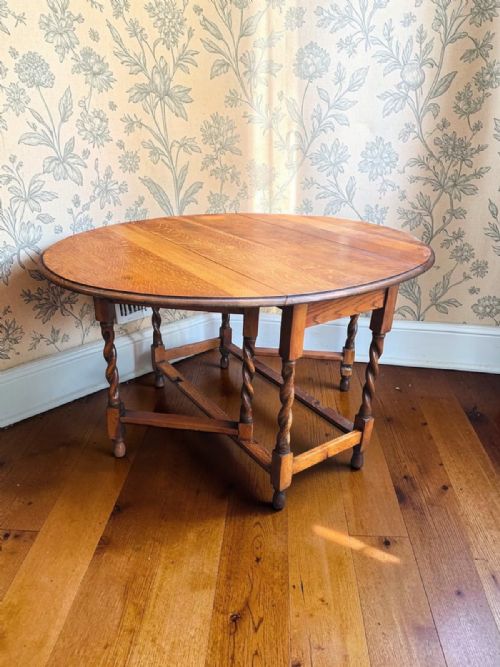
Extension systems utilise draw leaves, drop leaves, or removable leaves supported by twin pillars or refectory bases. Joinery and turned elements, such as barley twists, secure the heavy frameworks required for large dining formats.
Traditional Extension Table Retail Price Guide 2026
Typical asking prices for traditional extension table among the pieces listed under this phrase on Sellingantiques today, from the lower quarter to the upper quarter. They describe what is for sale here now, not the wider market.
Listings span the nineteenth century, nineteen-hundred, nineteen-ten, nineteen-twenty, and the Edwardian period, constructed in mahogany, oak, walnut, pine, and rosewood.
What varies in quality
Quality reveals itself in the figuring of the timber, such as highly figured mahogany or oak, and the precision of the extension mechanism. Heavy, solid construction and substantial seating capacity separate monumental examples from standard domestic tables.
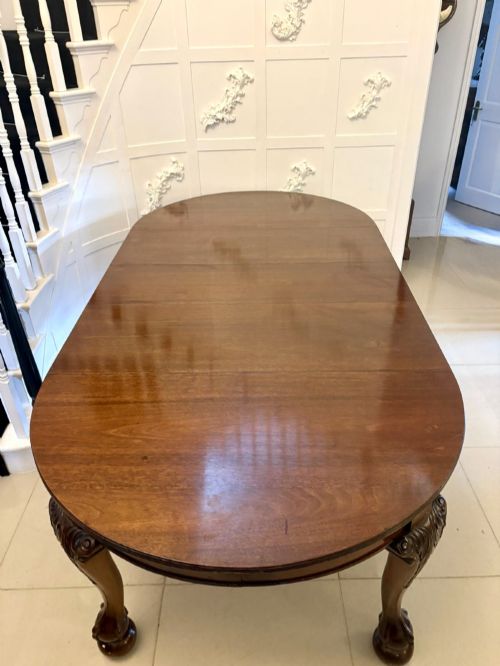
Carving detail on legs and pedestals, such as claw and ball feet, distinguishes finer workshop production from simpler utilitarian pieces. The seamless integration of additional leaves into the main top indicates superior cabinetmaking.
The Traditional Extension Table Glossary
- Draw-leaf table
- A table with auxiliary leaves stored beneath the main top that pull out to extend the surface. This mechanism allows the length to increase without removing separate leaves.
- Twin-pillar dining table
- A table supported by two separate pedestals, usually with branching legs, designed to hold leaves inserted in the centre. This configuration provides legroom along the sides.
- Gateleg table
- A drop-leaf table where hinged legs swing out to support the lowered leaves when raised. The folding gate framework supports the extended flaps.
- Refectory table
- A long dining table traditionally associated with monastic or farmhouse dining halls, often fitted with extension leaves in later iterations. These heavy tables utilise stretcher bases for stability.
- Satinwood inlay
- Decorative contrasting wood inserted into the primary timber surface in geometric or floral patterns. This technique highlights the borders and panels of finer tables.
Traditional Extension Table: Frequently Asked Questions
How do draw-leaf tables work?
Draw-leaf tables operate through panels hidden beneath the main surface that slide outward on tracks. When pulled, the main top lowers slightly to lock the extension pieces flush into place.
This system keeps the extra leaves attached to the furniture at all times, removing the need for separate storage cupboards.
What rooms suit a twin-pillar table?
Twin-pillar tables suit dining rooms that require flexible seating arrangements through the addition of removable leaves. The pedestal configuration leaves corner space open for chairs.
Larger variations require substantial floor area to accommodate both the closed format and the extended length.
How do I identify a Victorian table?
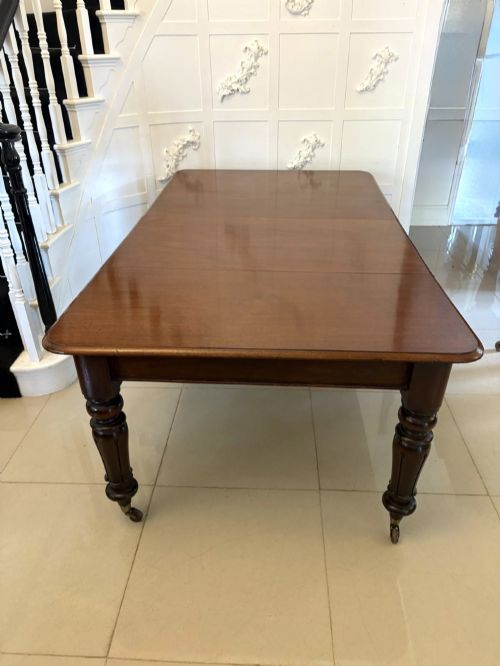
Victorian tables often feature rich mahogany timbers, turned or carved legs, and mechanical systems for inserting leaves. Many examples from this era seat ten or more guests.
Stylistic markers include heavy proportions and dark finishes typical of nineteenth-century cabinetmaking.
Are drop-leaf tables stable?
Drop-leaf tables gain stability from hinged wooden legs that swing outward to lock beneath the flaps. When open, the structural joints support everyday dining use.
Care should be taken not to place excessive weight on the unsupported outer edges of the leaves.