

Traditional Executive Table
A traditional executive table provides a commanding workspace, combining rich timber with inset leather to anchor a study with enduring gravitas.
Traditional Executive Table
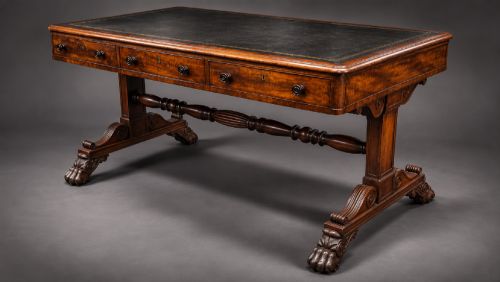
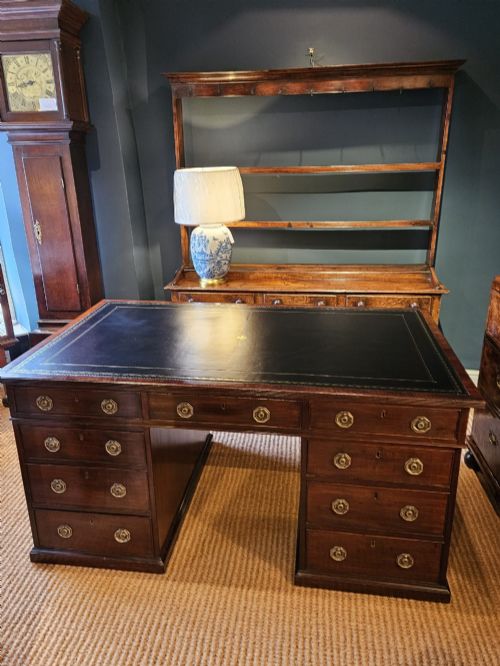
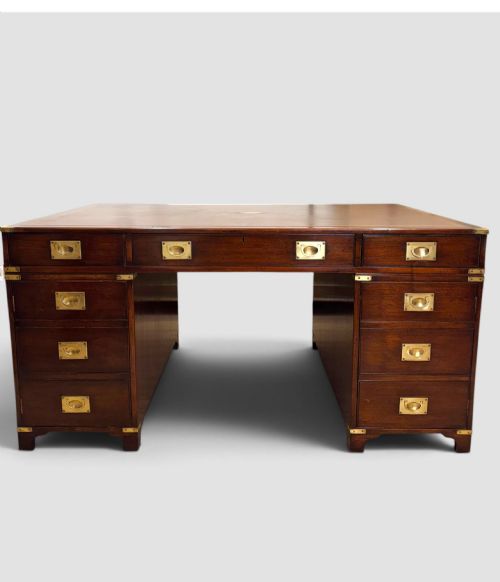
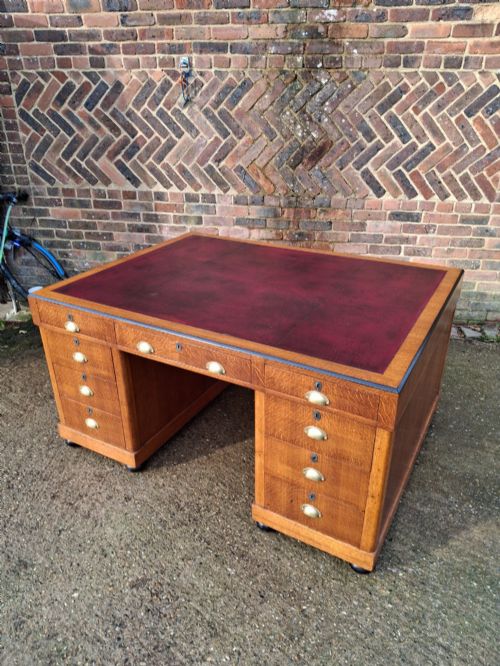
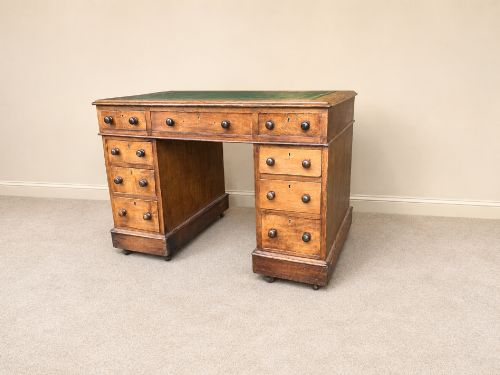
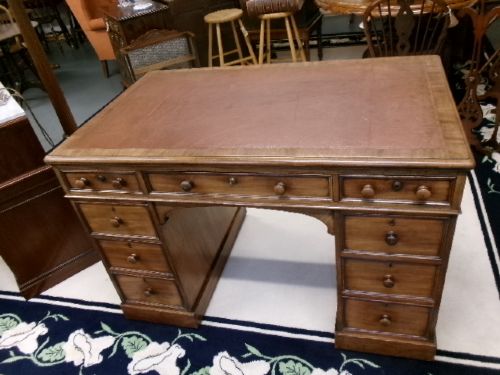
A traditional executive table encompasses robust pedestal desks, partners writing tables, and occasional dining forms designed for formal administrative use. These pieces primarily date from the nineteenth century and the Edwardian era, carrying distinct architectural proportions.
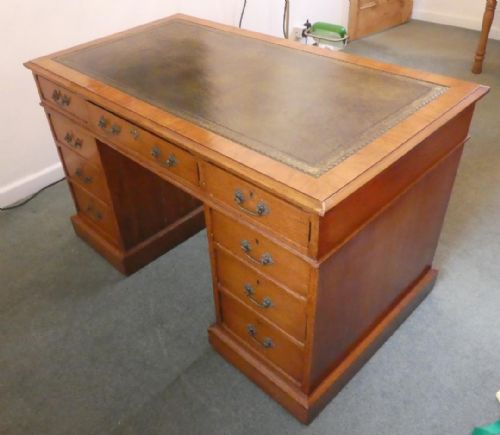
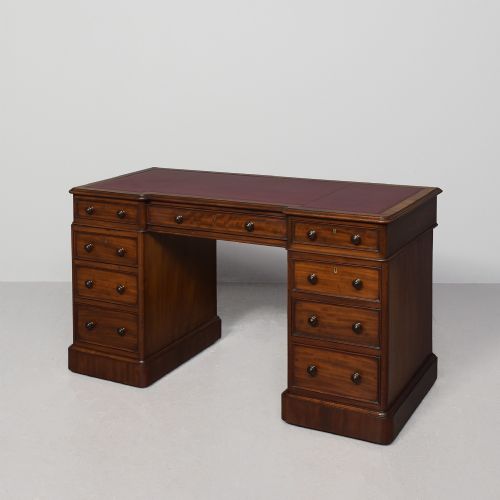
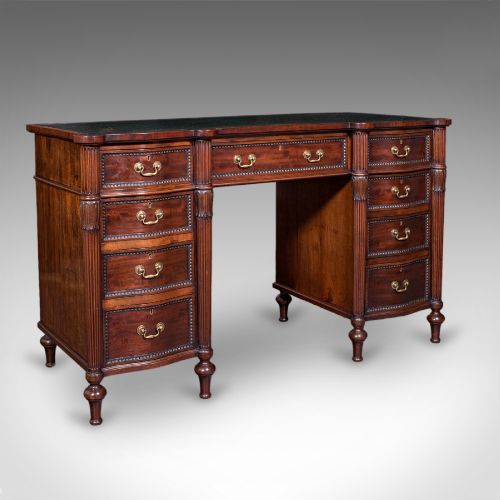
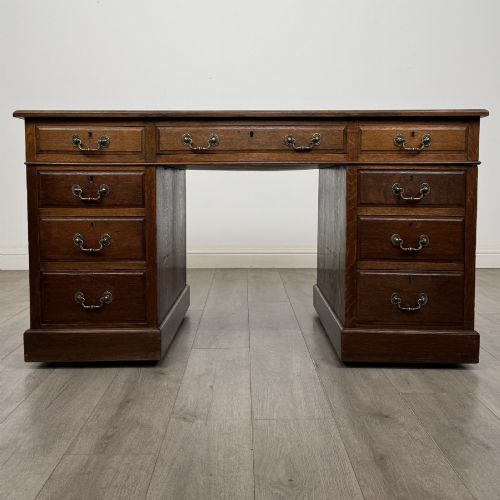
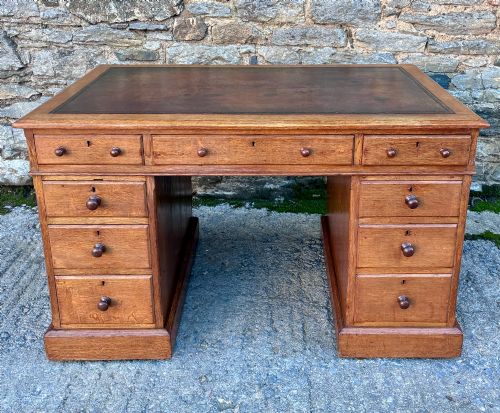
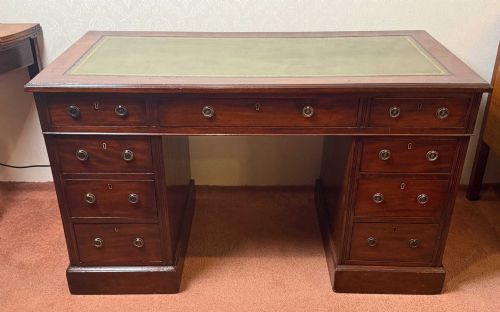
The version most frequently encountered on this page is the pedestal desk, often executed in mahogany or walnut with central kneeholes and banks of drawers. Such examples reflect the domestic and professional office requirements of their original Victorian and Edwardian contexts.
Materials and Construction
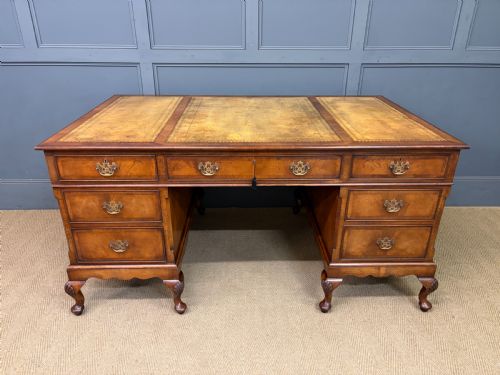
Cabinetmakers utilised dense hardwoods like mahogany, oak, and burr walnut for carcass construction, frequently selecting figured veneers to create striking surface patterns. Solid timber framing supported heavy daily use in studies and libraries.
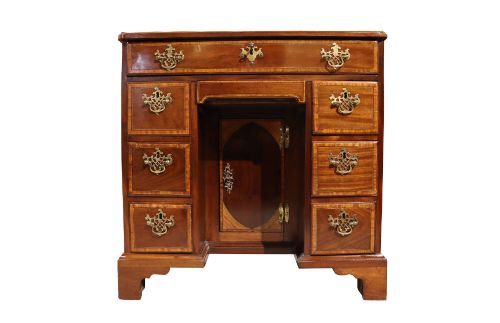
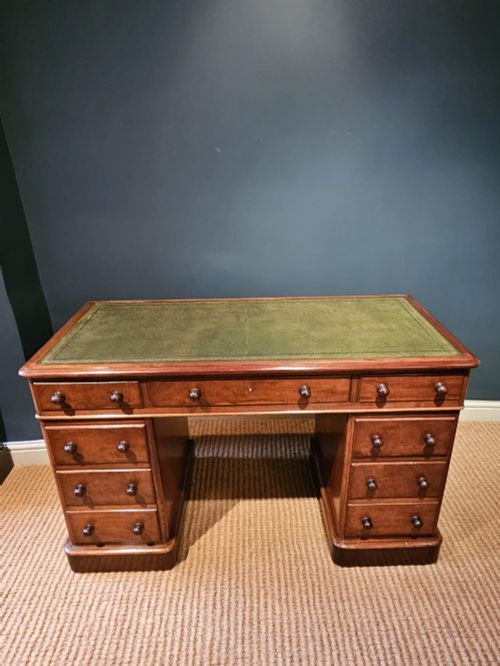
Insects and wear aside, working surfaces were traditionally finished with inset panels of dyed leather, often tooled with gold leaf borders. Brass campaign handles, swan neck pulls, and occasional satinwood stringing completed the detailing.
Traditional Executive Table Retail Price Guide 2026
Typical asking prices for traditional executive table among the pieces listed under this phrase on Sellingantiques today, from the lower quarter to the upper quarter. They describe what is for sale here now, not the wider market.
Some nineteenth-century partners desks hide deep drawers specifically proportioned to accommodate rolled architectural plans and bulky ledgers.
Judging Quality
Quality rests upon timber selection and the crispness of cabinetmaking execution, visible in the alignment of drawer linings and the depth of carved mouldings. Superior pieces employ finely figured veneers and robust secondary woods throughout.
Howard and Sons·Trollope and Sons
The Traditional Executive Table Glossary
- Pedestal desk
- A form comprising two banks of drawers supporting a single desktop, with a central kneehole space. It stands as the standard arrangement for executive office furniture.
- Partners desk
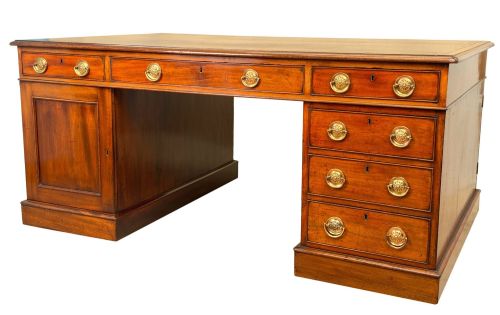
- A double-sided writing table designed for two people to sit opposite one another, featuring drawers on both flanks. These larger forms served governmental and boardroom settings.
- Kneehole desk
- A compact desk featuring a central recessed space for the legs, flanked by pedestals. It offers a tidy footprint for smaller studies.
- Writing slide
- A pull-out shelf housed above drawers, providing supplementary surface area for paperwork. It slides flush into the frieze when not in use.
Traditional Executive Table: Frequently Asked Questions
What is a partners desk?
A partners desk is a large writing table equipped with drawers and cupboards on both opposing sides. This dual-sided design allowed two individuals to work facing each other.
Such tables commonly appeared in grand libraries, banks, and administrative offices during the nineteenth century.
How do I identify a Victorian desk?
Victorian desks are typically constructed from heavy mahogany, oak, or walnut, displaying darker patinas and solid proportions. They frequently incorporate brass handles and inset leather writing surfaces.
Details such as hand-cut dovetails in the drawer construction point toward this period of manufacture.
What woods were used for these tables?
Cabinetmakers primarily relied on mahogany, oak, and walnut as the foundational timbers for executive desks and tables. Burr walnut and satinwood veneers added decorative contrast to drawer fronts and top panels.
Secondary woods like pine or oak frequently formed internal drawer linings and hidden structural elements.
Are leather writing surfaces original?
Many traditional desks retain inset leather writing surfaces, though older pieces often feature modern replacements. Original leathers show characteristic patination, scuffs, and gold-tooled borders.
The colour of these surfaces ranges across shades of green, red, and brown depending on the preference of the original owner.