


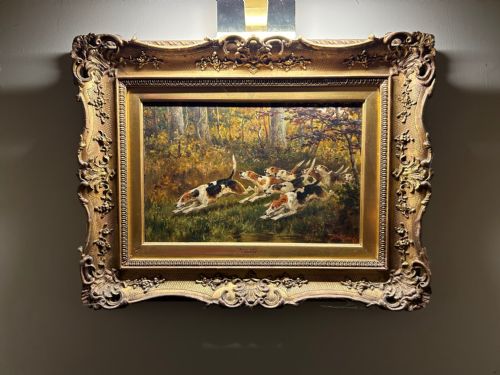

Traditional Equestrian Dog Art
Traditional equestrian dog art brings together working hounds, terriers, and hunters on canvas and paper.
Traditional Equestrian Dog Art
Traditional equestrian dog art captures horses, hounds, and field sports across canvas, board, and paper. These works document nineteenth-century rural life, field sports, and rural portraiture.
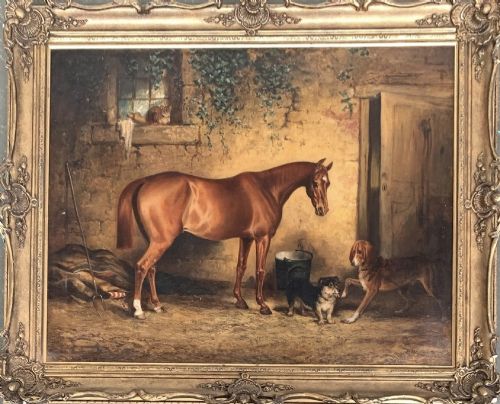
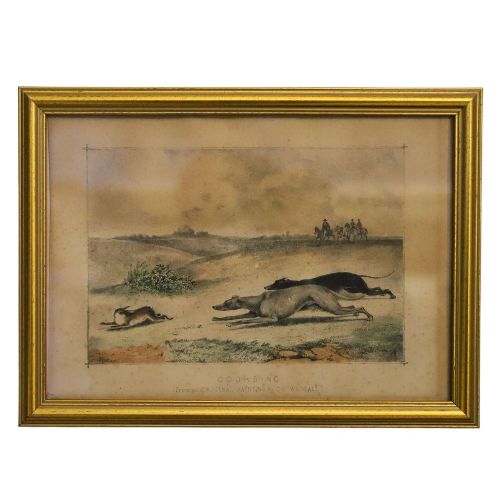
You meet Victorian oil paintings, watercolours, and early lithographs showing hunting parties, greyhounds, and farm horses with dogs. Most pieces date from the nineteenth century, framed in giltwood.
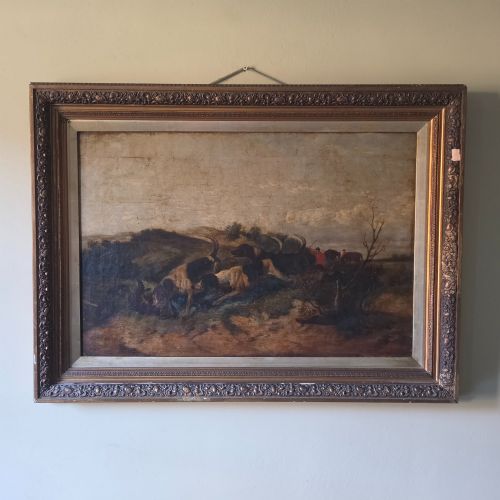
Subjects range from individual hunter portraits with terriers to expansive moorland hunts with packs of hounds. The focus remains on the working relationship between man, horse, and dog.
Materials and methods
Painters utilised oil on canvas or board to build rich textures in coats, landscapes, and horses. Watercolours on paper capture lighter, more immediate field scenes.
Many works sit inside period giltwood frames that complement the traditional subject matter.
Listings feature canvas, wood, and paper supports, spanning the Victorian period and nineteenth century.
Indicators of quality
Quality rests upon anatomical precision in the rendering of horses and hounds, alongside the handling of landscape depth. Stronger pieces display confident brushwork in animal musculature and movement.
The integration of the dog and horse within the wider rural landscape distinguishes accomplished artists from standard decorative works.
Henry Barraud·George E Sharpe·Fannie moody·Edwin Frederic Holt·Michael Lyne·Henri Schouten·Tom Carr·Thomas Blinks·Frank Dadd·George Cole·Samuel John Egbert Jones·George Wright
The Traditional Equestrian Dog Art Glossary
- Oil on canvas
- Pigment bound in oil medium applied to stretched woven fabric. This primary painting surface supports detailed nineteenth-century sporting scenes.
- Lithograph
- A print made from a flat stone or metal plate. This technique reproduces original drawings for mass distribution.
- Giltwood frame
- Wooden framing treated with a thin layer of gold leaf. These frames surround traditional paintings to enhance their presentation.
- Watercolour
- Paint consisting of pigment suspended in a water-soluble vehicle. Artists employ this medium on paper for delicate field sketches and finished works.
- Sporting art
- Depictions of hunting, racing, and rural field sports. This genre records horses, hounds, and rural participants.
Traditional Equestrian Dog Art: Frequently Asked Questions
What subjects appear in these paintings?
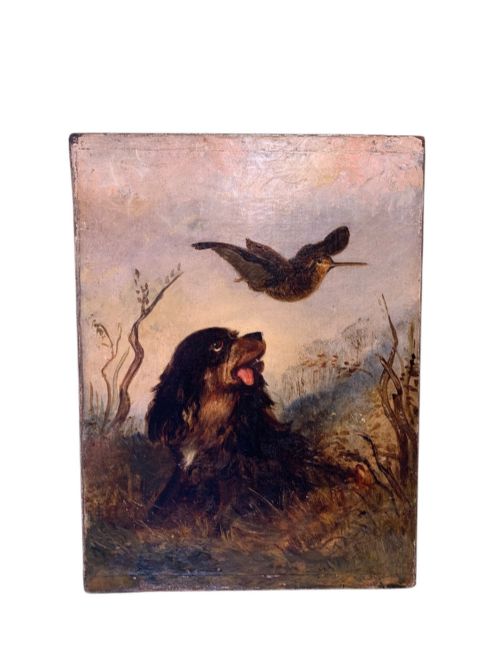
Paintings show hunters, plough teams, and sporting horses accompanied by terriers, spaniels, and foxhounds. Scenes range from quiet farm landscapes to active hunts.
Human figures such as lords, ploughmen, and sportsmen frequently share the composition with the animals.
How do I date these works?
Dating relies on costume details, framing styles, and the written record on the canvas or reverse. Nineteenth-century pieces often display specific Victorian clothing and traditional gilt frames.
Artists' active working dates provide a reliable anchor for the period of execution.
Where should I hang them?
These works suit traditional studies, hallways, and living spaces alongside wooden furniture. Keep them away from direct sunlight to protect oil paint and paper watercolours.
Ensure stable room humidity to preserve the canvas and original wooden frames.
Are watercolours as durable as oils?
Watercolours on paper require glass protection and careful light management to prevent fading. Oil on canvas or board offers greater resilience against environmental factors.
Both formats survive well when housed in appropriate indoor conditions.