
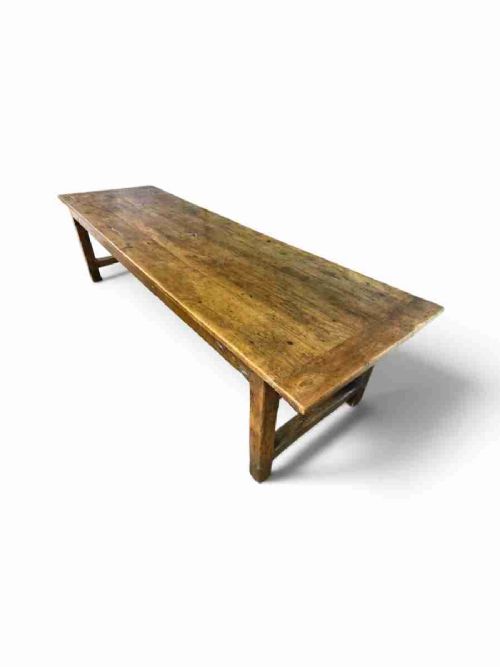
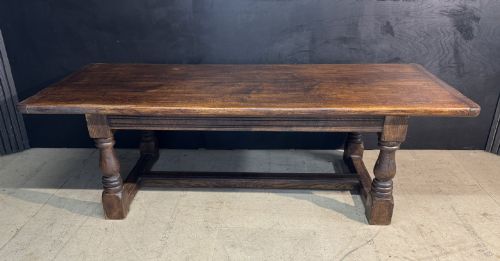
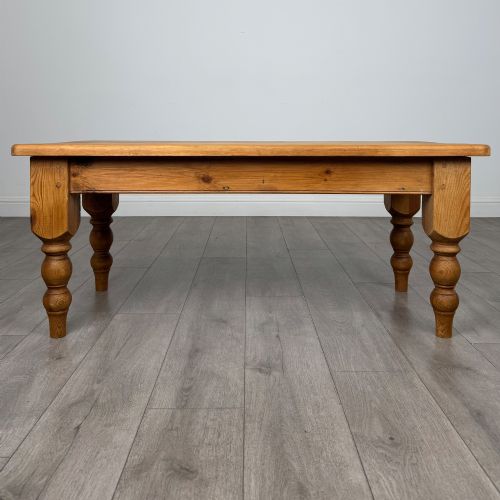

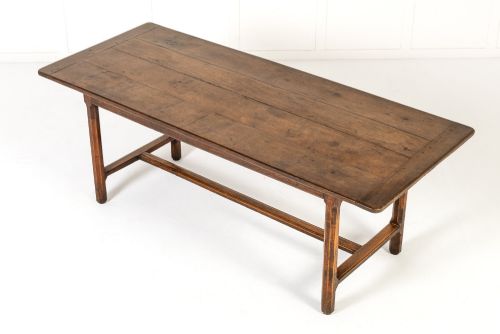
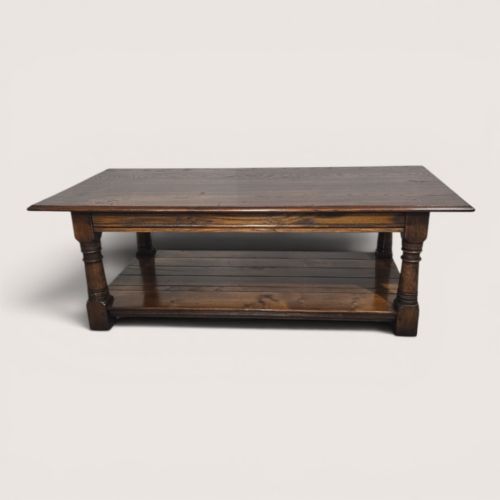
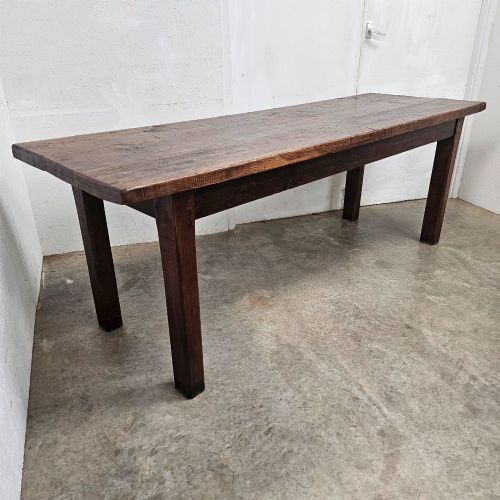


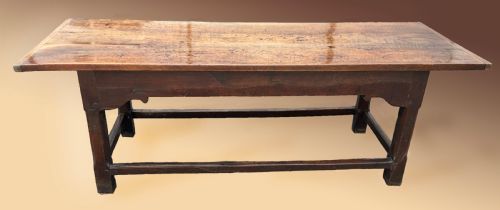
Traditional English Farmhouse Table
A traditional english farmhouse table brings honest grain and sturdy timber straight to the heart of the home.
Traditional English Farmhouse Table
A traditional english farmhouse table serves as the central gathering place for domestic life, built to handle daily meals and heavy labour alike. These pieces span centuries of regional carpentry, with forms ranging from generous dining refectories to smaller coffee tables and serving boards.
Most examples encountered here date from the eighteenth and nineteenth centuries, alongside early twentieth-century interpretations in the Edwardian taste. Oak and pine dominate the selection, often accompanied by beech, elm, and pitch pine structures.
Makers shaped these boards for practical utility in country houses, farmhouses, and taverns. Buyers will find variations including extending mechanisms, trestle supports, and thick plank tops designed to age gracefully through decades of use.
How they were made
Joiners selected dense local timbers such as oak and pine, sawing them into thick planks that could withstand constant impact. Carpenters utilised pegged mortise and tenon joints to lock the framework together without relying on modern adhesives.
Surfaces received hand planing and scraping to level the boards while leaving the natural tool marks visible. Some tables retained their bare timber grain, whilst others received traditional painted finishes or protective wax coatings.
Some nineteenth-century tables still bear the faint ink stains and knife marks from generations of farm accounting and pastry rolling.
What varies in quality
The distinction between tiers rests upon timber selection and the integrity of the original construction. Superior tables display heavy, well-matched planks joined with precise pegged framing that maintains absolute rigidity.
Lesser pieces may show excessive timber replacement or compromised undercarrames from centuries of damp floors. Original surface patination and untouched structural joints elevate an example above heavily restored alternatives.
The Traditional English Farmhouse Table Glossary
- Refectory table
- A long dining table traditionally used in communal eating halls. These forms feature substantial length and sturdy stretcher rails near the floor.
- Plank top
- A table surface constructed from several wide boards laid lengthwise. The number of planks often indicates the age and scale of the piece.
- Pitch pine
- A resinous North American and European pine variety valued for its durability. Carpenters utilised this dense wood for heavy-use kitchen and dining surfaces.
- Trestle table
- A board supported by two or more upright frames connected by a horizontal beam. This design allows maximum legroom along the length of the furniture.
- Patina
- The deep surface sheen and colour developed by wood over years of handling and polishing. This quality marks genuine age and continuous domestic use.
Traditional English Farmhouse Table: Frequently Asked Questions
How do I clean a wooden farmhouse table?
Wipe the surface using a damp cloth and mild soap, avoiding harsh chemical sprays that strip the finish. Dry the timber thoroughly immediately afterwards to prevent moisture damage.
Apply a traditional beeswax polish periodically to nourish the grain and maintain the natural sheen. Buff the wax gently with a soft cloth once dry to protect against everyday spills.
Can I use an antique table daily?
These tables were built specifically for heavy domestic labour and daily dining, making them ideal for modern family life. Their robust timber frames tolerate regular use remarkably well.
Use coasters and mats to guard against hot dishes and standing liquids. Allowing the surface to accumulate minor marks simply adds to the historical character of the wood.
How do I identify eighteenth-century tables?
Examine the underside and joints for hand-cut pegged construction and irregular saw marks left by pit saws. Eighteenth-century timber often shows wider boards and deeper patination than later reproductions.
Check for signs of genuine wear around the stretcher rails where boots and feet rested. Hand-planed surfaces with subtle undulations also point towards earlier craftsmanship.
What is the difference between oak and pine?
Oak provides a dense, heavy structure with prominent grain patterns that resists heavy impacts and ages to a deep bronze tone. It was chosen for principal farmhouse furniture intended to last generations.
Pine offers a softer, lighter alternative with a paler hue that readily accepts painted finishes or simple wax. It served as the standard timber for secondary kitchen tables and utility furniture.