


Traditional Dressing Stool
These traditional dressing stool examples offer a seat for the vanity table, spanning styles from the Georgian period through to the 1930s.
Traditional Dressing Stool
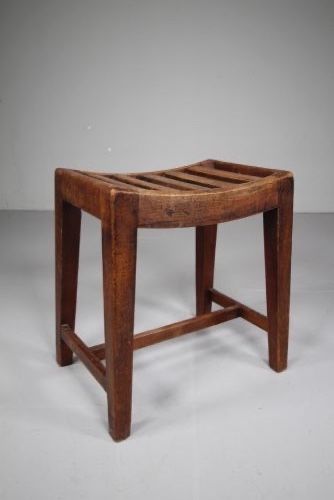
A traditional dressing stool is typically encountered as a low seat designed for use at a dressing table or vanity, though many examples share forms with footstools, piano stools and fireside seats. These pieces range in date from the eighteenth century through the Victorian era and into the early twentieth century.
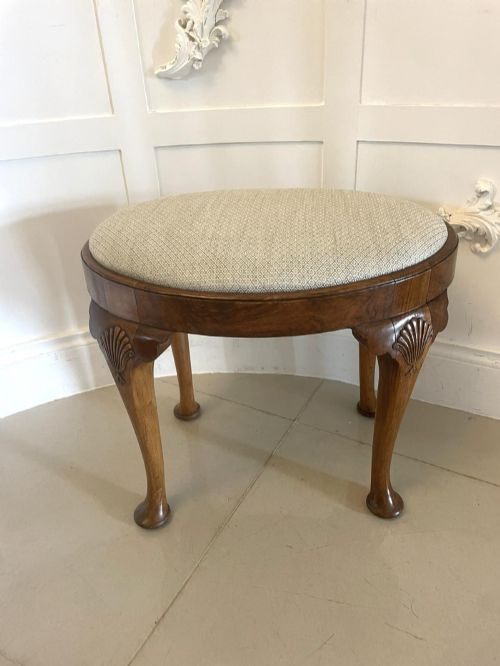
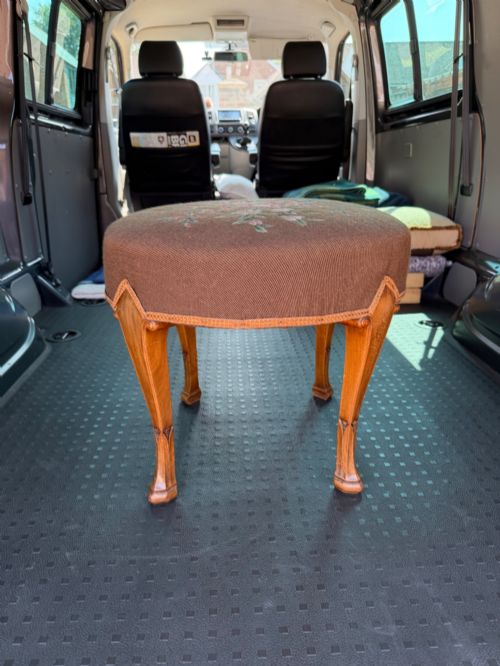
The selection here encompasses various forms, from oval and rectangular shapes to pieces featuring cabriole legs, turned supports and castors. Materials span hardwoods such as mahogany and walnut alongside beech and rosewood, paired with diverse seat coverings.
Makers drew on established historical aesthetics, producing pieces in Queen Anne style, Chippendale style, and George II style alongside simpler Victorian and Edwardian interpretations. Buyers encounter both compact bedroom pieces and larger upholstered benches designed for functional daily use.
Judging the range
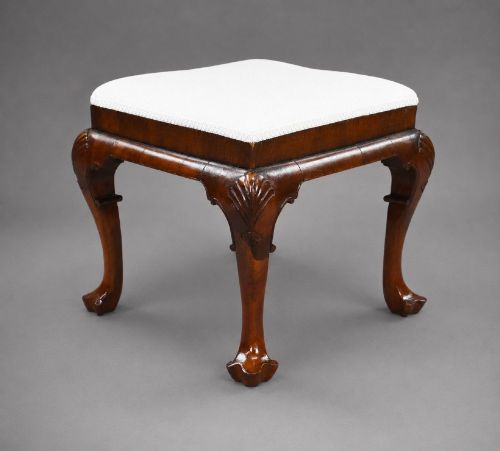
Quality separates pieces through the precision of timber carving, the execution of stylistic details such as cabriole legs and scroll feet, and the integrity of the frame construction. Pieces exhibiting crisp carving and well-proportioned historical revival forms sit at the top of the range.
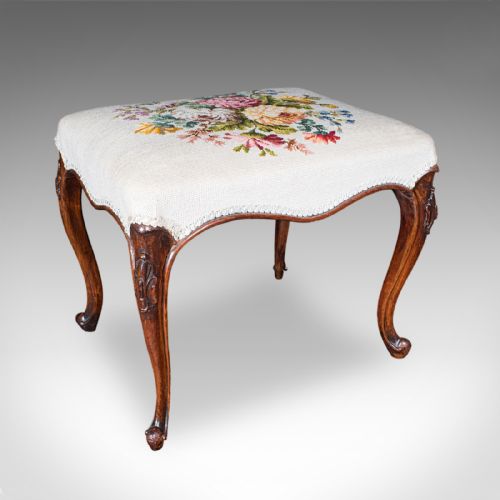
The treatment of the seat and upholstery also defines the grade of a piece, with finely worked needlepoint, tapestry or original fabric seats showing a higher level of preservation and craftsmanship than later replacements.
The listings feature mahogany and walnut predominantly, alongside beech and rosewood across periods from the eighteenth century to 1930.
The Traditional Dressing Stool Glossary
- Cabriole leg
- A furniture leg that curves out and then in, commonly found on Queen Anne and Chippendale style pieces. This shape mimics an animal's curving leg.
- Needlepoint
- A type of counted thread embroidery stitched onto canvas, frequently used for historical stool upholstery. It introduces intricate patterns and varied colour palettes to the seat top.
- Tapestry
- A form of heavy textile weaving used to cover seat cushions on period stools. These woven panels often display pictorial or floral designs.
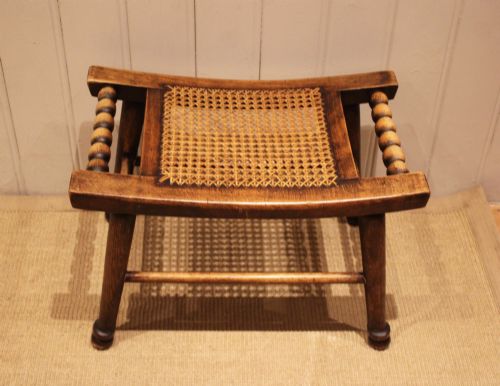
- Cane seat
- A seating surface woven from peeled rattan or cane strips, providing a lightweight and breathable panel. This technique appears on specific turned wooden frames.
- Deep buttoning
- An upholstery method where tufting buttons are pulled tightly through the padding to form a diamond pattern. This technique adds structural depth to Victorian seat cushions.
Traditional Dressing Stool: Frequently Asked Questions
What is a traditional dressing stool used for?
These low seats are traditionally placed in front of a bedroom dressing table or vanity for personal grooming. They also function as occasional seats or low footstools around the home.
Their compact proportions allow them to tuck neatly beneath tables when not in use.
How do I identify a Queen Anne style stool?
Queen Anne style stools typically feature characteristic cabriole legs that curve outward at the knee and taper down to pad or scroll feet. The frames often utilise walnut timber and feature restrained, elegant curves rather than heavy carving.
Many examples date from the early twentieth century revival of this eighteenth century aesthetic.
What woods were used for these stools?
Makers predominantly used dense hardwoods such as mahogany and walnut for framing structural components. Beech and rosewood also appear across various nineteenth and twentieth century examples.
These timbers provided the strength required for carved legs and shaped seat rails.
Can I use a piano stool as a dressing stool?
Piano stools share very similar dimensions and low heights with traditional dressing stools, making them interchangeable in many domestic settings. Both types were manufactured during the Victorian and Edwardian periods.
Their shared forms mean they integrate easily into bedroom layouts.