



Traditional Double Pedestal Desk
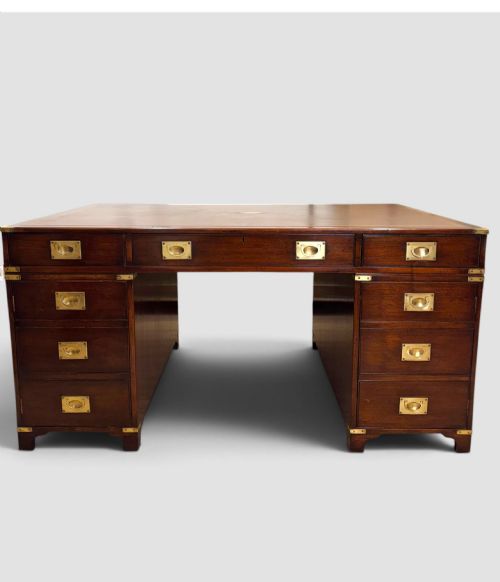
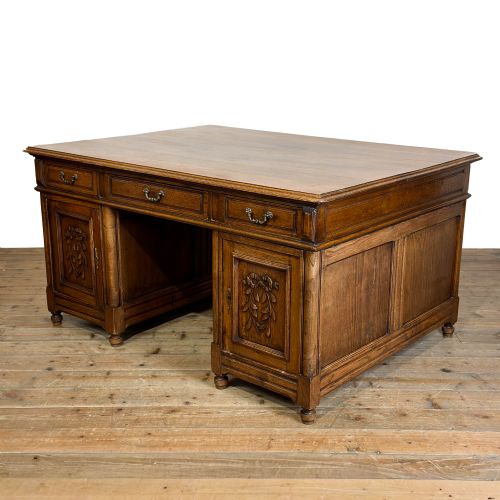
A traditional double pedestal desk is a substantial workspace built with two stacks of drawers supporting a large top, offering dual-sided utility and commanding presence.
Traditional Double Pedestal Desk
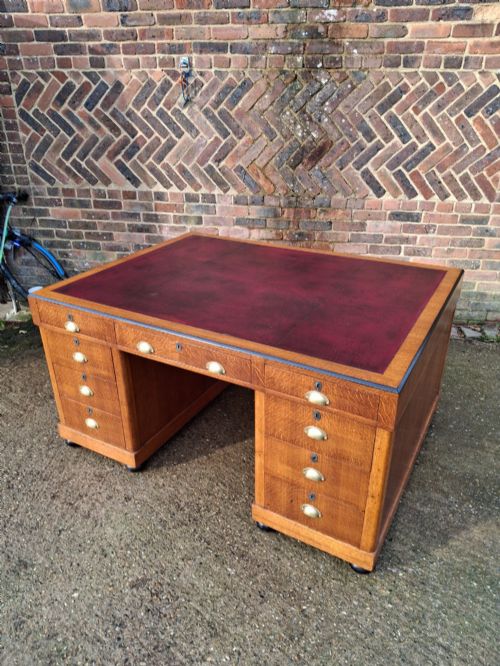
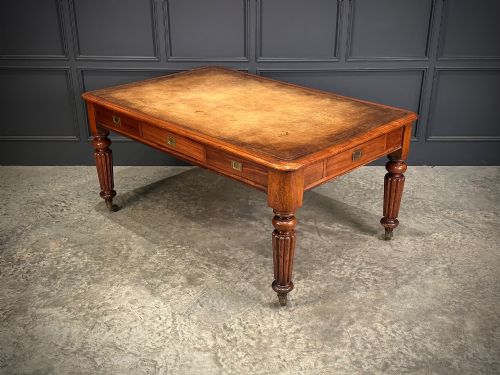
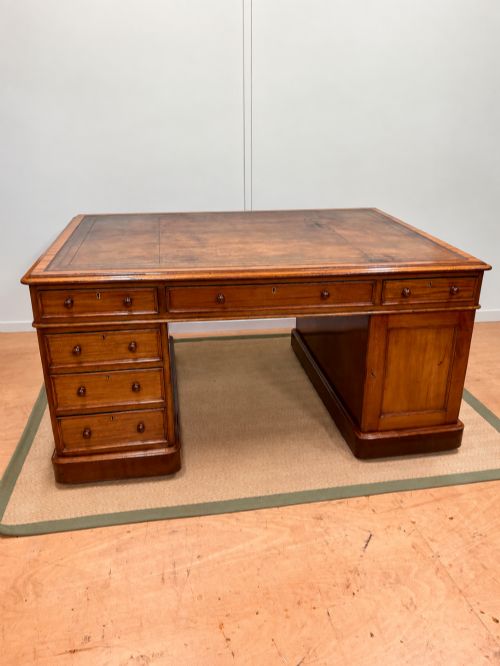
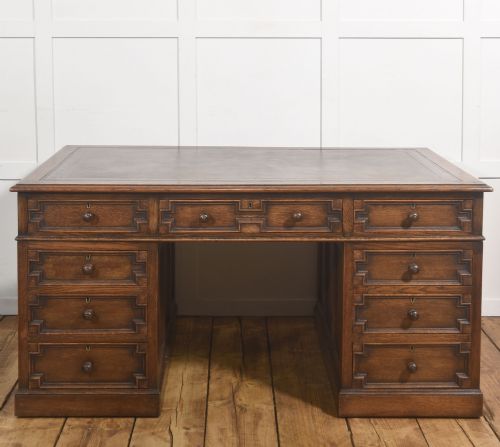
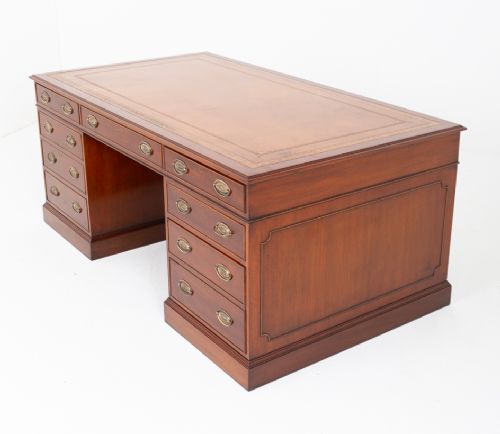
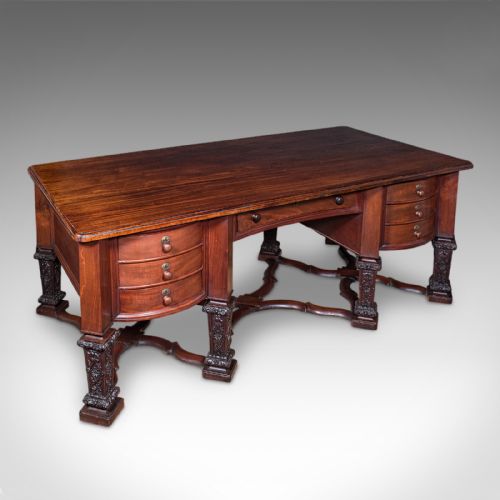
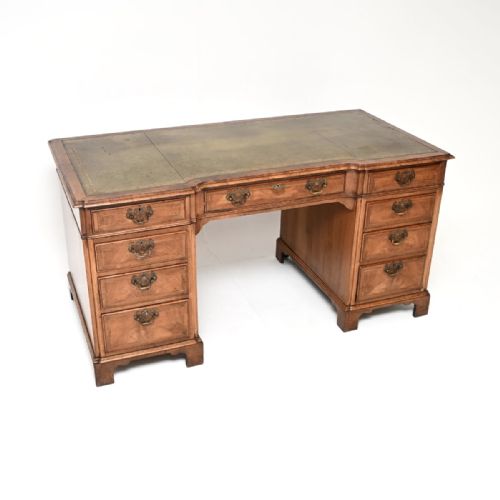
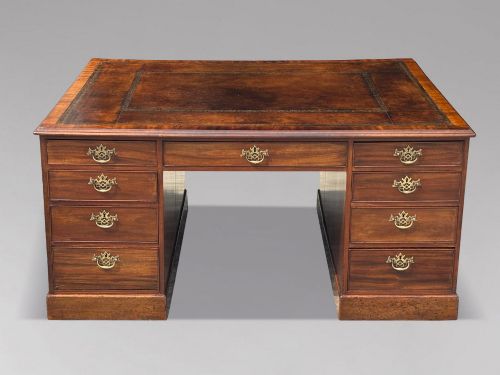
When you search for a traditional double pedestal desk, you encounter large, twin-pedestal forms designed for collaborative office work or grand studies. These pieces provide twin banks of drawers beneath a broad writing surface, often finished with tooled leather inserts.
The versions you are most likely to meet on this page hail primarily from the nineteenth century, including robust Victorian and Edwardian examples. Many of these survive as partners desks, offering storage and workspace accessible from both sides.
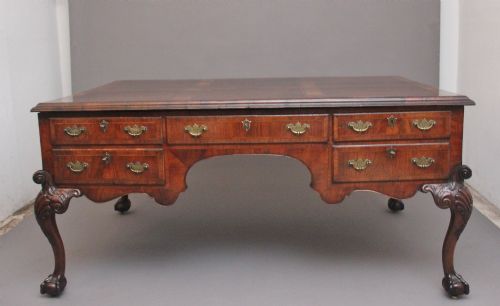
Examples stretch from eighteenth-century George III origins through to early twentieth-century revivals like Chippendale and Queen Anne styles. Oak and mahogany dominate the offerings, occasionally appearing in burr walnut and flame mahogany finishes.
How they were made
Cabinet makers built these desks using sturdy timbers like mahogany and oak, applying decorative veneers such as flame mahogany and burr walnut to primary display surfaces. Solid wood construction ensured the heavy pedestals could support large writing slabs and numerous drawers over centuries of daily use.
Hardware played an essential structural and decorative role, incorporating brass handles, campaign-style recessed fittings, and occasionally numbered drawer configurations. Writing surfaces were routinely inset with tooled leather, secured at the borders with subtle blind-tooling.
Traditional Double Pedestal Desk Retail Price Guide 2026
Typical asking prices for traditional double pedestal desk among the pieces listed under this phrase on Sellingantiques today, from the lower quarter to the upper quarter. They describe what is for sale here now, not the wider market.
What varies in quality
The distinction between ordinary and exceptional desks rests on the selection of timber and the ambition of the construction. Finer examples utilise highly figured timbers like curl mahogany or burr walnut across every elevation, rather than just the primary top.
Construction methods and internal detailing elevate certain pieces above the rest. The presence of secondary timbers of high grade, meticulously dovetailed drawer boxes, and secondary side access for partners indicate superior workshop origins.
Holland and Sons·Gillows
The Traditional Double Pedestal Desk Glossary
- Partners desk
- A large pedestal desk designed with drawers and cupboards on both sides, allowing two people to work opposite one another. These were traditionally used in banks, libraries, and grand estate offices.
- Pedestal
- One of the two vertical banks of drawers that support the main writing surface of the desk. They typically contain three graduated drawers on each side of the central kneehole.
- Flame mahogany
- A veneer cut from the fork of a mahogany tree where the branches join the trunk, producing a distinctive, fiery ripple pattern. It was favoured by cabinet makers for grand nineteenth-century facades.
- Campaign handles
- Recessed brass handles set flush into the drawer fronts to prevent catching during transport. They appear frequently on military-style furniture and robust nineteenth-century office pieces.
Traditional Double Pedestal Desk: Frequently Asked Questions
What is a partners desk?
A partners desk is a large double pedestal desk finished on both sides, featuring drawers and cupboards accessible from the front and the back. This configuration allowed two individuals, such as business partners or legal associates, to sit and work opposite each other at the same piece of furniture.
These desks were staples of nineteenth-century institutions, banks, and stately home libraries. Their generous proportions provide ample surface area for ledgers, correspondence, and writing equipment.
How do I care for the leather top?
The leather writing surface requires gentle maintenance to keep it supple and prevent cracking over time. Regular dusting with a soft cloth and occasional treatment with specialist leather balsam or neutral wax helps preserve the material.
Avoid placing hot cups or excessive moisture directly onto the leather insert. Using blotters or desk pads protects the historic hide from ink stains and surface wear.
How do I distinguish Victorian from Georgian desks?
Georgian desks, dating from the eighteenth and early nineteenth centuries, often exhibit restrained classical proportions and lighter framing. Their mahogany timbers tend to have a rich, mellow patina developed over a longer lifespan.
Victorian examples built later in the nineteenth century frequently run larger and heavier, sometimes incorporating campaign hardware, darker finishes, or elaborate revival styling such as Chippendale or Louis XIV motifs.
Can these desks be dismantled for transport?
Most traditional double pedestal desks are built in three main sections for ease of movement. The construction typically separates into the left pedestal, the right pedestal, and the heavy top slab resting on top.
Some examples also feature removable internal partitions or separate plinth bases. Securing or removing the drawers prior to lifting ensures the structural joints remain protected during relocation.