


Traditional Door Fitting
These pieces of traditional door fitting span the Georgian and Victorian eras, offering solid brass hardware that brings period character to an entrance.
Traditional Door Fitting
When you search for a traditional door fitting on this page, you encounter hardware designed to operate and adorn period entrances and architectural joinery. The selections span Georgian and Victorian periods alongside later 19th Century examples.
You are most likely to meet solid brass items such as door knockers, bell pulls, letter boxes, and hinges. These utilitarian pieces survived because they were cast in durable metals during eras that valued heavy architectural hardware.
The hardware ranges from distinct Maltese dolphin knockers to functional brass hinges with acorn finials and centre door knobs. Each component served a daily domestic purpose in country houses and town properties.
Materials and construction
Brass serves as the primary metal for these fittings, shaped through casting to create detailed knockers, bell pulls, and decorative plates. This material provided both the necessary weight and resilience for heavy daily use.
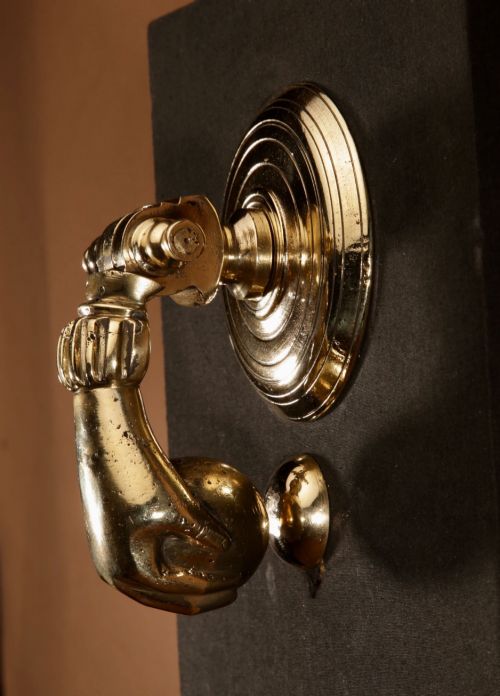
Iron and bronze also appear among the metalwork, utilised for specific hardware like large hand-shaped knockers. These metals were chosen for their robust structural qualities.
Manufacturing methods relied on traditional foundry techniques, producing solid components designed to be screwed or fixed securely to timber doors.
Listings for traditional door fittings concentrate heavily on solid brass components from the Victorian and Georgian eras.
Distinctions in quality
The presence of original striking plates and matching fixings elevates a piece significantly. Complete sets demonstrate a higher grade of original manufacture than isolated components missing their complementary hardware.
Weight and thickness of the metal further distinguish finer examples from standard production. Heavier brass castings indicate a more substantial investment of material by the original maker.
The Traditional Door Fitting Glossary
- Brass
- A copper and zinc alloy widely cast for hardware during the Georgian and Victorian periods. It took a bright polish and resisted corrosion on exterior doors.
- Door Knocker
- A hinged metal hammer mounted on a exterior door for visitors to announce their arrival. They were frequently cast in elaborate shapes such as hands or marine creatures.
- Bell Pull
- A mechanical rod or wire fitting connected to an interior bell system. Visitors pulled the brass handle to alert household staff.
- Striking Plate
- The metal plate mounted on the door face or frame to receive the impact of a knocker. It protected the surrounding timber from repeated blows.
- Finial
- The decorative terminal ornament on hinges and architectural hardware. They were often shaped as acorns or simple spheres.
Traditional Door Fitting: Frequently Asked Questions
How do I clean old brass?
Old brass fittings benefit from gentle washing with warm soapy water and a soft cloth to remove accumulated dirt without destroying the aged surface. Avoid harsh chemical polishes that strip away the historic patina built up over centuries.
Allow the metal to dry naturally after cleaning. Preserving the dark undertones in recessed areas maintains the visual depth expected of period hardware.
Are these fittings suitable for modern doors?
Many of these pieces can be fitted to modern entrance doors provided the dimensions and screw fixings align with contemporary joinery. Measuring the backplate and bolt spacing beforehand ensures a secure installation.
Thick solid brass items require sturdy timber to support their weight. Check that the door structure can bear heavier hardware before mounting.
What is a Maltese dolphin knocker?
A Maltese dolphin knocker is a distinct Victorian hardware design featuring two stylized marine mammals intertwined to form the striking handle. This nautical motif gained popularity in maritime trading hubs during the 19th century.
These pieces were typically cast in solid brass and paired with a matching decorative striking plate. They remain recognizable examples of Victorian coastal design.
How do I date a brass door fitting?
Dating relies on stylistic clues, casting techniques, and the screw types used in the construction. Georgian pieces tend toward simpler neoclassical proportions, while Victorian hardware often displays heavier, more ornate relief work.
Examining the back of the metal for hand-finished marks or sand-casting textures helps distinguish older examples from modern reproductions. Period context provides the most reliable guide.