


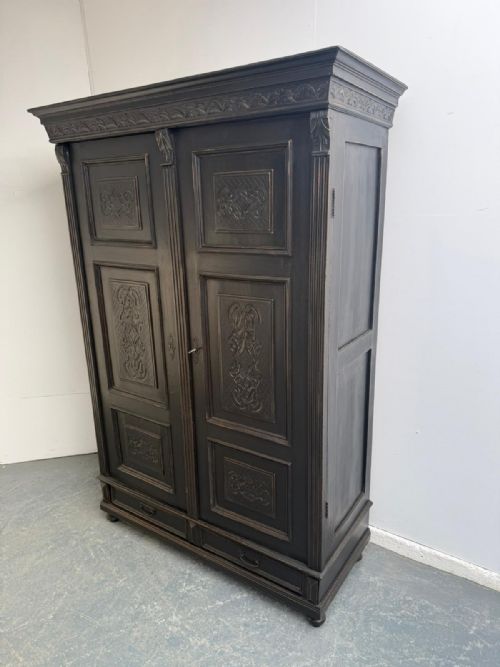


Traditional Dark Painted Cupboard
A traditional dark painted cupboard brings honest utility and deep pigment to a room, holding centuries of regional craftsmanship within its sturdy timber frame.
Traditional Dark Painted Cupboard
When you search for a traditional dark painted cupboard, you encounter robust storage pieces shaped by regional vernacular traditions across Britain and Europe. The selection spans utilitarian kitchen dressers, food cupboards, and bedside cabinets rooted in practical domestic life.
The forms reflect diverse regional styles, encompassing English country, Welsh vernacular, and European folk art influences. Each piece carries the distinct structural signatures of its maker, from open pot boards to glazed vitrine doors.
How they were made
Carpenters constructed these cupboards using locally available timbers such as solid pine and oak, joined with traditional framing and panel techniques. Surfaces were finished with durable paint layers, applied to protect the wood and provide a rich, matte coloration.
Hardware played a functional role, incorporating iron hinges, brass pulls, and ceramic elements secured directly to heavy doors and drawers. These unpretentious methods prioritized daily endurance over delicate ornamentation.
Traditional Dark Painted Cupboard Retail Price Guide 2026
Typical asking prices for traditional dark painted cupboard among the pieces listed under this phrase on Sellingantiques today, from the lower quarter to the upper quarter. They describe what is for sale here now, not the wider market.
Listings feature pieces spanning the eighteenth century through to the late Victorian era, utilising pine, oak, brass, glass, and iron.
What varies in quality
The distinction between ordinary and exceptional examples rests in the survival of original painted finishes and untouched structural integrity. Pieces retaining their early pigment layers display a depth and character that later refinishing simply cannot replicate.
Proportion and regional character also dictate distinction, with bespoke country joinery exhibiting more confident lines than standard workshop output. The harmony between the timber frame, the historic paint, and original hardware determines the true standing of a piece.
The Traditional Dark Painted Cupboard Glossary
- Pot board
- An open lower shelf built into a dresser or cupboard, traditionally used for storing heavy earthenware and kitchen utensils. This practical feature defines many vernacular English and Welsh dining room pieces.
- Vitrine
- A glass-fronted display cabinet designed for holding prized ceramics or books. These pieces protect delicate objects while offering clear visibility through panelled glazing bars.
- Vernacular
- Architecture and furniture built by local craftsmen using traditional regional methods and materials, rather than following high-style academic designs. This approach ensures every piece responds directly to local domestic needs.
- Bread and cheese cupboard
- A specialised food storage piece featuring pierced or louvred panels for ventilation. These cabinets kept perishable provisions fresh in rural homes before modern refrigeration.
- Dresser base
- The lower section of a kitchen dresser, typically comprising drawers and cupboards beneath a solid timber top. They served as primary work surfaces and heavy storage units in country houses.
Traditional Dark Painted Cupboard: Frequently Asked Questions
What is a traditional dark painted cupboard?
It is a utilitarian storage item built from timber like pine or oak, finished with historic dark paint.
These pieces originate from domestic and rural settings across Europe and Britain.
How were these cupboards used historically?
Families utilised them in kitchens, halls, and pantries to store food, linens, books, and household goods.
Their robust construction ensured they could withstand the demands of busy daily rural life.
How do I care for a painted antique?
Keep the piece away from direct sunlight and dramatic humidity changes to protect the fragile historic paint layers.
Dust gently with a dry cloth and avoid harsh modern cleaning chemicals.
How can I tell the period?
Examine the construction joints, timber types, and the composition of the paint surface for signs of age.
Stylistic cues like Georgian proportions or Victorian column details also point toward specific decades.