
Traditional Dark Oak Table
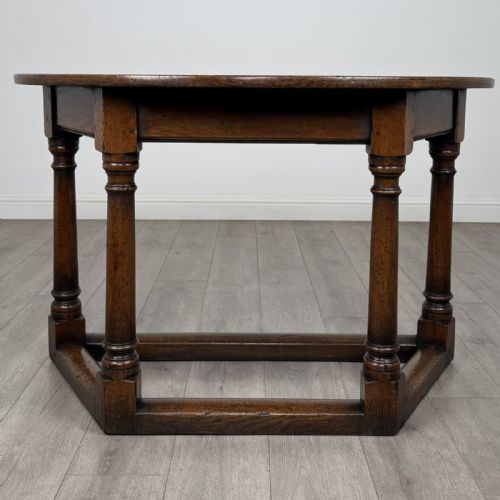
A traditional dark oak table grounds a room with heavy timber and centuries of regional craftsmanship, spanning sturdy refectory forms to clever extending designs.
Traditional Dark Oak Table
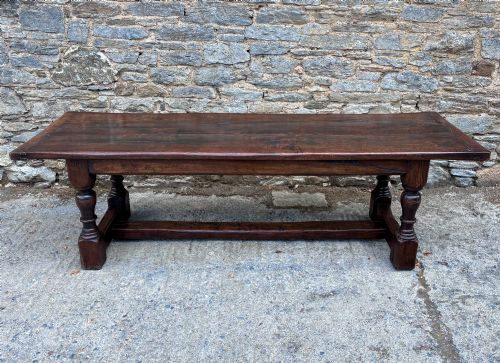
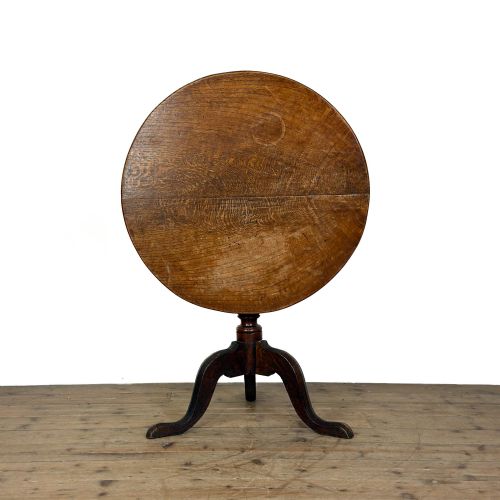
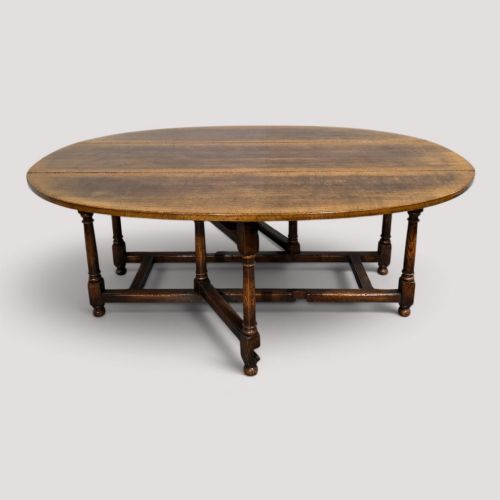
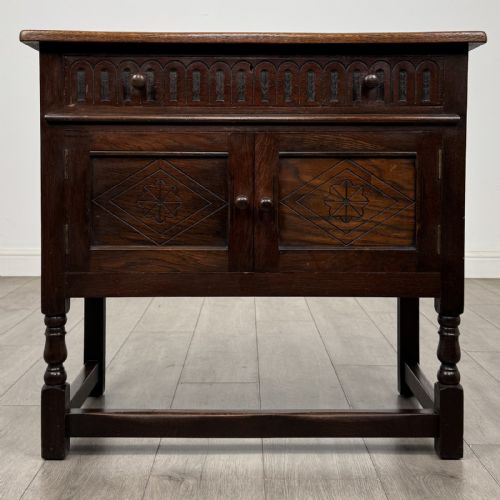
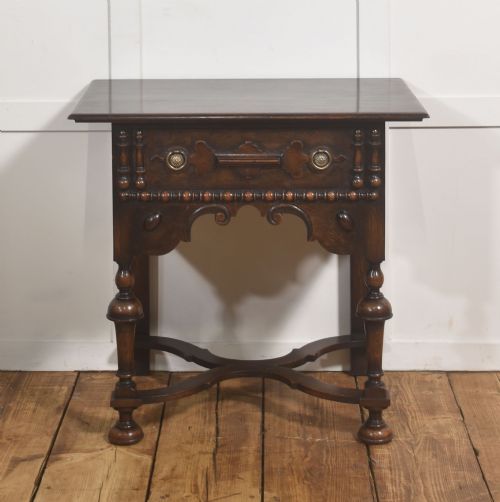
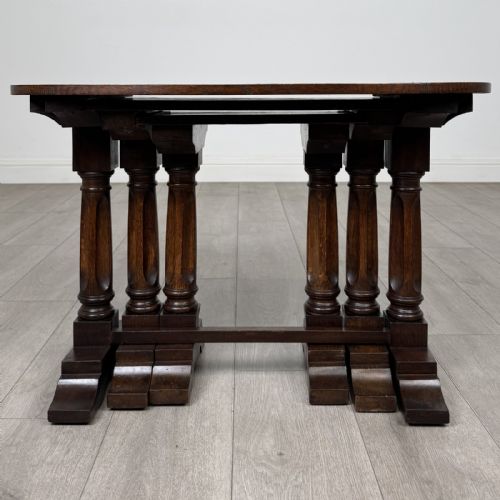
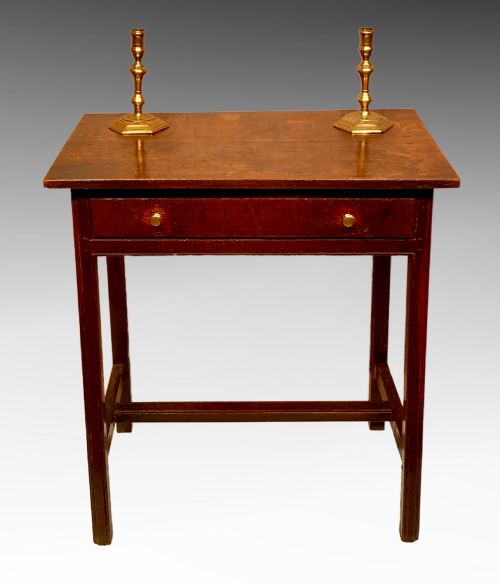
When you search for a traditional dark oak table, you encounter pieces that range from substantial refectory forms designed for communal dining to compact side tables and coffee tables. The selection draws heavily upon periods including the Georgian and Victorian eras, alongside Edwardian revivals and early twentieth-century interpretations.
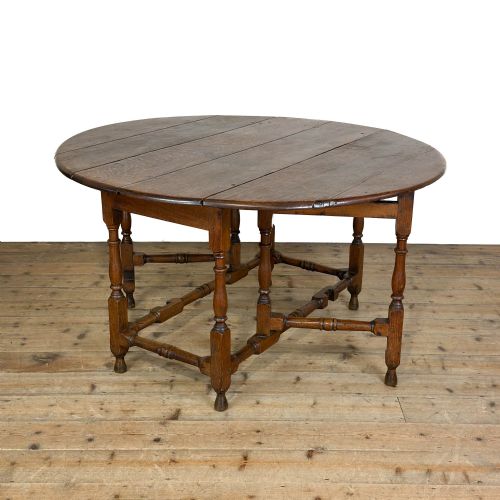
The most common formats on this page are dining tables, side tables, and coffee tables, often utilising draw-leaf or double-extending mechanisms. Stylistic influences span Jacobean Revival, Gothic Revival, and rustic farmhouse aesthetics, reflecting domestic utility across centuries.
Makers adapted these pieces for various domestic spaces, producing everything from large kitchen tables to smaller hall seats and desk variants. Oak remains the central material, frequently paired with brass hardware or chestnut and elm secondary timbers.
What varies in quality
The caliber of a traditional dark oak table rests upon the selection of timber and the integrity of the joinery rather than ornamental excess. Superior examples display dense, well-figured grain in the primary oak boards, tight joints without excessive modern reinforcement, and mechanisms that operate with smooth precision.
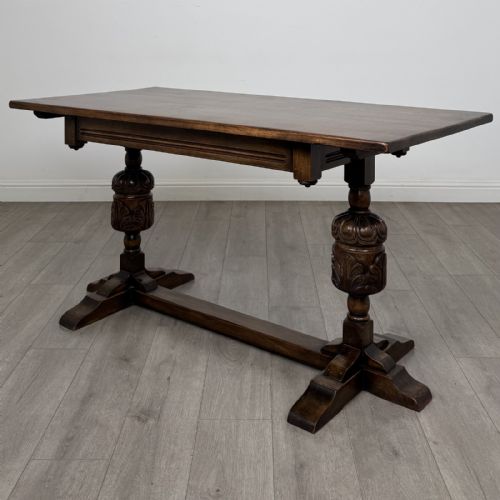
Proportion and execution distinguish finer workshop production from more utilitarian items, evident in the balance of trestle ends, turned legs, and carved details. Original hardware, such as brass fittings or hinges, contributes to the overall coherence and integrity of the piece.
One unexpected survivor in the timber lineup is a free-standing oak skittles game from the nineteenth century.
The Traditional Dark Oak Table Glossary
- Refectory table
- A long, narrow dining table originally built for monastic dining halls, typically characterised by sturdy legs connected by a central stretcher.
- Draw-leaf table
- An extending table equipped with two sliding leaves hidden beneath the main top that pull out to increase surface area.
- Gateleg table
- A table with hinged leaves supported by legs that swing out like gates to hold the flaps in position.
- Linenfold
- A style of wood carving that mimics vertical folds of folded linen or fabric, popular in Tudor and revival periods.
- Potboard
- An open slatted lower shelf fitted between the legs of a dresser base or table, originally used for storing pots and pans.
Traditional Dark Oak Table: Frequently Asked Questions
How do I identify a refectory table?
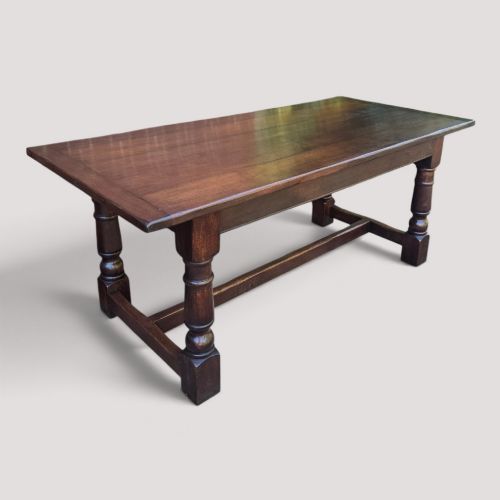
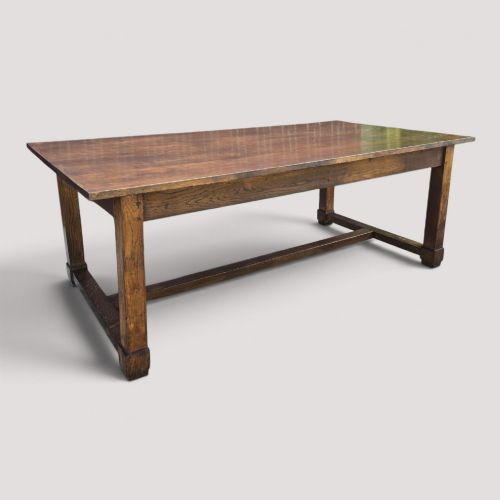
A refectory table is distinguished by its long, narrow proportions and solid wooden construction, often supported by heavy trestle ends or four turned legs linked by low stretchers.
These pieces were built to accommodate large numbers of diners in communal settings, providing exceptional stability through substantial timber framing.
How should I care for dark oak?
Maintain dark oak surfaces by dusting regularly with a soft cloth and applying a quality beeswax periodically to nourish the wood and preserve its patina.
Avoid placing solid timber furniture near direct heat sources or in areas with fluctuating humidity to prevent splitting or warping.
What periods do these tables represent?
The listings span multiple centuries, ranging from early eighteenth-century Georgian and 19th-century Victorian examples to Edwardian revivals and 1920s workshop pieces.
Each period imparts distinct stylistic traits, from the austere proportions of early refectory tables to the decorative carving of later revival styles.