
Traditional Cut Crystal Glass
Traditional cut crystal glass brings weight, clarity, and brilliant refraction to tables and ceilings through centuries of refined decorative work.
Traditional Cut Crystal Glass
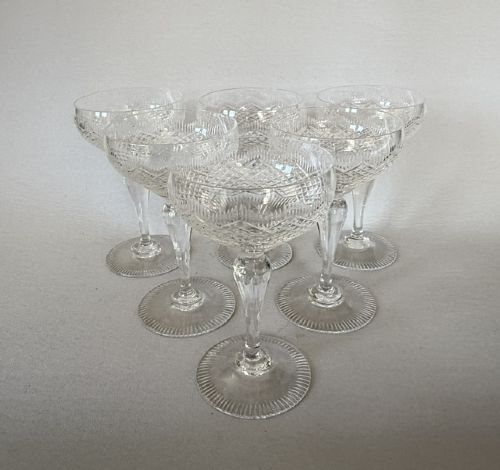
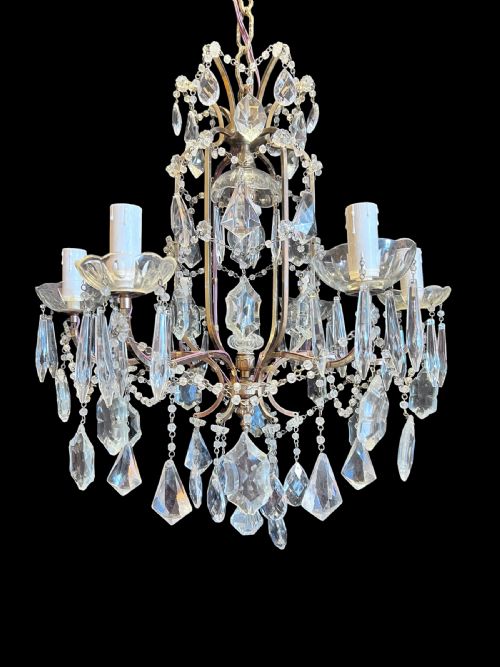
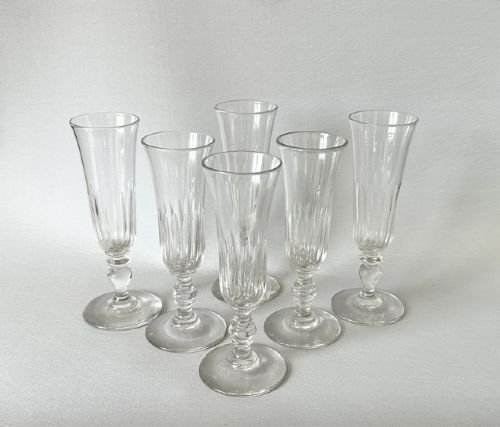
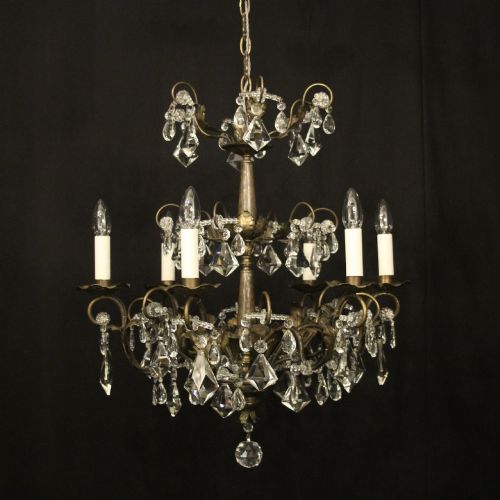
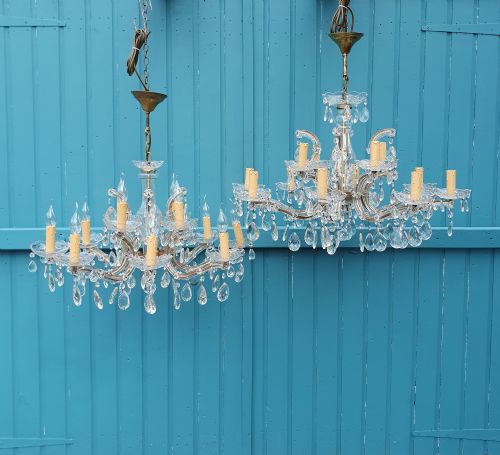
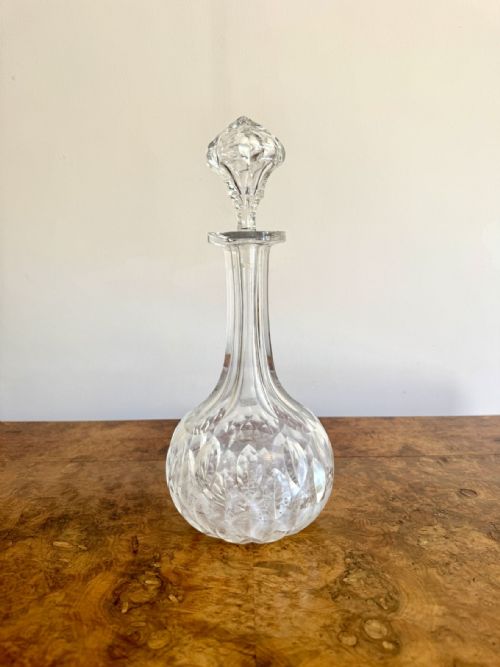
Traditional cut crystal glass encompasses functional vessels and large lighting fixtures created across the nineteenth and early twentieth centuries. Pieces range from matched sets of Victorian champagne flutes and decanters to substantial Edwardian and Art Deco chandeliers hung with lustres.
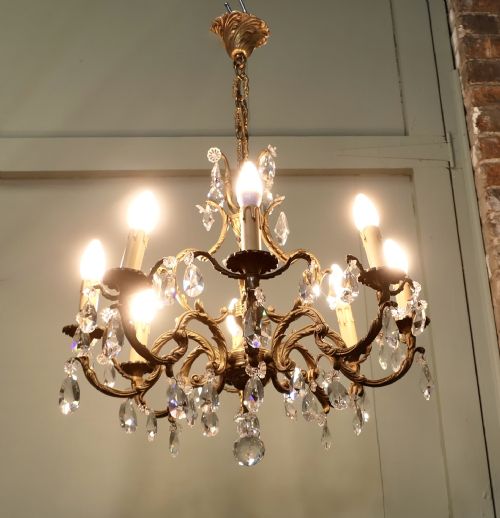
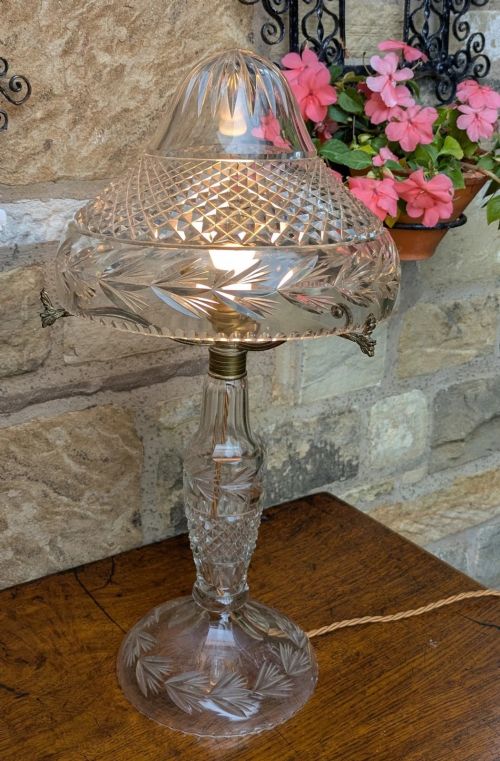
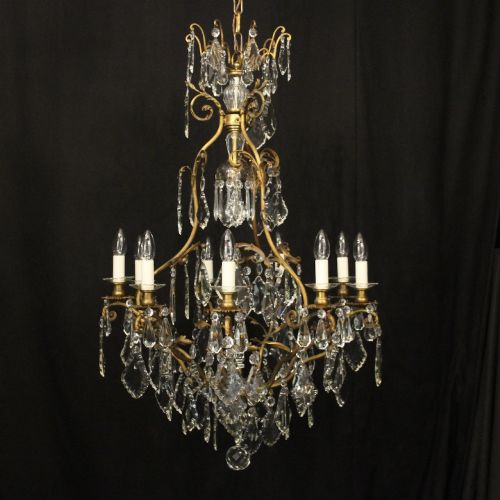
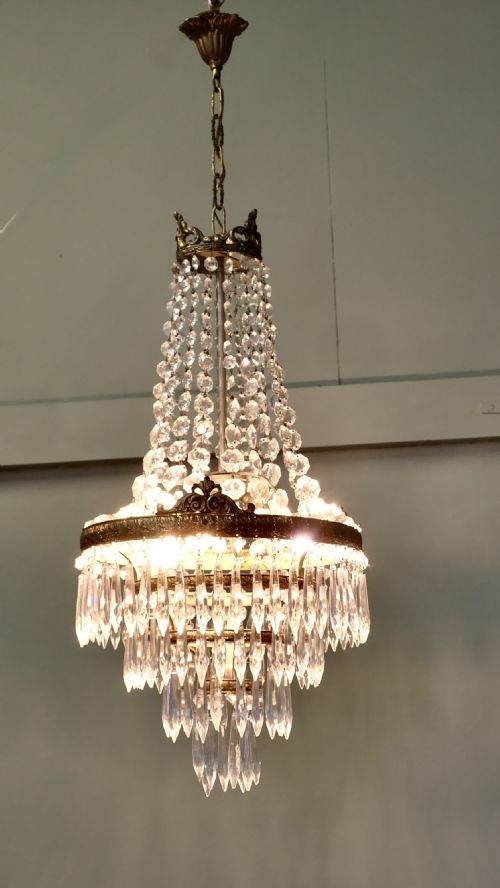
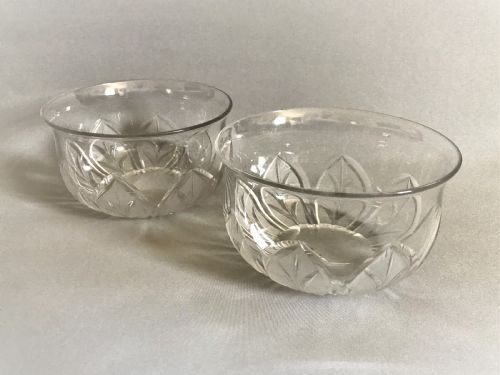
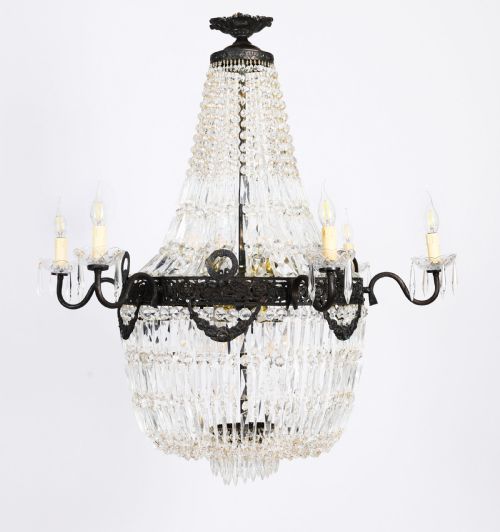
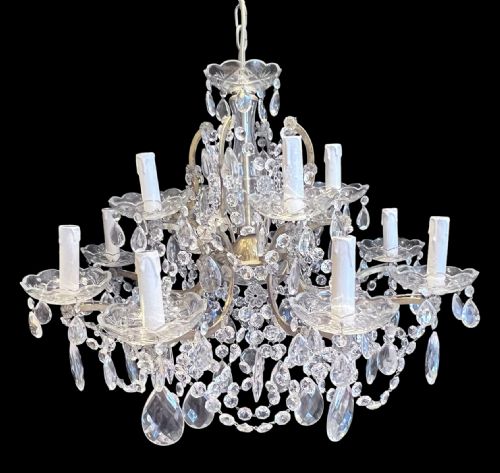
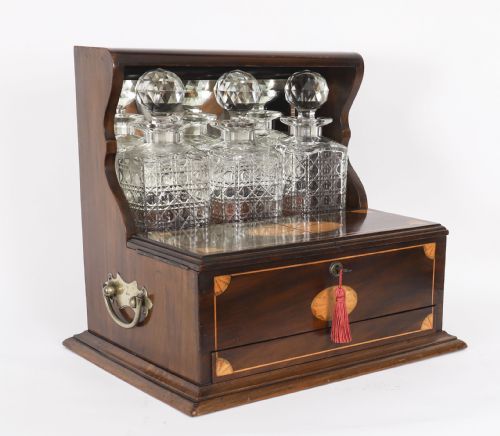
Lighting forms dominate the available selection, particularly French Empire and Louis Revival chandeliers featuring brass, gilded bronze, and cascading crystal drops. Table accessories such as mushroom lamps and finger bowls also appear frequently alongside fitted tantalus sets.
Materials and construction
Makers utilised heavy lead crystal and standard glass combined with metal frames made from brass, gilded bronze, and silver. The material allows deep geometric and botanical facets to be carved into the surface.
Chandeliers integrate complex metal armatures holding glass drops, beads, and lustres secured by wire. Decanters and glassware rely on wheel-cutting techniques to achieve sharp, refractive edges.
Common lighting forms include ceiling lights, wall lights, and tent chandeliers alongside functional glassware like decanters and tumblers.
Judging quality and character
The standard of cutting determines the brilliance of the piece, with crisp, deep facets reflecting light far more intensely than shallow markings. Weight is another indicator, as high lead content provides a heavy, resonant feel in the hand.
The integrity of the supporting metalwork matters greatly in lighting fixtures, where original brass or gilded bronze frames elevate the piece above later reproductions. Completeness of matching sets, such as unbroken Harlequin wine glasses or intact crystal lustres, defines the upper tier.
F. & C. Osler
The Traditional Cut Crystal Glass Glossary
- Plafonnier
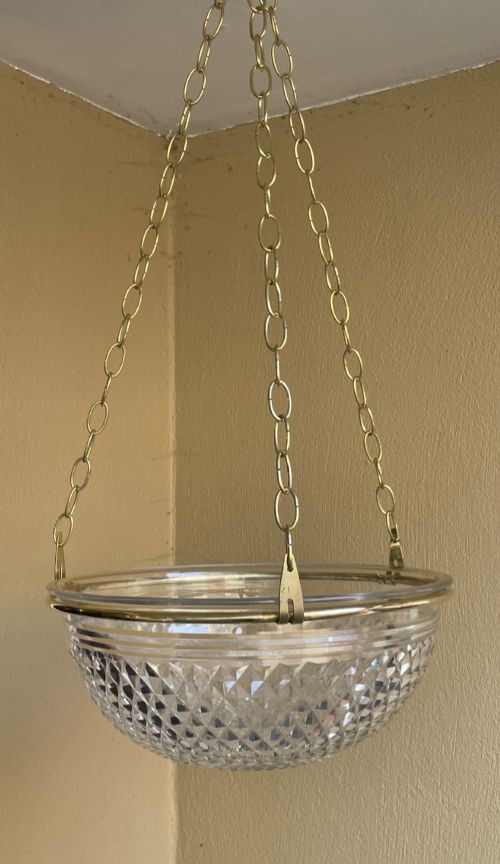
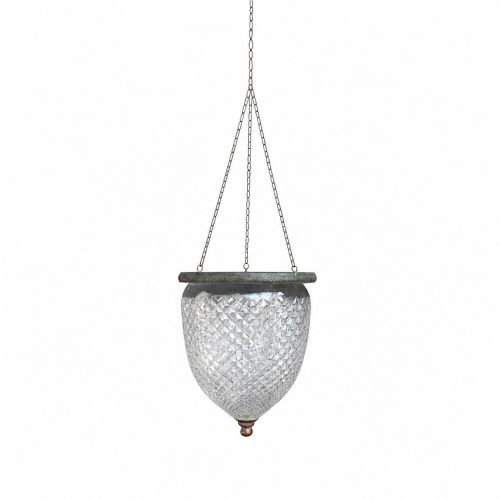
- A shallow ceiling light mounted flush or close to the surface, frequently featuring cut glass bowls or shades. These fixtures gained popularity during the Edwardian period.
- Lustre
- A cut crystal pendant or drop suspended from a chandelier or wall light to increase light refraction. They are often faceted in spear or teardrop shapes.
- Tantalus
- A wooden frame, often mahogany, holding decanters securely behind a locking bar. The design allows contents to be seen while preventing unpermitted access.
- Harlequin set
- A collection of tableware items that match in style or form but differ slightly in individual details or colour. Such sets were assembled across various nineteenth century periods.
- Bag chandelier
- A lighting fixture featuring a dense mass of small crystal beads gathered in a bag-like silhouette beneath a metal frame. This style creates a shimmering column of reflected light.
Traditional Cut Crystal Glass: Frequently Asked Questions
How do I clean an antique chandelier?
Cleaning requires a mild solution of warm water and a gentle cleaning agent applied by hand to each individual crystal drop. Metal frames should be wiped carefully without harsh chemicals to preserve the original finish.
Leaving the lustres attached while cleaning prevents misplacement of the delicate wire fixings. Drying each component with a soft cloth ensures maximum light refraction.
Are old decanters safe for modern wine?
Most nineteenth century decanters are suitable for serving wine once thoroughly rinsed and checked for internal residue. Lead content in older crystal means wine should not be stored in them for extended periods.
Gentle washing with warm water and specialised cleaning beads removes sediment from narrow necks. Wooden tantalus frames should be kept away from excessive moisture during cleaning.
How can I date a crystal decanter?
Dating relies on the shape of the body, the style of the stopper, and the depth of the cutting. Victorian examples often feature star-cut bases and heavy mushroom stoppers.
Edwardian pieces tend toward elongated necks and geometric bell shapes. Accompanying silver or mahogany presentation stands also provide clues to the manufacturing era.