

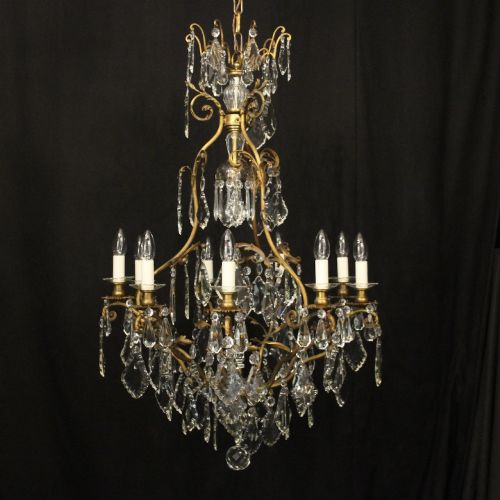
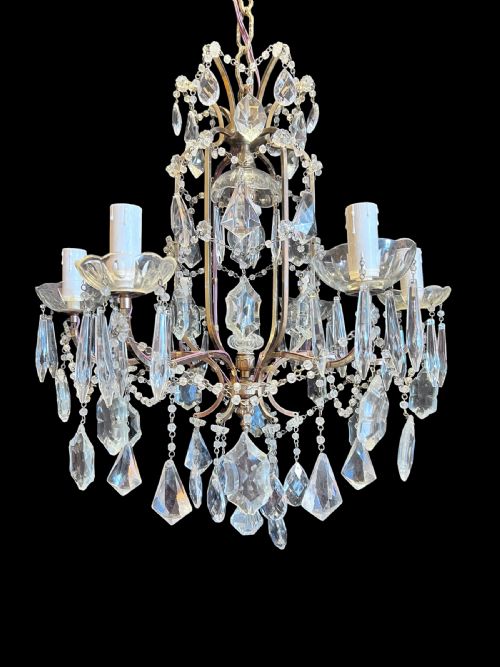
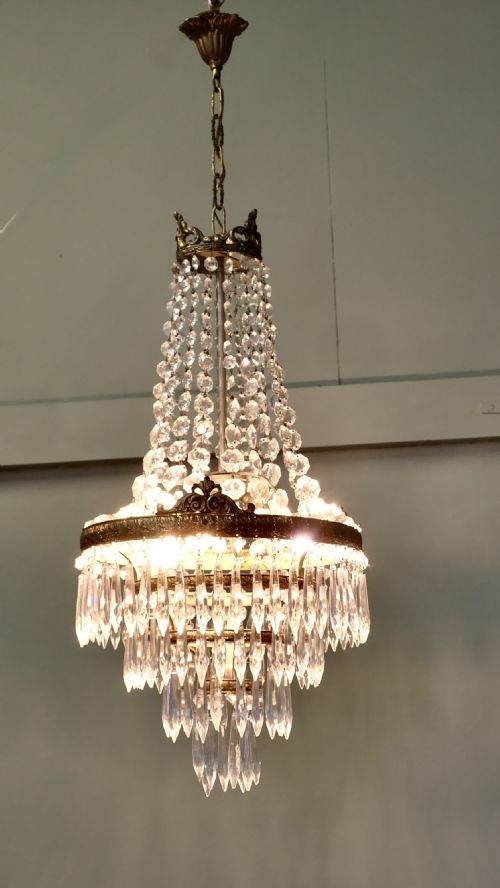
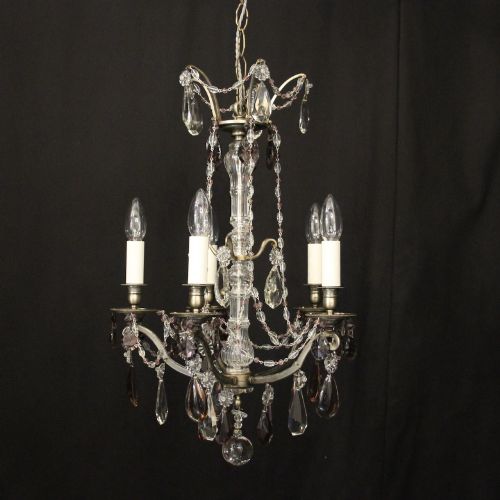
Traditional Crystal Pendant Fitting
A traditional crystal pendant fitting brings focused illumination and refractive sparkle to a room, drawing the eye upward through hanging drops and tiers of glass.
Traditional Crystal Pendant Fitting
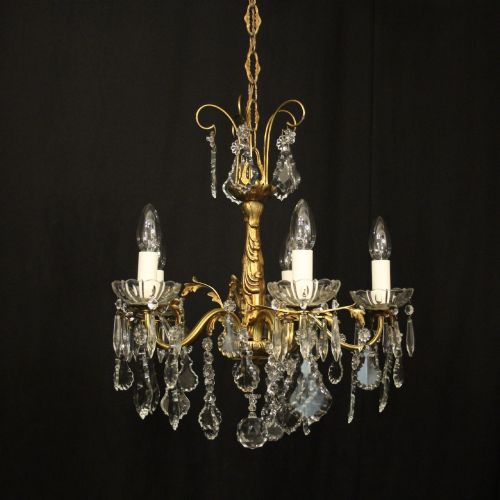
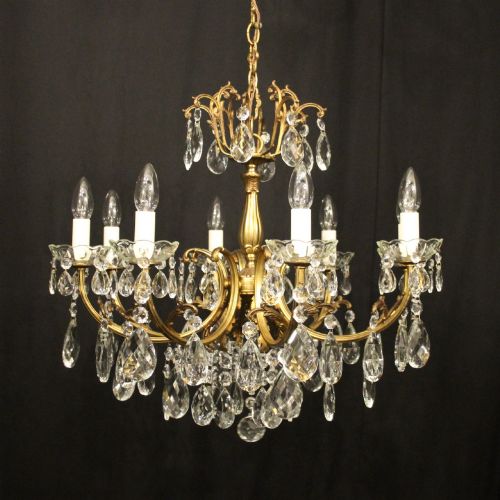
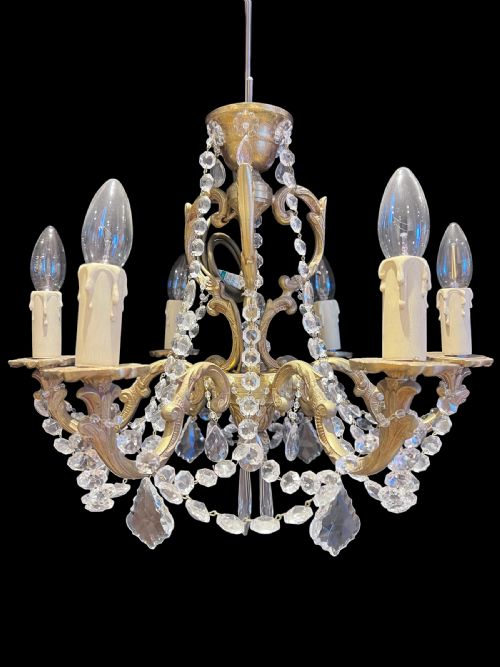
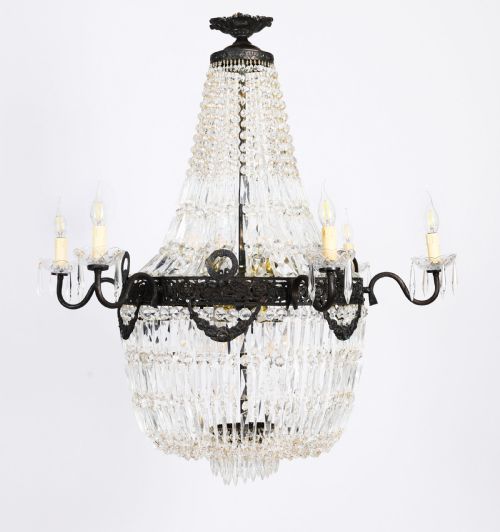
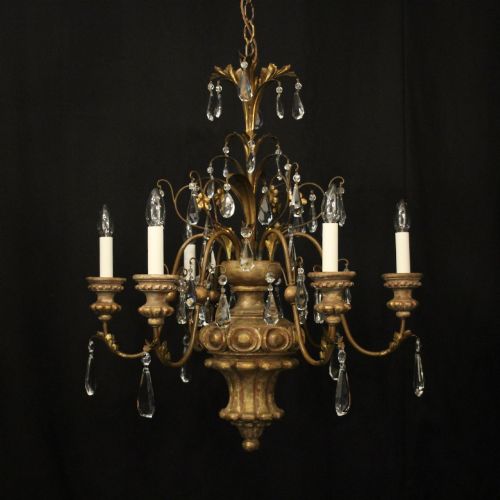
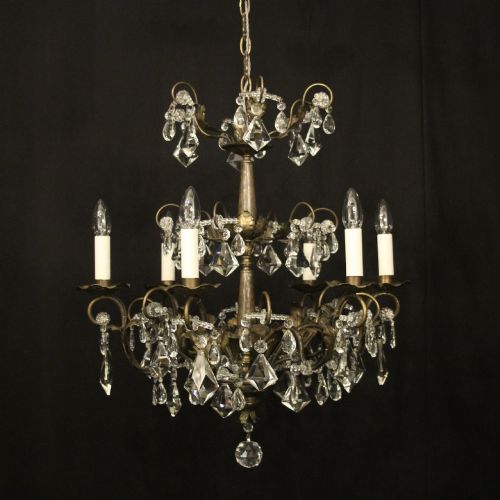
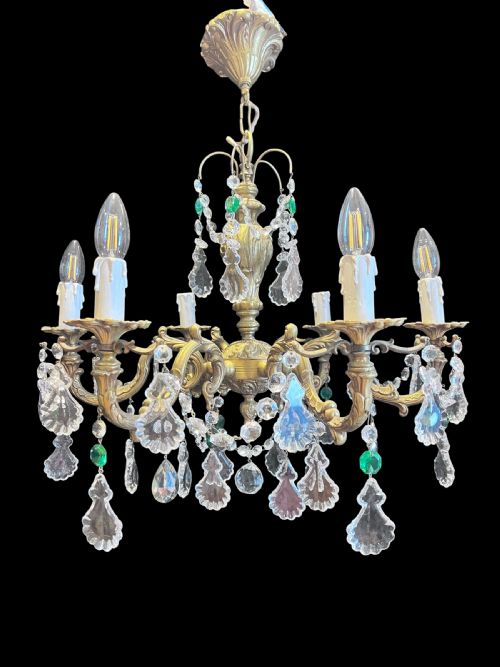
A traditional crystal pendant fitting encompasses hanging ceiling lights constructed from metal frames adorned with glass or crystal elements. These pieces originate predominantly from the late nineteenth century through to the 1930s, spanning Edwardian and early twentieth century periods.
Lighting formats on this page extend across ceiling lights, ceiling lighting, and pendant lights. Brass, bronze, and gilt metal form the structural framework that supports extensive arrays of cut crystal and glass.
Assessing quality in period lighting
The calibre of a traditional crystal pendant fitting rests upon the depth of the metal casting and the precision of the crystal cutting. Heavier gilt bronze or brass frames provide stable architecture for intricate arrangements of beaded arms and waterfall drops.
Superior examples demonstrate meticulous hand-wiring and uniform clarity within the glass components, ensuring unobstructed light dispersion. The complexity of the tiered design and the integration of specialised forms like bag or birdcage frames distinguish standard production from exceptional pieces.
The listings span the 1880s to the 1930s, uniting late Victorian wrought iron with elaborate 1920s French Empire gilt bronze designs.
The Traditional Crystal Pendant Fitting Glossary
- Bag chandelier
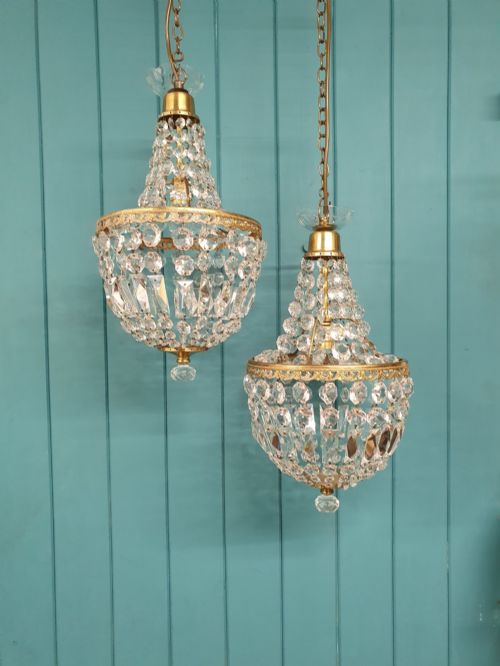
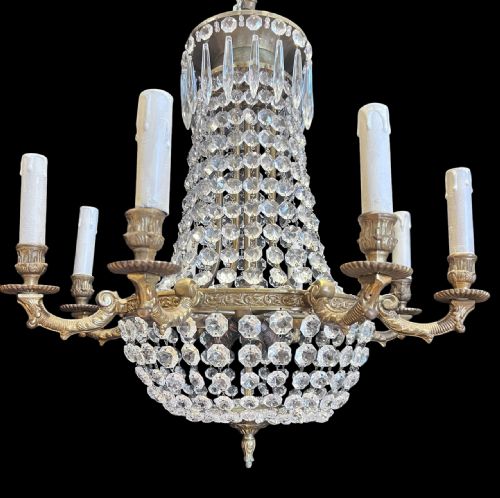
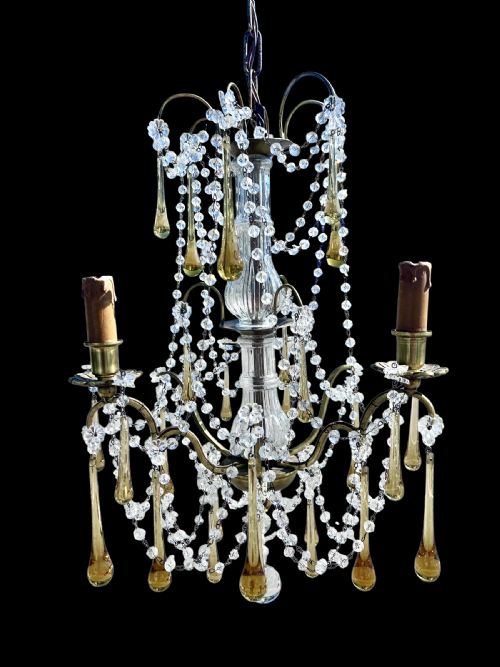
- A lighting fixture featuring a flattened lower bowl shape composed of numerous small crystal beads strung together. This style creates a dense cascade of light beneath the main metal frame.
- Waterfall chandelier
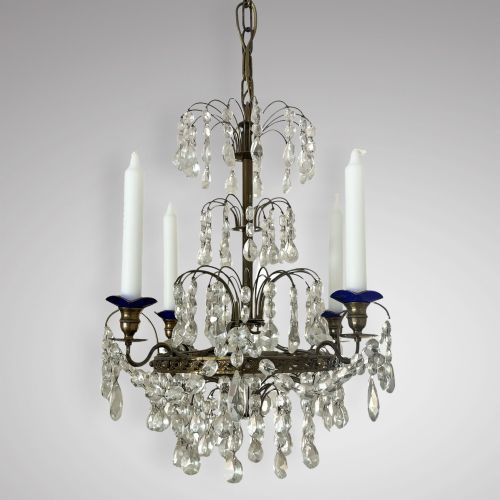
- A fitting characterised by cascading tiers of crystal drops that flow outward and downward from a central crown. The arrangement emulates the visual movement of falling water.
- Gilded bronze
- A metal alloy treated with a thin layer of gold leaf or gilt wash to impart a rich metallic sheen. This finish protects the underlying bronze while adding decorative warmth.
- Cut crystal
- Glass that has been mechanically ground and polished with facets to maximise light refraction. These sharp facets create rainbow prisms when illuminated.
- Maria Theresa chandelier
- A flat-arm style of lighting fixture developed in honour of the Austrian Empress, featuring glass-sheathed metal arms. This form incorporates elaborate crests and extensive leaf motifs.
Traditional Crystal Pendant Fitting: Frequently Asked Questions
How do I hang a heavy pendant fitting?
Suspending these fixtures requires securing the ceiling rose directly to a structural timber joist or ceiling noggint to bear the substantial combined weight of metal and glass. A professional electrician should assess the ceiling capacity and install a rated support hook.
Heavier multi-tier fittings often demand independent steel suspension cables concealed alongside the electrical flex for absolute safety during daily use.
What is a bag chandelier?
A bag chandelier takes its name from the distinctive triangular or bag-shaped lower section formed by dense webs of small glass beads. This regional design directs light through a concentrated mesh of crystal.
Originating in earlier centuries, these compact fittings gained renewed popularity during the Edwardian era and the 1920s for rooms requiring intense sparkle without immense drop height.
How do I clean period crystal fittings?
Routine maintenance involves dusting the glass drops with a soft feather duster while the fitting remains unpowered and cool. For deeper cleaning, professionals recommend a specialised spray cleaner designed for chandeliers, allowing residue to drip onto towels placed below.
Individual crystal drops can also be detached, washed in warm soapy water, dried thoroughly, and rehung by hand to restore maximum refractive brilliance.
Are these lights wired for modern bulbs?
Most period ceiling fixtures on this page retain or have received updated internal wiring compatible with standard domestic electrical systems. Electricians can easily integrate modern LED candle bulbs that emit appropriate warmth without generating excessive heat.
Buyers should consult a qualified professional to ensure the existing lamp holders meet current safety standards upon installation.