


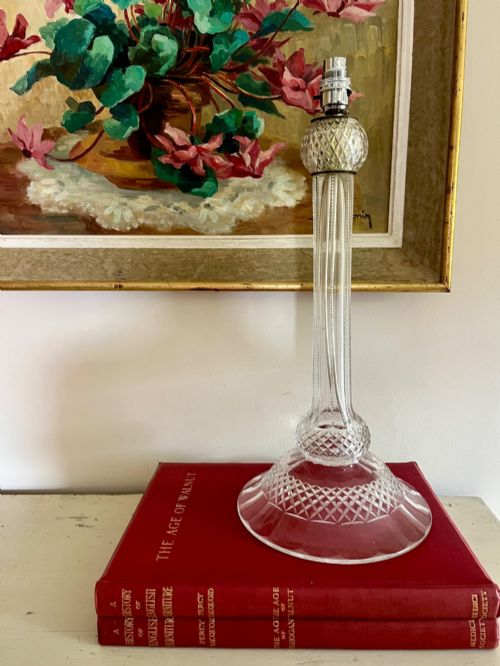


Traditional Crystal Lamp
A traditional crystal lamp brings heavy glass and polished metal together to catch and throw light across a room.
Traditional Crystal Lamp
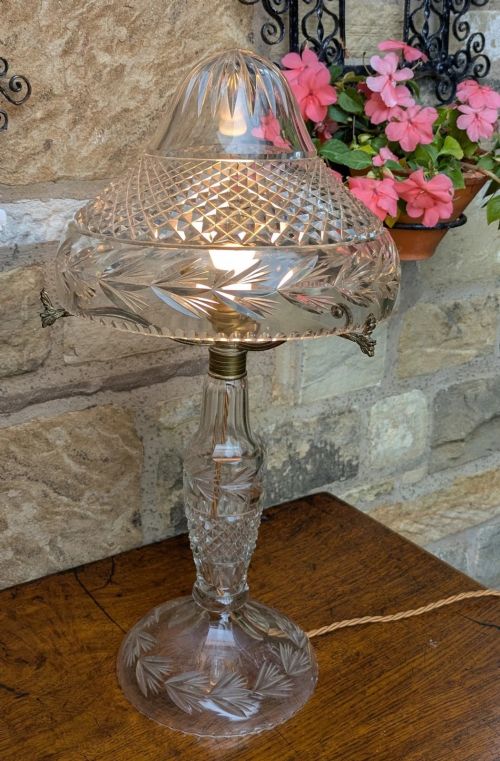
A traditional crystal lamp relies on cut glass or crystal drops suspended from metal frames to refract illumination. When people search for a traditional crystal lamp, they usually encounter either heavy table lamps with faceted stems or ceiling fixtures arranged in tiers. These pieces span from the mid-nineteenth century through the Edwardian era and into the early twentieth century.
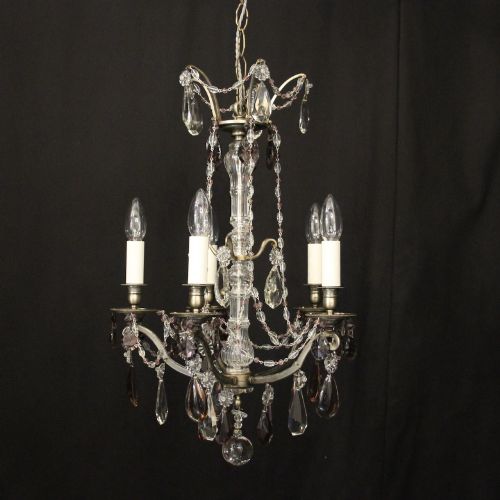
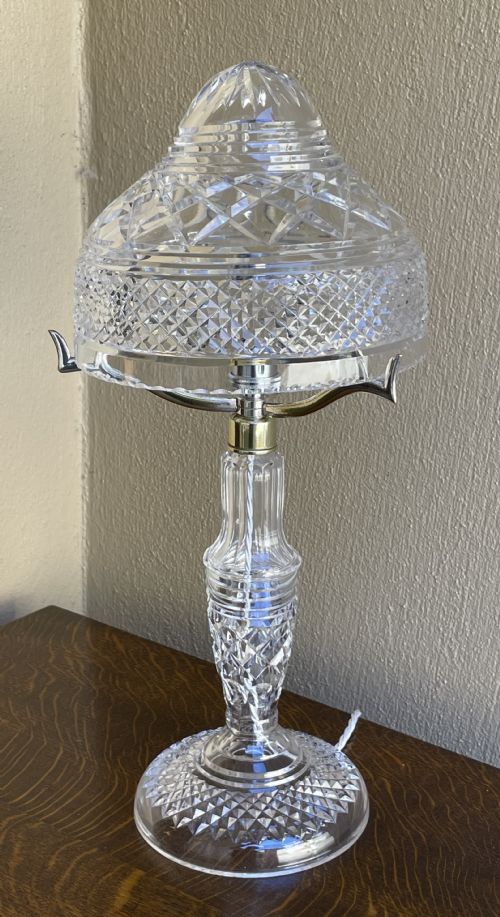
The selection includes many French and English forms, from small mushroom-shaped table lamps to large multi-light chandeliers and plafonniers. Brass, gilt bronze, and chrome supply the structural skeletons that hold the glass components securely in place. Most examples date from the nineteen-tens and nineteen-twenties, reflecting Edwardian and classical revival tastes.
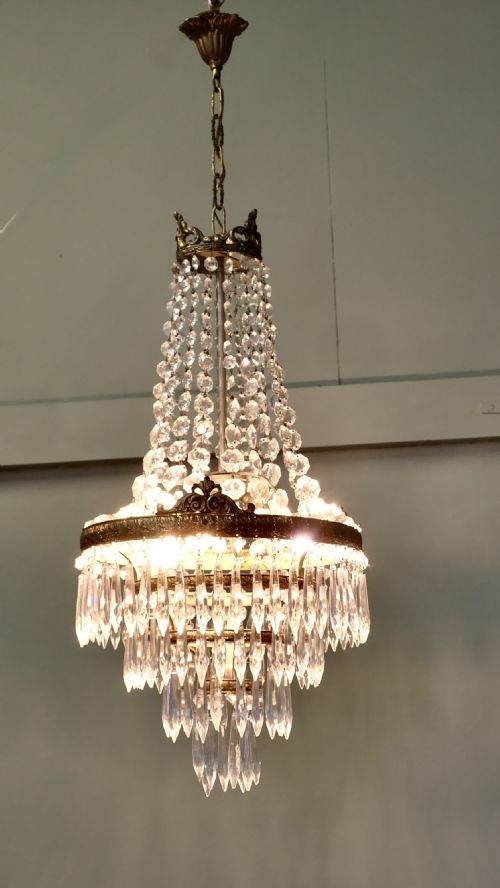
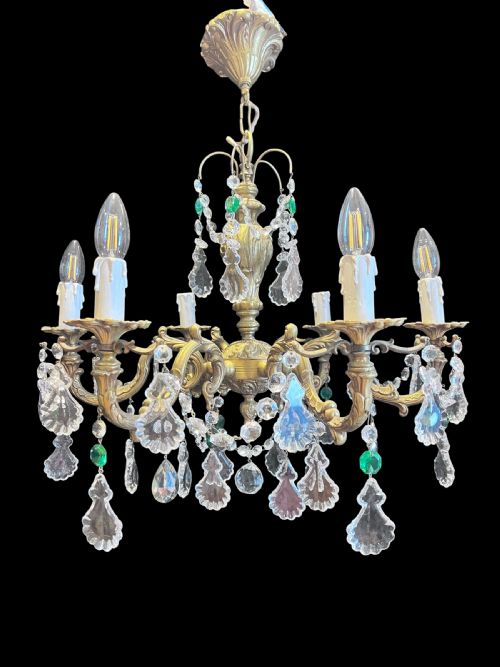
Table lamps and smaller ceiling lights dominate the single-point lighting options, while tent and waterfall chandeliers provide grander illumination. Brass frames paired with coloured or clear crystals appear frequently across the inventory. Each object serves to bounce light from bulbs or candles through shaped and polished glass surfaces.
Materials and construction methods
Makers built these lamps using structural metal frames of brass, gilt bronze, iron, or silver-gilded alloy to bear the weight of heavy glass components. Skilled workers cast or forged these metal parts into arms, bands, and canopies before applying surface gilding or leaving the polished brass exposed.
Glass elements underwent meticulous cutting and moulding by hand to create faceted drops, swags, beads, and heavy mushroom shades. Workers then wired these crystal pieces to the metal frames using brass pins and wire loops, allowing each pendant to move and catch the surrounding light.
Listings feature items spanning the Victorian era through the nineteen-fifties, utilising brass, gilt bronze, and cut crystal.
Distinctions in craftsmanship
The density and lead content of the glass dictate how sharply a lamp refracts light and how crisply the facets hold their edges. Superior pieces employ heavy cut crystal with deep, hand-polished grooves rather than thin moulded glass with softer, rounded seams.
Metalwork quality separates standard production from finer workshop output, particularly in the weight of the cast bronze or brass frames and the precision of the joining mounts. Elaborate chased detailing on gilt bronze mounts and secure, articulated crystal pinning indicate higher workshop standards.
F. & C. Osler·Stuart Crystal
The Traditional Crystal Lamp Glossary
- Plafonnier
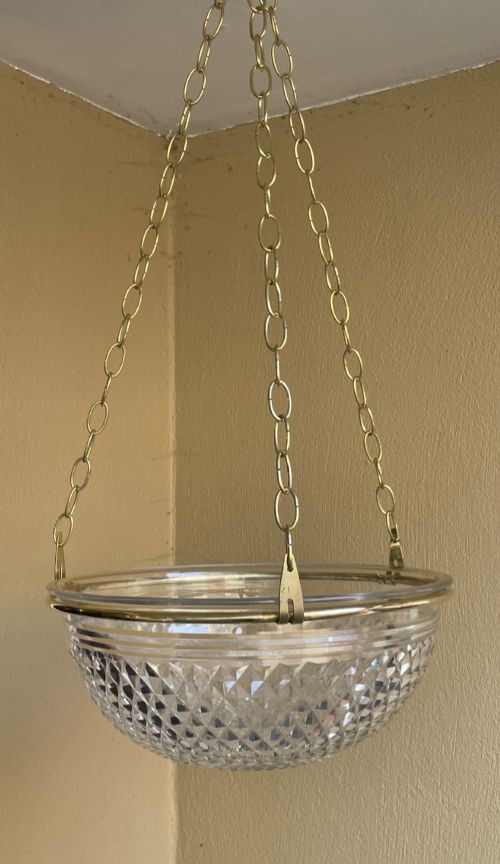
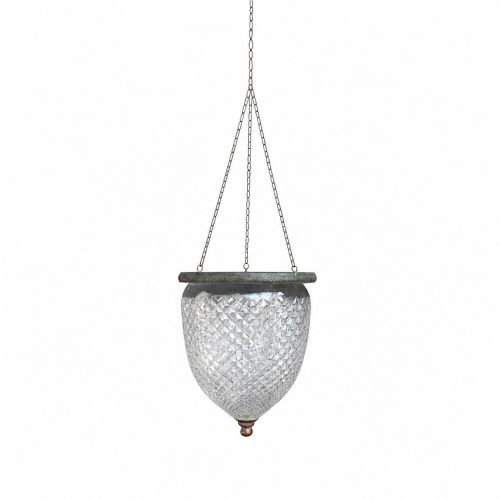
- A ceiling light fixture that sits flush or very close to the ceiling surface. These often feature a glass bowl or shade held by a metal rim.
- Tent and waterfall
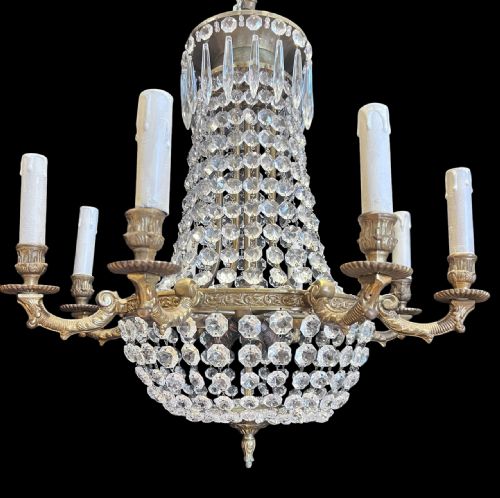
- A lighting configuration where strings of crystal beads form an upper tent shape that drops down into a cascading curtain of glass pendants. This layout maximises the reflective surface area.
- Gilt bronze
- Metal cast from a copper and zinc alloy with a thin layer of gold applied to the surface. It provides a rich, warm metallic tone that does not tarnish easily.
- Cut glass
- Glass shaped and patterned by holding it against a revolving abrasive wheel. The process leaves sharp, clear facets that disperse light effectively.
- Drop
- An individual piece of cut glass or crystal suspended from a lighting fixture. Drops come in various shapes such as pears, icicles, and beads.
Traditional Crystal Lamp: Frequently Asked Questions
How do I clean a crystal lamp?
Maintenance involves wiping individual glass drops with a mild cleaning solution while they remain attached to the frame, or removing them for thorough washing. Careful handling prevents damage to the delicate brass pins holding the pendants.
Using a soft lint-free cloth ensures the polished glass surfaces retain their clarity without scratching the metal mounts beneath.
Are these lamps heavy to hang?
Many fixtures incorporate dense cast bronze frames and hundreds of glass drops, which add considerable weight to the overall assembly. Proper ceiling joist anchors and metal fixings are essential for safe suspension.
Table versions sit securely on heavy bases, but ceiling lights demand professional installation to support their full load safely.
How do I date a crystal lamp?
Dating relies on examining the wiring methods, metal alloys, and cutting styles characteristic of specific decades. Edwardian and early twentieth-century pieces often feature distinct casting marks and hand-cut glass formations.
Comparing the frame construction against known period styles helps narrow down the production era accurately.
Can modern bulbs be used?
Most antique fixtures accept standard modern bulbs provided the wattage matches the capacity of the original wiring circuits. Rewiring is often recommended for older pieces to ensure electrical safety.
Consulting a qualified electrician ensures the lamp operates safely while preserving the historic frame and sockets.