
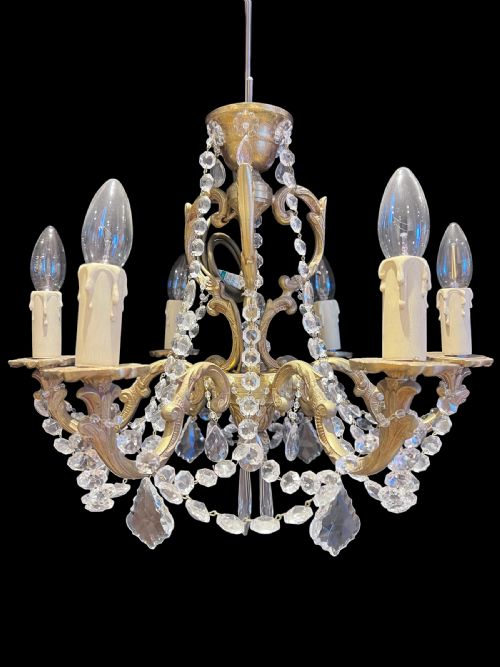

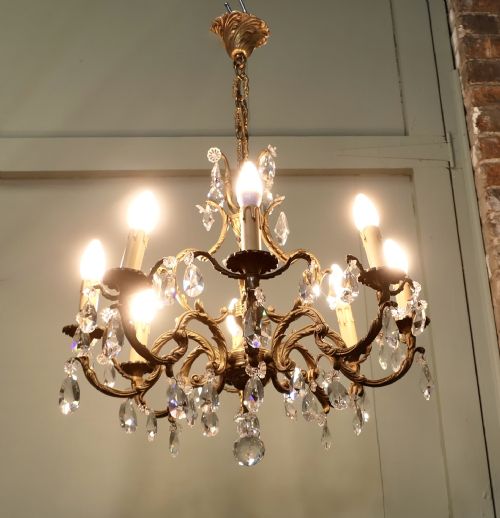
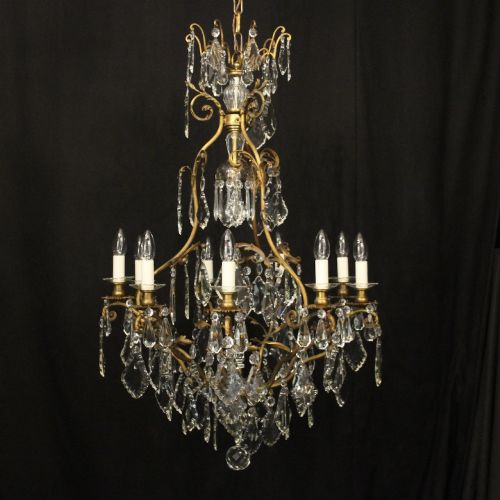
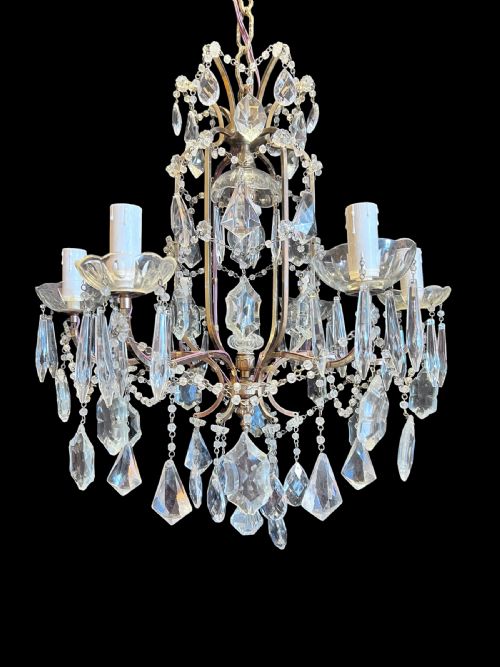
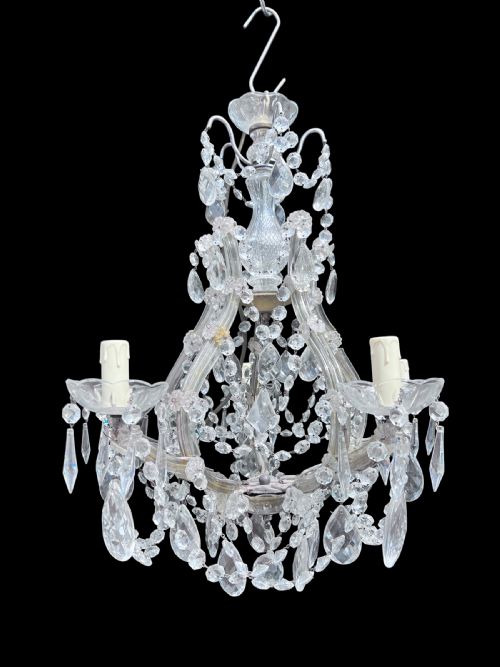
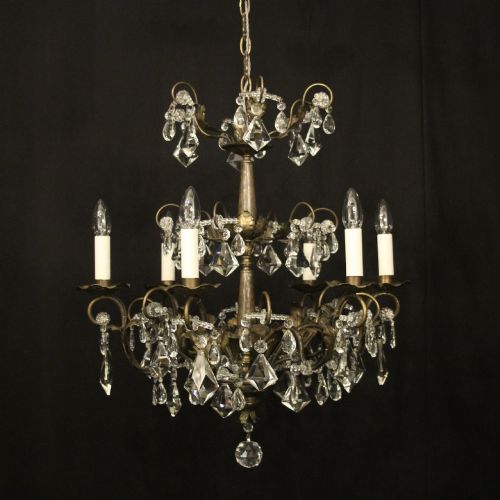
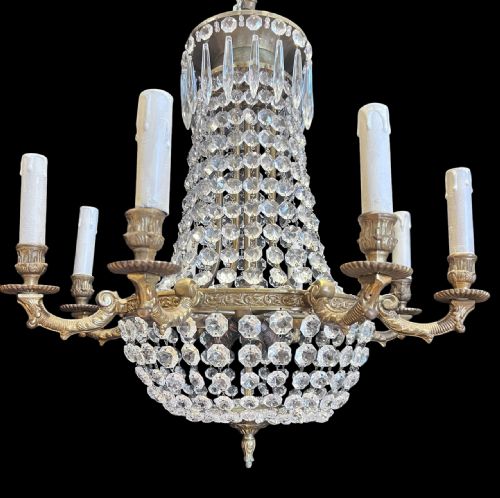
Traditional Crystal Chandelier
A traditional crystal chandelier brings undeniable presence to a room, offering glittering illumination through assembled drops, beads and lustres.
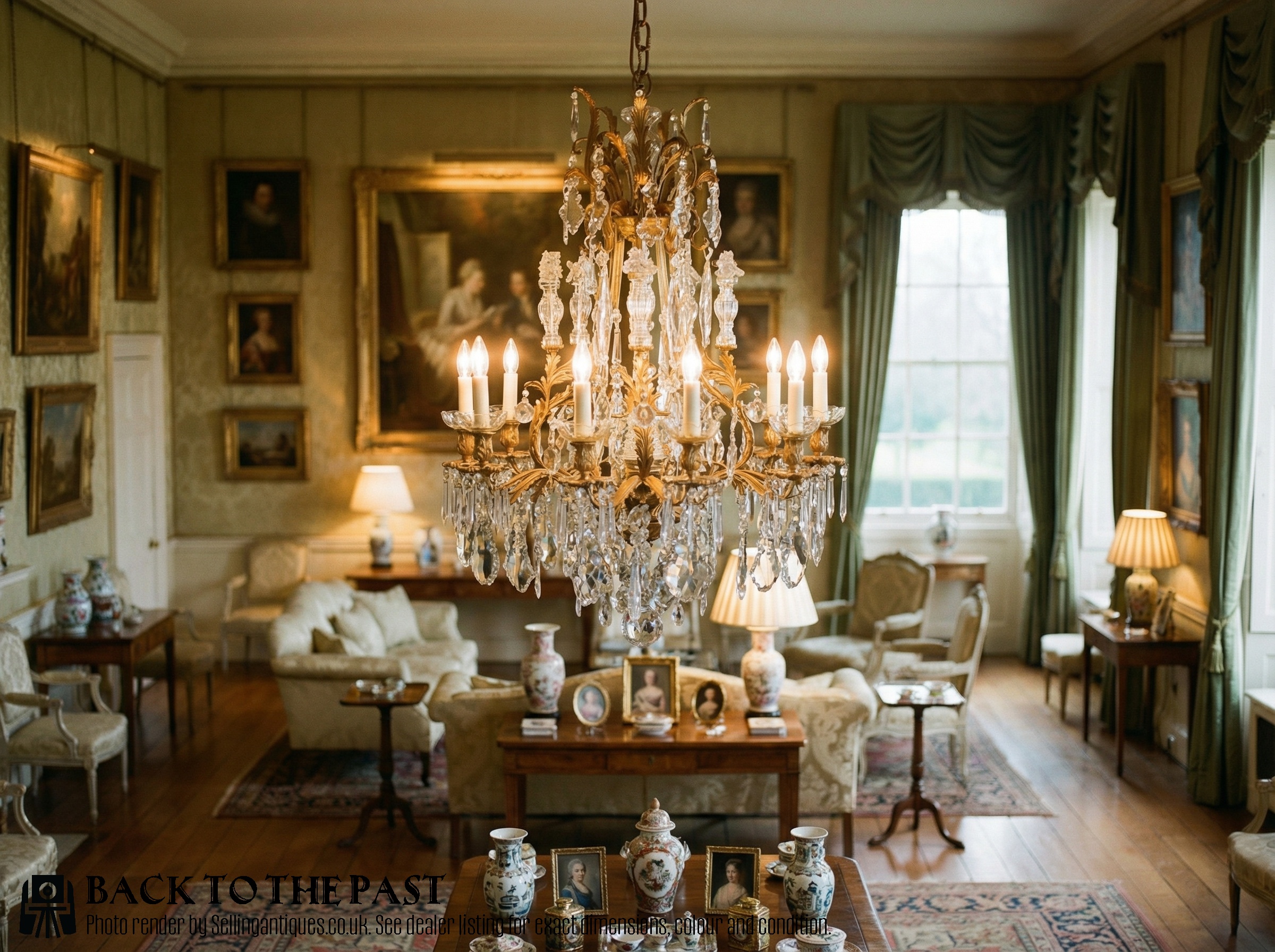
Traditional Crystal Chandelier
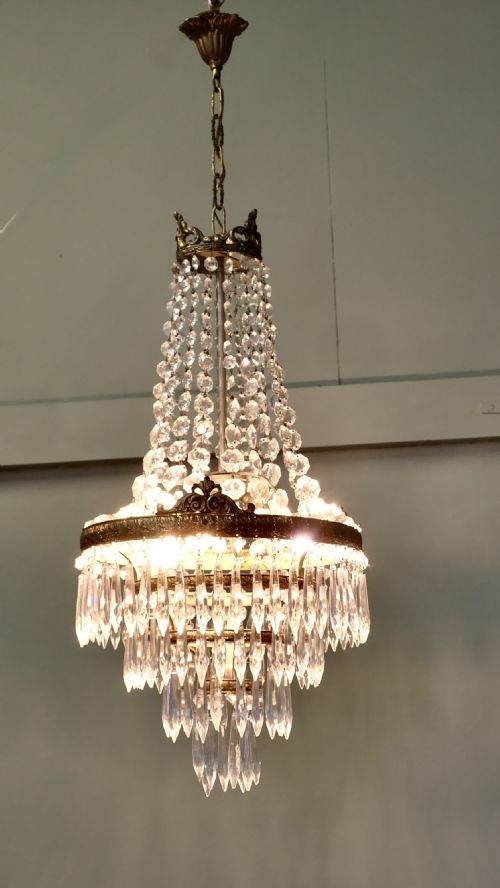
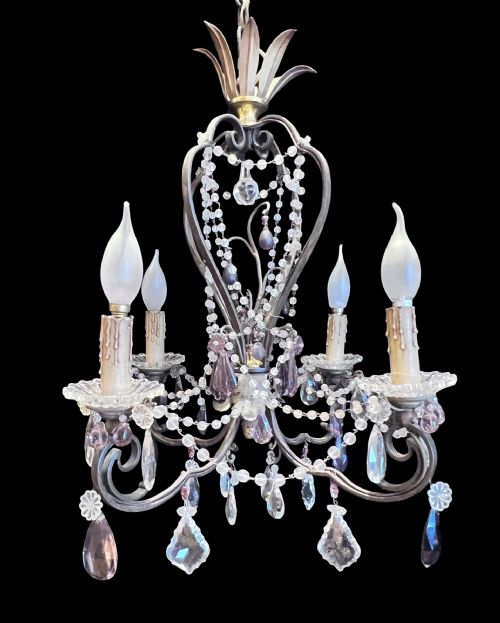
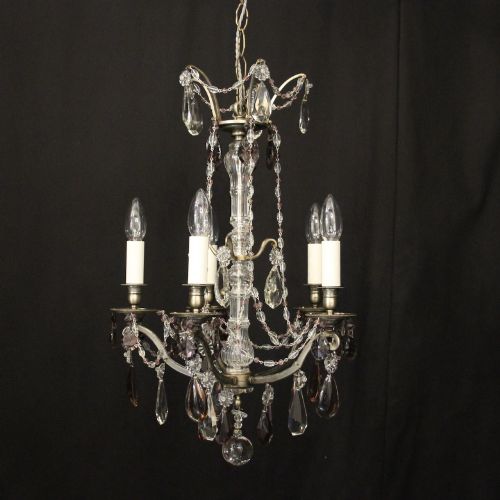
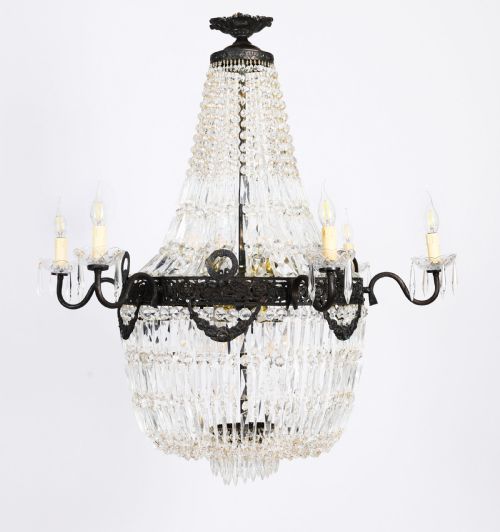
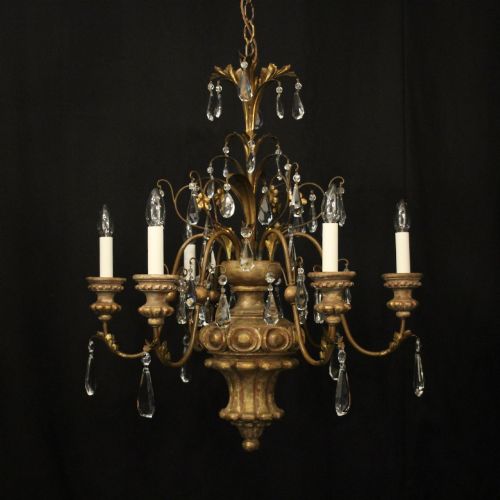
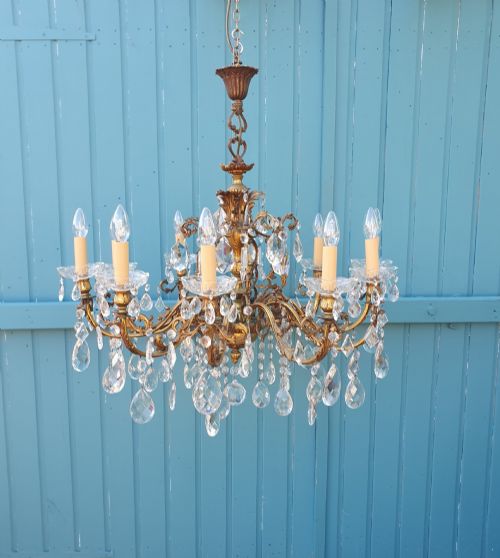
A traditional crystal chandelier typically takes the form of a multi-branched ceiling light or pendant hung with glass and crystal elements. Examples span the nineteenth century, the Edwardian era, and the early twentieth century, showing strong French and Italian influences.
The assortment on this page leans heavily toward French Empire, Louis Revival, and Italian styles, often featuring gilt brass, bronze, or metal frames. Buyers encounter configurations ranging from compact three-light fixtures to large fourteen-light ballroom centerpieces.
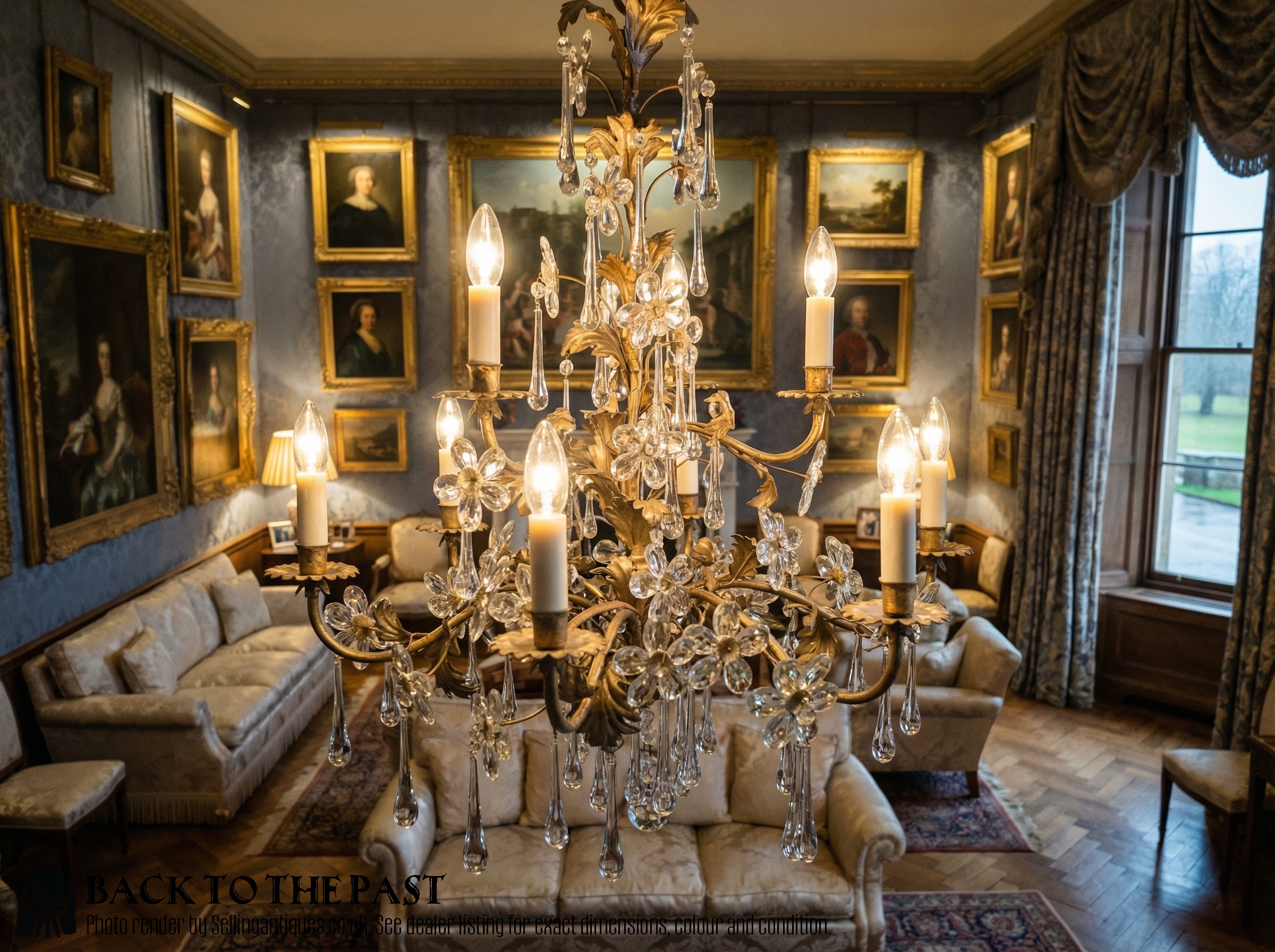
Materials and construction methods
Makers built the structural frameworks using cast brass, gilt bronze, and metal, shaping arms and crowns to support multiple candle-style light branches. Gilding and silvering were frequently applied to the brass and bronze bases.
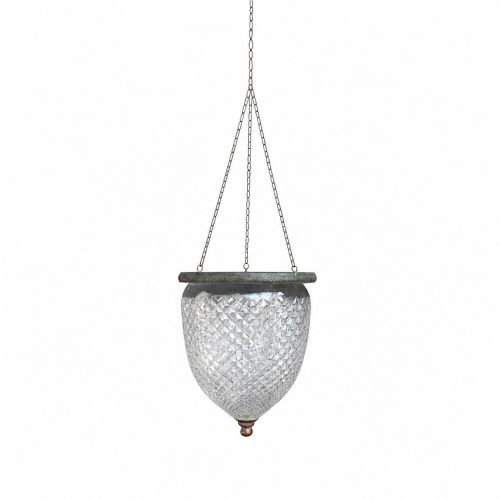
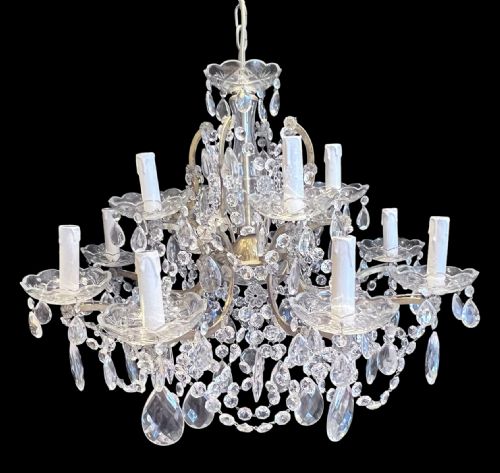
The hanging components rely on moulded glass, cut glass, and cut crystal, shaped into teardrops, beads, acorns, and large lustres. These elements are wired or pinned together by hand to drape gracefully across the frame.
Traditional Crystal Chandelier Retail Price Guide 2026
Typical asking prices for traditional crystal chandelier among the pieces listed under this phrase on Sellingantiques today, from the lower quarter to the upper quarter. They describe what is for sale here now, not the wider market.
Listings feature pieces spanning from the late nineteenth century through the 1930s, constructed in brass, cut glass, and gilt bronze.
Distinguishing quality across examples
Quality reveals itself in the density and precision of the glass cutting, where sharper facets catch and refract light more effectively than simpler moulded drops. The weight and complexity of the metal frame, especially detailed gilt brass or bronze castings, also indicate higher workmanship.
The structural integration of the design separates standard pieces from grander ones, such as multi-tiered tent and waterfall configurations with extensive beadwork and numerous light arms. Heavier, more substantial armatures support intricate arrays without visual crowding.
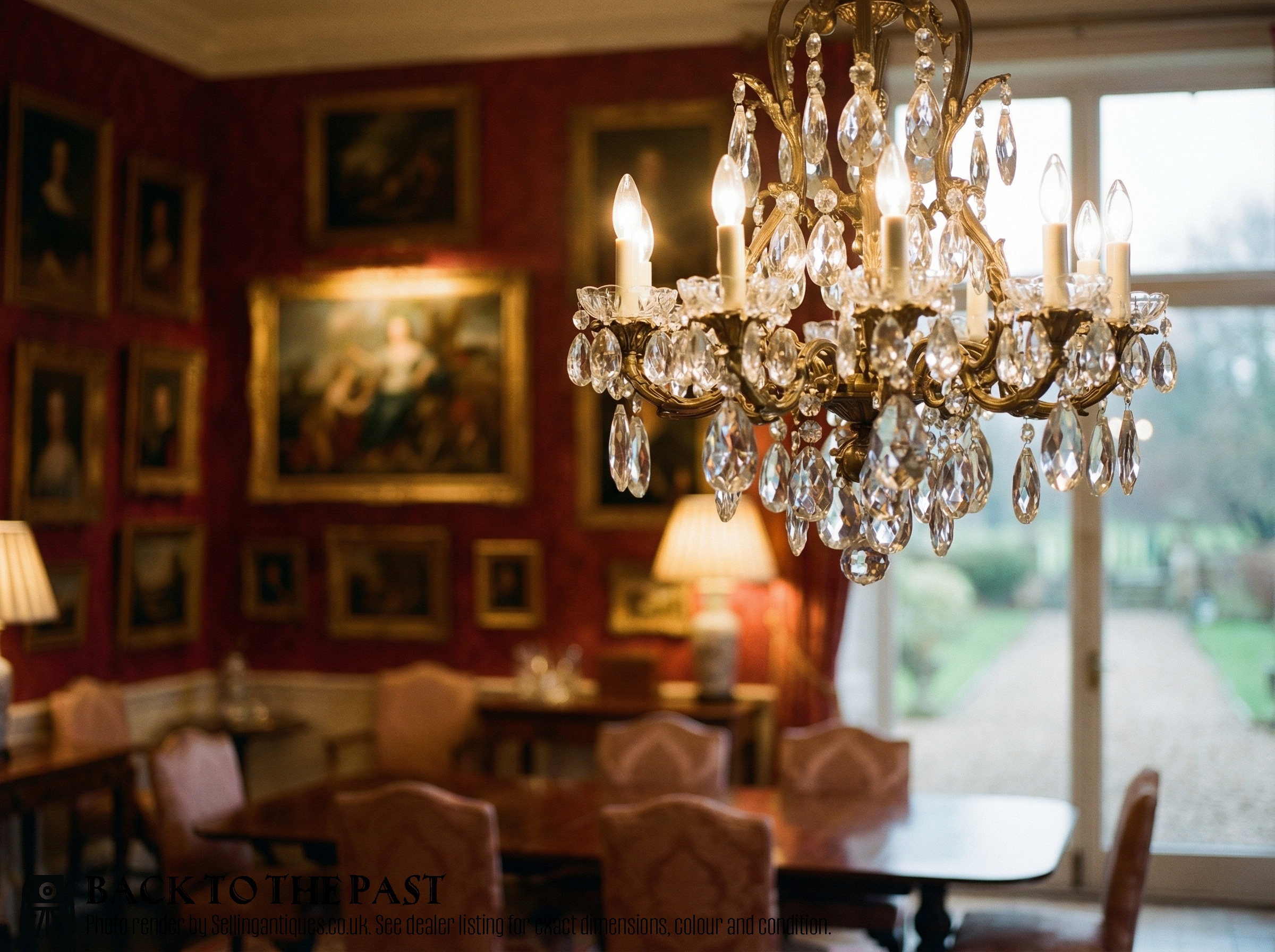
The Traditional Crystal Chandelier Glossary
- Lustre
- A cut glass or crystal pendant suspended from the arms or crown of a light fixture. These elements catch and multiply the illumination from the bulbs.
- Plafonnier
- A ceiling-mounted light fixture that sits relatively flat against the ceiling rather than hanging on a long drop.
- Tent and waterfall
- A chandelier structure featuring an upper canopy of gathered crystal strands forming a tent shape, dropping down into a tiered waterfall effect.
- Toleware
- Painted or enamelled sheet metal used in certain fixture frames and decorative components, offering a contrasting matte texture to bright glass.
- Bag chandelier
- A fixture style featuring a flattened or rounded base bag constructed from interlocking crystal beads, enclosing the internal light sources.
Traditional Crystal Chandelier: Frequently Asked Questions
How do I clean a crystal chandelier?
Cleaning requires a specialist glass spray and gentle hand wiping of each pendant and arm in position. Removing individual drops for washing in warm soapy water ensures a thorough restoration of their sparkle.
Care must be taken to support fragile glass components and avoid harsh chemical cleaners that might damage the gilt surfaces of the brass or bronze frames.
What is a Marie Therese chandelier?
A Marie Therese chandelier is a distinctive style characterised by a frame largely obscured by glass elements, often featuring flattened scrolling arms and elaborate crystal draping. These fixtures originated in Central Europe and gained widespread popularity.
They typically present a lighter, more transparent visual profile because the metal armature is wrapped or hung extensively with glass components.
How do I determine the right size chandelier?
Choosing the correct proportion involves measuring the room dimensions and matching them to the diameter and height of the fixture. Larger spaces require multi-tiered arrangements or extended arm counts to adequately fill the visual field.
Ceiling height dictates the length of the drop, ensuring the fixture hangs securely above traffic areas while maintaining proper balance within the interior.
Are these chandeliers wired for modern use?
Most antique fixtures found on the market have been adapted for contemporary electrical standards during their lifetime. Rewiring is often updated to meet current safety regulations while preserving the historic appearance of the lamp holders.
Buyers should consult a qualified electrician to inspect the internal wiring and ensure the ceiling can support the physical weight of a heavy brass and crystal piece.