
Traditional Country Scene Artwork
Traditional country scene artwork brings rural life, pastoral landscapes, and working farms of past centuries directly onto the wall.
Traditional Country Scene Artwork
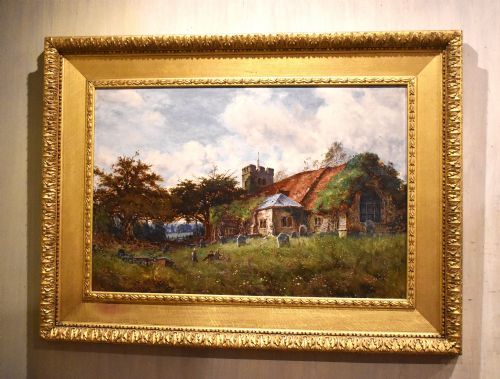
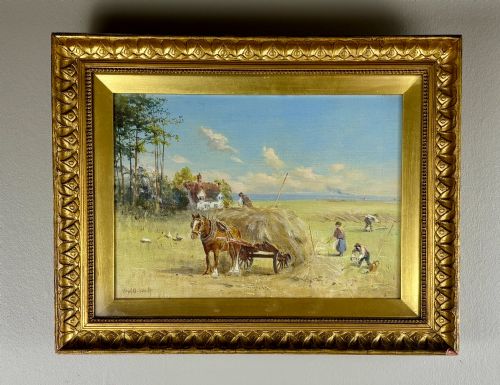
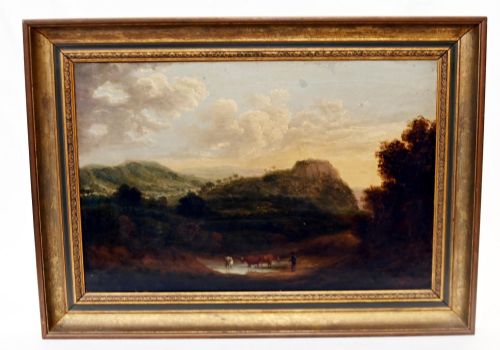
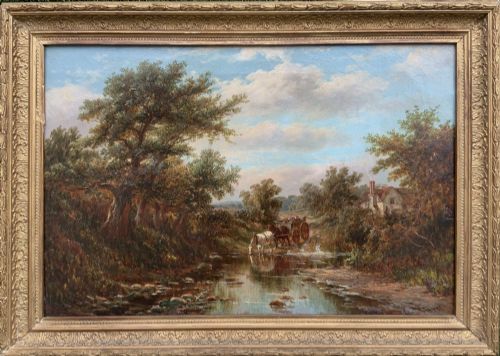
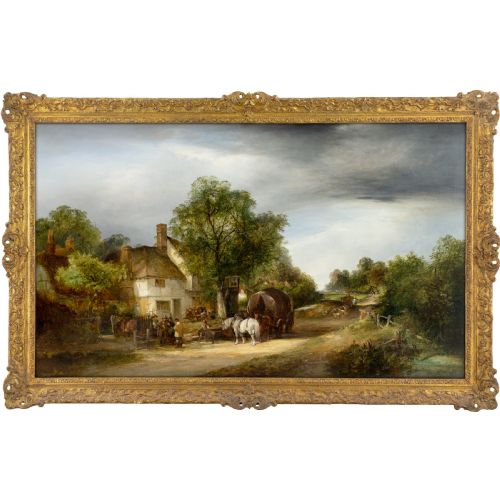
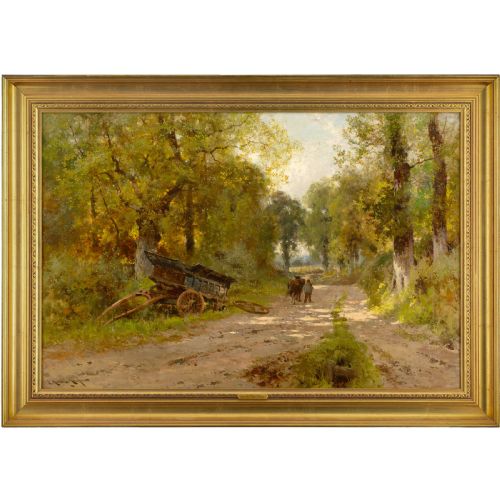
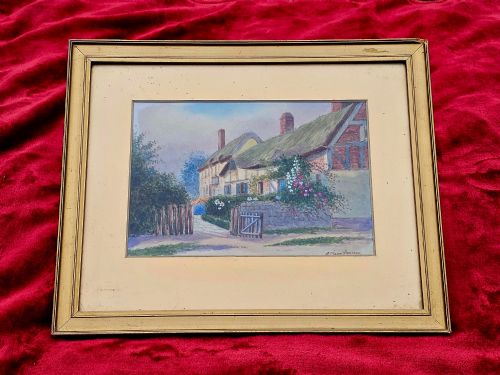
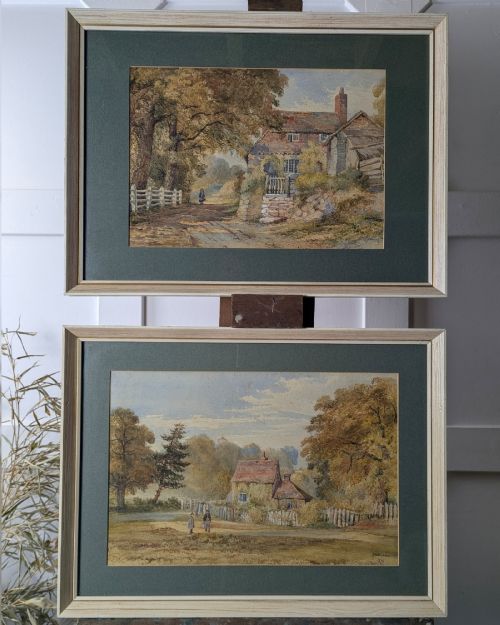
Traditional country scene artwork encompasses framed oil paintings, watercolours, and hand-coloured engravings depicting rural landscapes, agricultural labour, and farm animals. When searching for traditional country scene artwork, buyers encounter pieces originating from the nineteenth and early twentieth centuries, including Victorian and Edwardian periods.
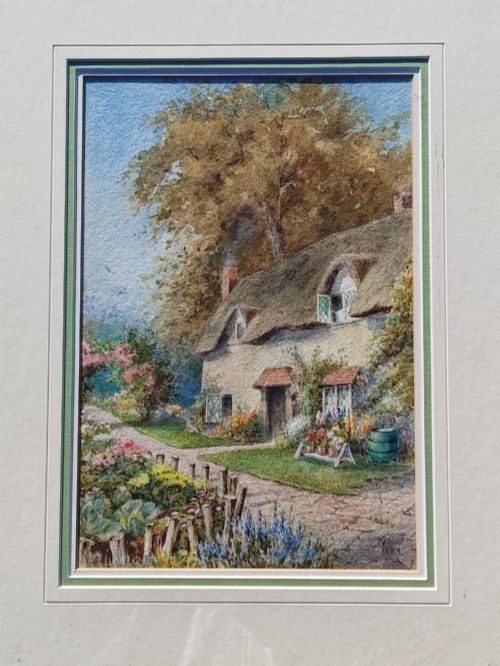
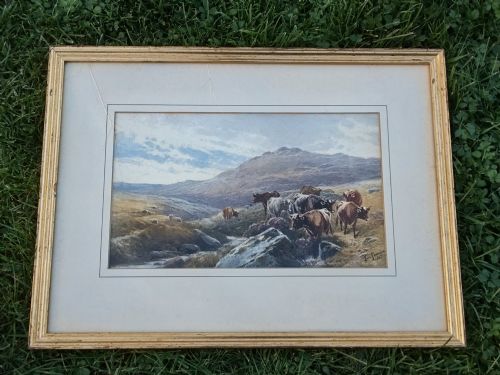
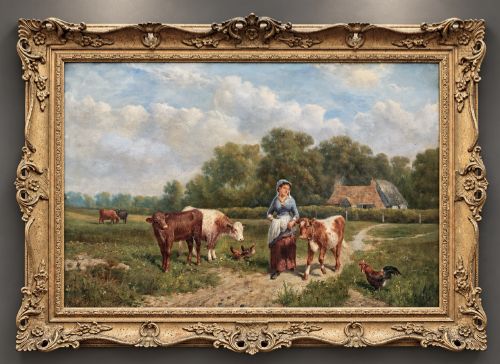
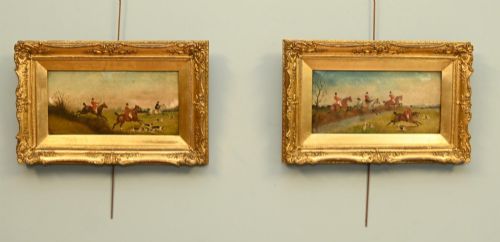
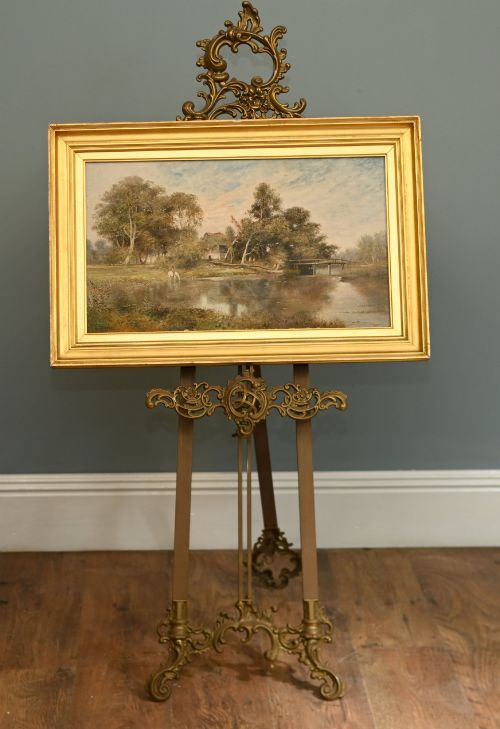
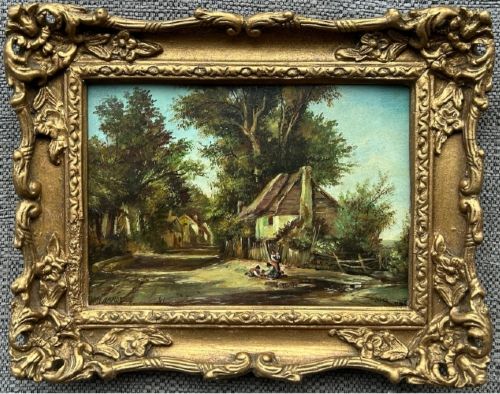
The subjects on this page range from thatched cottages by rivers and harvest landscapes to equestrian portraits, hunting dogs, and cattle grazing in fields. Many pieces portray figures outside rural dwellings, ploughing farmers, and farmyard scenes featuring chickens and horses.
Most selections are executed by British and Irish artists working in oil paint on canvas, panel, or board, alongside paper watercolours. These framed artworks reflect pastoral traditions and rural realism characteristic of nineteenth-century and early twentieth-century painting.
How they were made
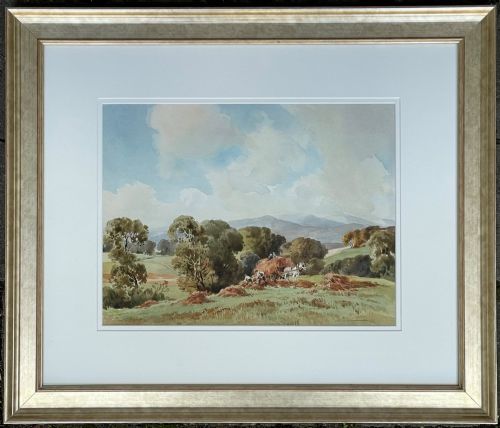
Artists painted primarily with oil paint on canvas, wooden panels, or card, building rich textures and durable surfaces. Watercolours were painted on paper, capturing lighter atmospheric effects in river landscapes and pastoral scenes.
Support materials include wood, giltwood, canvas, and glass, paired with original or period gilt frames that complement the rural subject matter. Hand-coloured engravings also appear, utilising printed lines finished with applied colour.
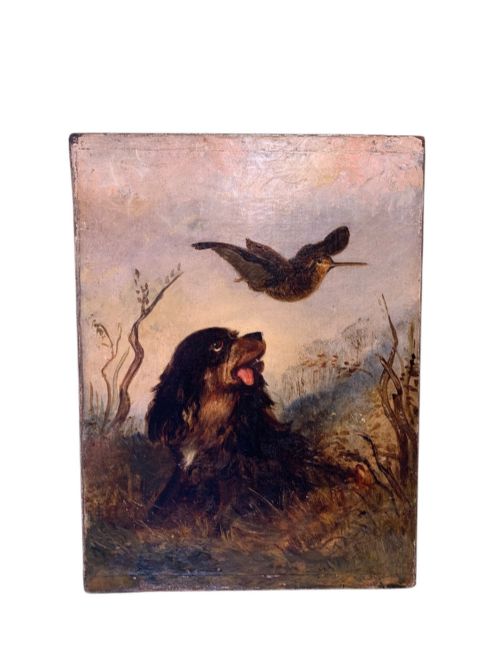
Several canvases record hardworking spaniels and woodcocks caught mid-action in the field.
What varies in quality
Quality rests in the artist's handling of light, anatomical precision in animals, and the atmospheric depth of the landscape. Works by named nineteenth-century painters demonstrate greater control over composition and detail than anonymous school pieces.
The condition of the canvas, panel, or paper, alongside the preservation of the original gilt frame, influences the piece. Finer works maintain clear brushwork and stable paint layers without extensive overpainting.
Percy Lancaster·William Howard Hardy·John Horace Hooper·A. Marie Parsons·Robert A. Nottingham·Robert John Hammond·Robert Thorne Waite·Howard Helmick·Thomas Sidney Cooper·Joseph H Barnes·Johann Friedrich Voltz·T C Hofland·Henry H Parker·Miles Birkett Foster·Claude Cardon·Hubert Wellington·John Arthur Lomax·Henry John Kinnaird·John Frederick Herring Jnr·Samuel Joseph Clark·Philip Henry Rideout·George Armfield·J. Phipps·George E Sharpe
The Traditional Country Scene Artwork Glossary
- Oil on Canvas
- Pigment mixed with drying oil applied to stretched fabric. This medium allows for deep blending of colour and rich surface texture.
- Watercolour
- Pigment suspended in a water-soluble vehicle applied to paper. It produces translucent washes suited to river and sky landscapes.
- Giltwood
- Wood carved and coated with gold leaf or metallic paint. It provides decorative framing for nineteenth-century paintings.
- Pastoral
- Art depicting rural life and idyllic country scenes. These subjects emphasise agriculture, cottages, and domestic animals.
- Equine
- Pertaining to horses. This category covers hunting scenes, ploughing horses, and individual animal portraits.
Traditional Country Scene Artwork: Frequently Asked Questions
What periods do these artworks cover?
The pieces span from the early nineteenth century through the Victorian and Edwardian eras up to the mid-twentieth century.
Most items date from the nineteenth century, reflecting historical painting styles and rural subjects.
How do I identify a watercolour from an oil painting?
Watercolours are painted on paper, often showing transparent washes and delicate pencil underdrawings behind glass.
Oil paintings utilise heavier paint on canvas, board, or wood panels, presenting textured brushwork without glass protection.
Where should I hang a rural landscape?
These framed works suit living rooms, studies, and hallways where traditional interior styles prevail.
Keep them away from direct sunlight and damp walls to preserve the canvas, paper, and gilt framing.
What subjects are most common?
Common subjects include river landscapes, thatched cottages, farm animals such as cattle and chickens, and working horses.
Equestrian portraits and hunting scenes with dogs also appear frequently across the nineteenth-century selections.