



Traditional Cottage Interior Painting
These traditional cottage interior painting works capture domestic domestic hearths and rural daily life across the nineteenth and twentieth centuries.
Traditional Cottage Interior Painting
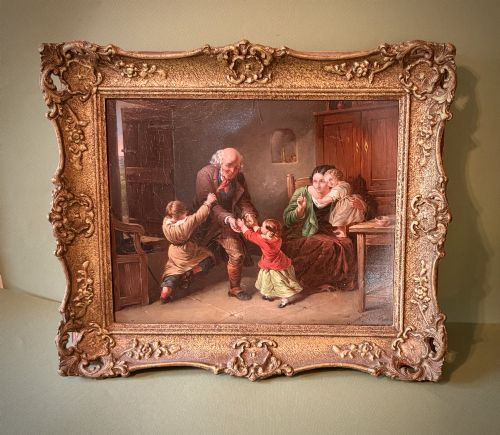
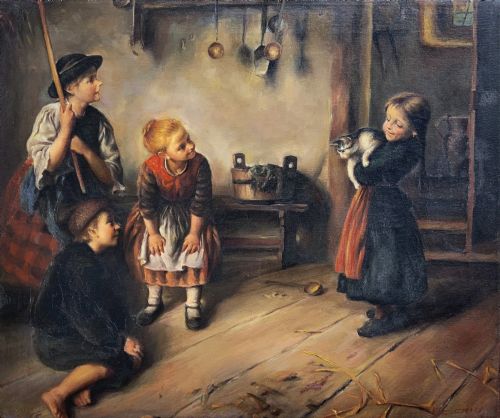
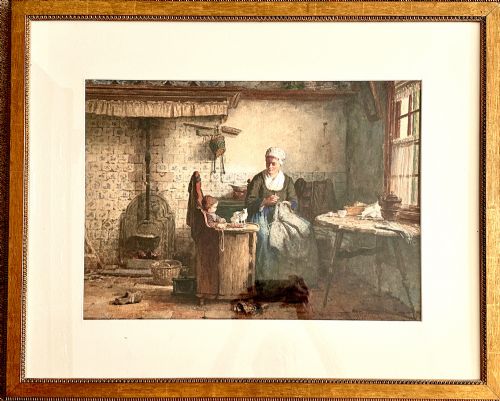
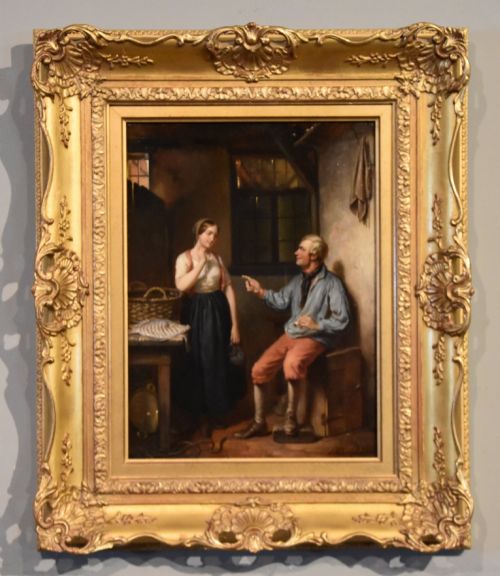
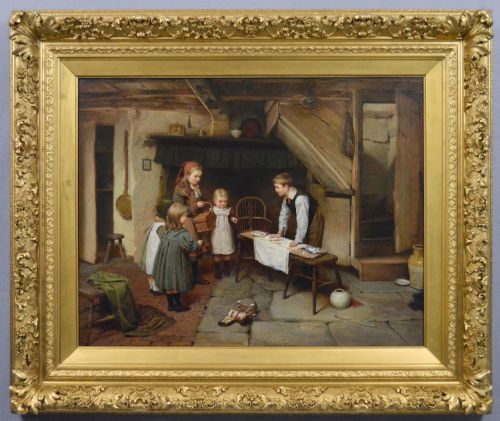
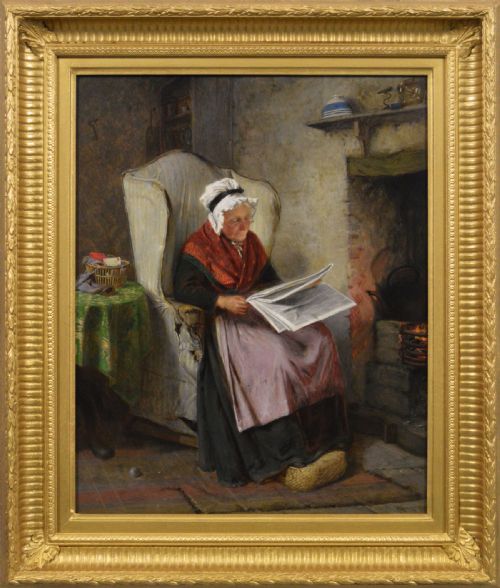
A traditional cottage interior painting portrays domestic scenes within domestic dwellings, frequently featuring figures engaged in everyday tasks like spinning wool, resting by the fireside, or children playing. These works span the nineteenth century through the mid-twentieth century, with Victorian genre paintings forming a prominent part of the selection.
The compositions focus on Northern European and British subjects, capturing familial moments and quiet domestic spaces. Artists render women, children, and elderly residents in intimate rural settings, utilising styles that range from Dutch realism to Victorian genre.
Buyers encounter works executed in oil on canvas, oil on panel, and watercolour. Subjects like 'Tea Time' and fireside rests dominate the selections available on the page.
Materials and methods
Painters utilised oil paint applied to canvas or wood panels, alongside watercolours on paper, to achieve depth and texture in these domestic scenes. Giltwood frames frequently house the finished works, providing structural definition and period context.
Artists handled light and shadow to direct attention towards the hearth or the central figures within the cottage. Brushwork varies from the smooth realism seen in Dutch-influenced pieces to the more expressive domestic studies of the Victorian period.
Listings feature works spanning the nineteenth century, Edwardian era, and mid-twentieth century, executed in oil and watercolour.
Distinguishing quality
The handling of light around the interior hearth and the psychological depth of the figures separate standard works from superior examples. Masterly artists capture nuanced expressions in faces and realistic textures in textiles, wood furniture, and cottage walls.
Compositional balance and the preservation of the original paint surface determine the standing of a piece. Works retaining their initial giltwood frames and unblemished mediums command greater attention from collectors.
Hendrik Valkenberg·Jacob Akkersdijk·Harry Brooker·Alexander Rosell·Haynes King·Henry Spernon Tozer·Pauline Delacroix Garnier·Alfred Provis·Ralph Hedley·Jonathan Pratt·John Exley
The Traditional Cottage Interior Painting Glossary
- Genre painting
- Depiction of aspects of everyday life by portraying ordinary people engaged in common activities. These works focus on domestic scenes rather than historical or mythological subjects.
- Oil on panel
- A painting technique where oil paint is applied to a wooden board rather than canvas. This substrate offers a rigid support that preserves fine detail.
- Giltwood
- Wood that has been covered with a thin layer of gold leaf or gold paint. Frames utilising this material often complement nineteenth-century domestic artworks.
- Watercolour
- Paint consisting of pigment suspended in a water-based solution applied to paper. This medium creates translucent washes that suit delicate interior studies.
- Dutch realism
- An artistic approach focused on truthful depictions of ordinary subjects and daily domestic life. This style heavily influenced nineteenth-century European interior paintings.
Traditional Cottage Interior Painting: Frequently Asked Questions
What is a genre painting?
A genre painting depicts everyday life and ordinary people in domestic or social settings. These artworks tell stories of daily routines rather than recording historical events.
In cottage interiors, this includes figures resting by the fireside, spinning wool, or children playing within the home.
How do I date these paintings?
Dating relies on stylistic evidence, artist lifespans, framing, and medium specifics recorded in the cataloguing. Victorian and Edwardian fashions worn by the figures also offer clear chronological markers.
Substrates like wood panels versus canvas help distinguish nineteenth-century works from later mid-century pieces.
Where were these interiors painted?
These scenes depict cottages across Britain, Wales, and Northern Europe, reflecting rural domestic architecture of the period. Artists often worked in regional communities to capture authentic local settings.
Some compositions follow Dutch realism traditions, while others focus specifically on Welsh or English rural life.
How should I hang an oil painting?
Hang oil paintings away from direct sunlight and fluctuating humidity to protect the canvas and paint layers. Stable interior walls maintain the structural integrity of both the artwork and its original frame.
Ensure the hanging wire and wall fixings safely support the combined weight of the painting and its giltwood frame.