


Traditional Cluster Ring
A traditional cluster ring brings together a central stone framed by smaller gems, offering enduring brilliance across various periods.

Traditional Cluster Ring
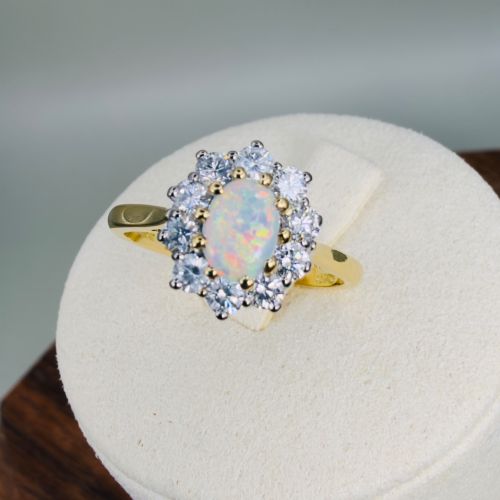
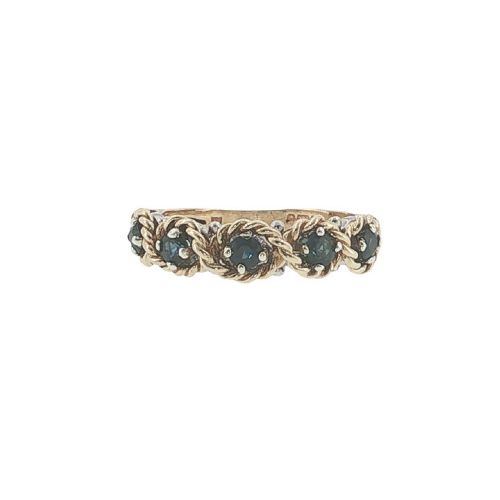
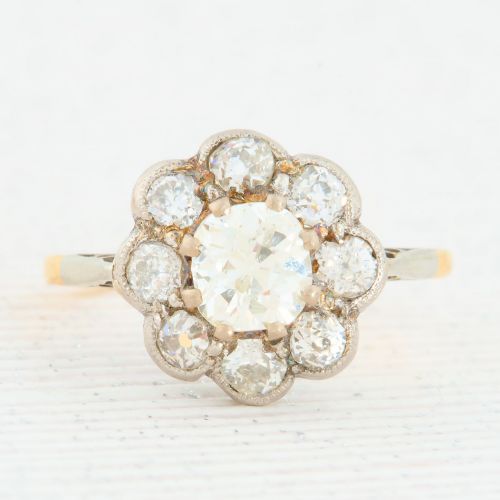
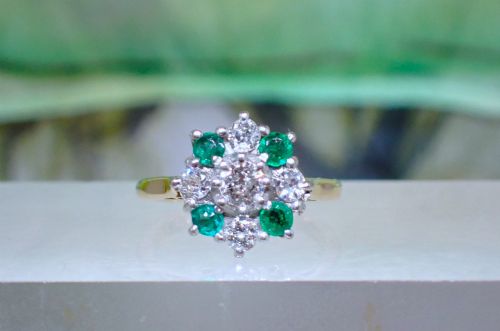
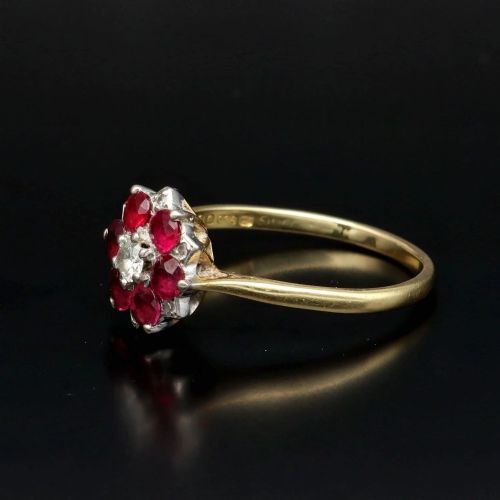
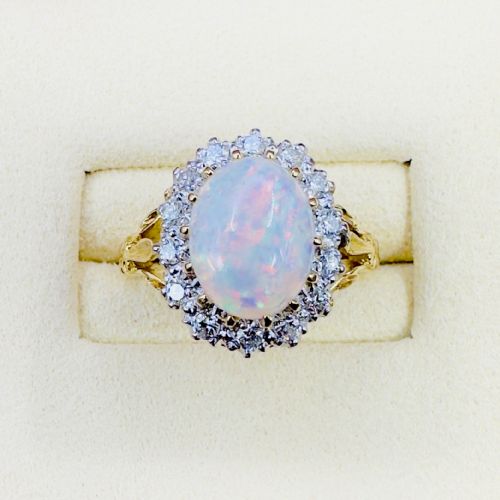
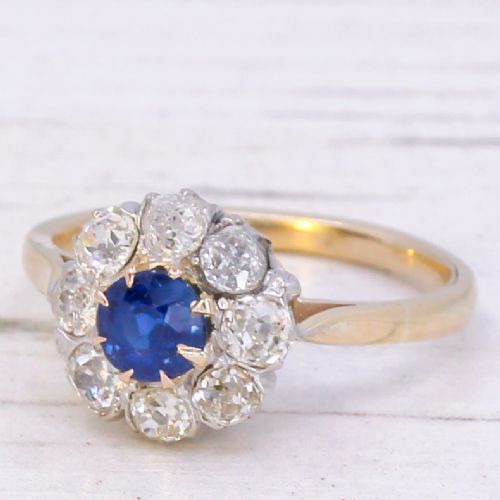
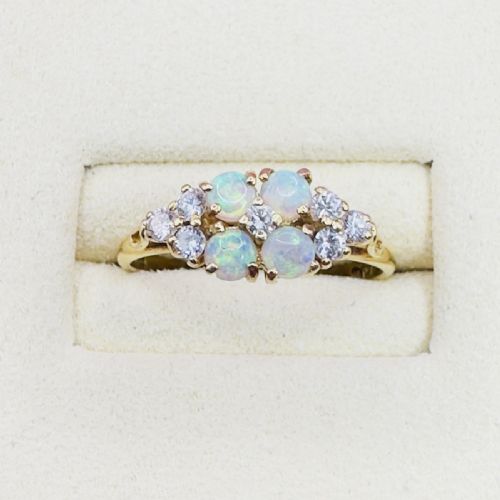
A traditional cluster ring consists of a central gemstone, most often sapphire, ruby, emerald, opal, or diamond, surrounded by a border of smaller accent diamonds or coloured stones. These pieces span periods from the Edwardian era through the nineteen-fifties and nineteen-sixties, reflecting enduring styles such as Art Deco and mid-century design.
The version most commonly met on this page is formed from yellow or white gold, frequently nineteen-carat or nine-carat, alongside platinum. Gemstone arrangements focus heavily on sapphire and diamond combinations, or cabochon opals paired with diamonds, creating distinct floral or geometric silhouettes upon the hand.
How they were made
Goldsmiths utilised eighteen-carat gold, nine-carat gold, and platinum to set the stones securely while maintaining delicate proportions in the surrounding mount. Gemstones were shaped into round, oval, or cabochon cuts before being positioned into tight geometric or flower-like formations.
Techniques relied on precise metalwork to support multi-stone layouts, combining yellow and white gold elements to enhance the visual impact of the central sapphire, ruby, emerald, opal, or diamond.
Available pieces span the Edwardian era, nineteen-thirties, nineteen-fifties, and nineteen-sixties with distinct mid-century styles.
What varies in quality
Quality depends upon the depth of colour in the central gemstone, such as a Ceylon sapphire or rich ruby, balanced against the cut and clarity of the surrounding diamonds. The weight and purity of the gold or platinum mount also dictate the overall substance and refinement of the piece.
Design execution determines distinction, where balanced proportions between the central stone and the framing cluster create a harmonious silhouette. Finer examples display meticulous stone setting and substantial metal weight that endure through decades of wear.
The Traditional Cluster Ring Glossary
- Cluster ring
- A ring featuring a central gemstone surrounded by a halo of smaller stones. This arrangement maximises surface brilliance and visual presence on the finger.
- Cabochon
- A gemstone shaped and polished with a smooth, rounded surface rather than faceted. This style is frequently seen on opals within these listings.
- Carat
- A unit of weight used for diamonds and other gemstones. It determines the physical mass of the individual stones set within the mount.
- Platinum
- A dense, durable white metal used for secure stone settings. Its strength allows for fine claw work without compromising structural integrity.
Traditional Cluster Ring: Frequently Asked Questions
How do I wear a cluster ring daily?
Wearing a cluster ring daily involves considering the durability of the central stone, as softer gems like opal require gentle care compared to diamonds or sapphires.
Pairing the ring thoughtfully with other bands helps prevent unnecessary friction against the outer cluster setting.
What periods do these rings come from?
These rings span several decades, including Edwardian designs, nineteen-thirties pieces, and mid-century examples from the nineteen-fifties and nineteen-sixties.
Each period brings distinct mount styles and gold purities, ranging from nine-carat and eighteen-carat gold to platinum.
How do I identify a sapphire cluster ring?
A sapphire cluster ring is identified by a blue central gemstone framed by a border of sparkling white diamonds.
Variations include specific origins like Ceylon sapphires set in yellow or white gold mounts dating from the mid-twentieth century.