



Traditional Chinese Hardwood Nest
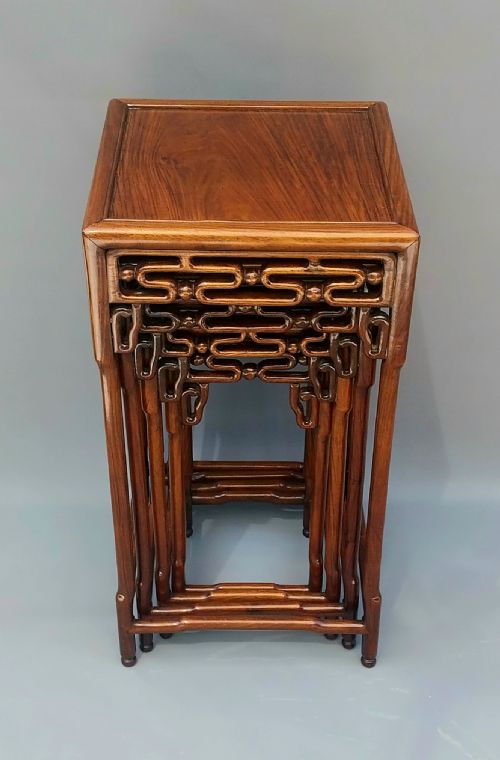
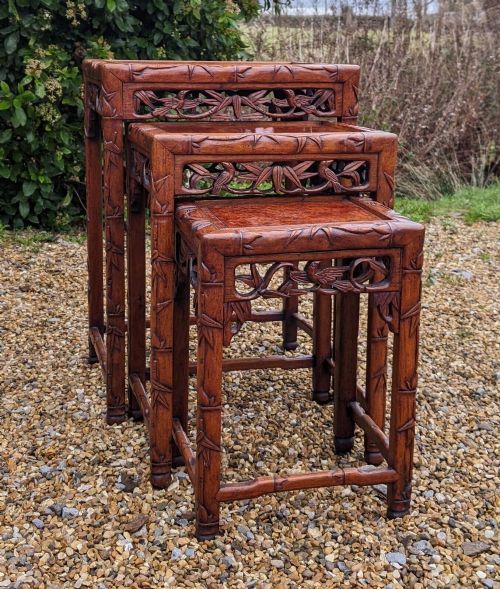
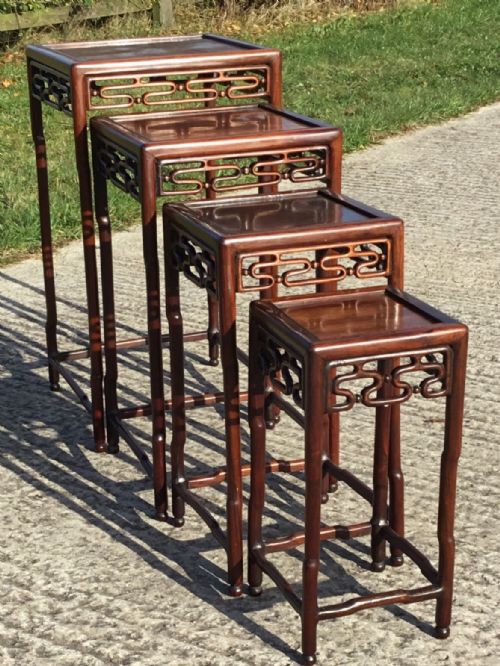
A traditional chinese hardwood nest is a practical set of graduating tables that slides together compactly, offering versatile display space when pulled apart.
Traditional Chinese Hardwood Nest
A traditional chinese hardwood nest comprises sets of three or four graduating tables designed to slide neatly beneath one another. These pieces serve flexible functions in domestic spaces, functioning as occasional, coffee, or quartetto tables depending on the layout.
The examples encountered on this page originate from periods such as the nineteenth century, the Victorian era, and the early decades of the twentieth century. They carry stylistic influences from the late Qing dynasty and Chinese export traditions, presenting forms intended for both utility and display.
How they were made
Construction relies upon dense timbers including rosewood, hongmu, and huanghuali wood. These heavy hardwoods provide the structural rigidity required for slender legs and interlocking frames.
Joinery and surface shaping emphasise the natural grain and deep colour of the timber. Craftsmen shaped these woods into coordinated nests without relying on extraneous metal hardware.
Some nineteenth-century makers built four tables to nest so tightly they occupied the floor space of just one.
What varies in quality
The distinction between tiers of quality rests upon the selection of timber and the expressiveness of the grain. Huanghuali wood and figured rosewood command attention for their visual depth, whereas plainer hardwood displays a more uniform surface.
Proportion and the precision of the graduating scale also define the work. Superior sets slide together with exact clearances, maintaining balanced lines whether stacked as one or separated across a room.
The Traditional Chinese Hardwood Nest Glossary
- Hongmu
- A dense, dark tropical hardwood traditionally utilised in fine Chinese furniture. It translates literally to red wood and provides a heavy, durable structure.
- Quartetto
- A term occasionally applied to a set of four nesting tables. It derives from musical terminology denoting a group of four.
- Graduating
- Describing tables built in diminishing sizes so that smaller units slide beneath larger ones. This design maximises floor space when the tables are stored together.
Traditional Chinese Hardwood Nest: Frequently Asked Questions
What is a traditional chinese hardwood nest used for?
These sets function primarily as occasional furniture, providing extra surface area for drinks or lamps when separated. When not in use, the smaller tables slide underneath the largest one to save space.
Their compact footprint makes them adaptable to various rooms in the house without cluttering the floor.
How do I care for rosewood tables?
Keep the wood away from direct heat sources and strong sunlight to prevent the timber from drying out. Dust regularly with a soft, dry cloth.
Avoid using silicone-based polishes, as they can build up a film on the surface of the hardwood over time.
How many tables are in a standard nest?
The sets on this page typically comprise either three or four graduating tables. Four-table sets are common in nineteenth-century and Victorian examples.
Each table is proportioned to fit precisely beneath the next largest one in the sequence.
How can I tell the age of these tables?
Dating relies upon observing the timber species, construction methods, and stylistic cues associated with periods like the late Qing dynasty or the Victorian era. Nineteenth-century pieces often display hand-selected grain and traditional joinery.
Comparing the graduation and weight against known pieces helps determine the likely period of manufacture.