



Traditional Chinese Artwork
Traditional chinese artwork brings remarkable depth to a room through centuries of skilled brushwork and craft.
Traditional Chinese Artwork
Traditional chinese artwork encompasses wall art, paintings, scroll paintings, and sculptures produced across the nineteenth and twentieth centuries. These pieces reflect enduring aesthetic traditions, often associated with the Qing dynasty and subsequent periods of the early and mid twentieth century.
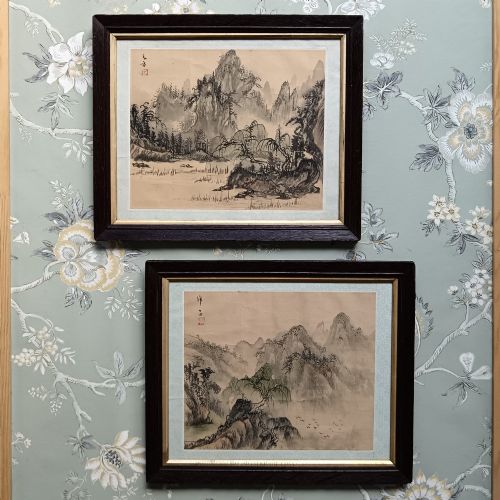
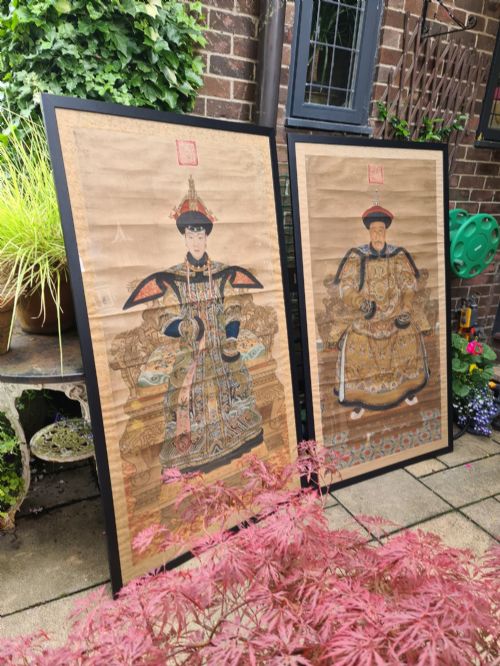
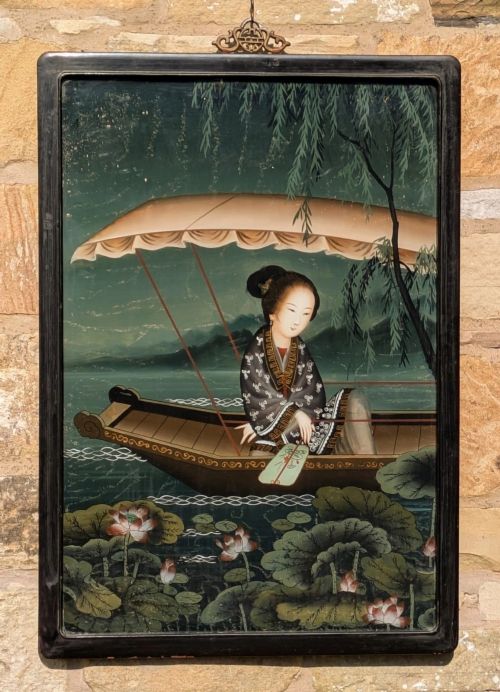
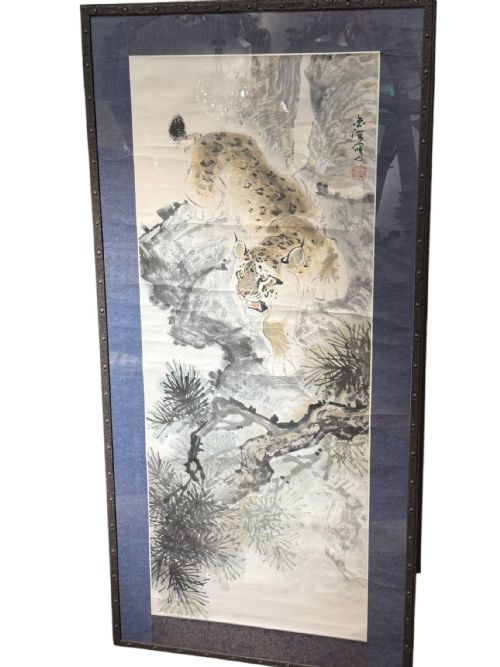
Buyers will encounter framed paintings on silk, ancestor scrolls, reverse paintings on glass, and carved jade mountain landscapes on hardwood stands. Scroll paintings and framed silk works feature prominently among these listings, alongside watercolour and ink sketches.
Originating from diverse periods including the Victorian era, the nineteenth century, and through to the nineteen-sixties, these works demonstrate varied regional output. Whether in the form of a wall plaque or a framed portrait, each item carries distinct historical character.
Materials and Methods
Artisans employed traditional supports such as paper, silk, and wood, applying ink, pigment, gouache, and oil paint to create detailed compositions. Reverse painting on glass represents a distinct technique where imagery is painted directly onto the reverse side of a glass panel.
Sculptural works utilise carved jade mounted on hardwood stands, while other pieces incorporate brass elements or are presented within original frames. The combination of delicate brushwork on silk or paper requires precise control of ink and water-based pigments.
Traditional Chinese Artwork Retail Price Guide 2026
Typical asking prices for traditional chinese artwork among the pieces listed under this phrase on Sellingantiques today, from the lower quarter to the upper quarter. They describe what is for sale here now, not the wider market.
Listings feature works spanning from the Victorian period and nineteenth century through to nineteen-sixty, utilising silk, paper, glass, and wood.
Judging Quality and Execution
Quality rests upon the finesse of the brushwork and the preservation of the delicate materials, whether ink on paper or pigment on silk. Superior examples exhibit confident lines and subtle tonal gradations that bring subjects like landscapes, portraits, and wildlife to life.
The integrity of the mounting, from original frames to hardwood stands and traditional scroll mountings, influences the overall presentation and historical coherence of the piece. Well-preserved pigments and clearly struck artist seals or signatures further distinguish finer works from simpler items.
YA MING·E. Cremer
The Traditional Chinese Artwork Glossary
- Scroll painting
- A work executed on paper or silk designed to be rolled up for storage or displayed mounted on a wall. These often feature landscapes or portraits.
- Reverse painting on glass
- A technique where the artist paints directly on the back of a glass pane, creating a finished image viewed from the unpainted front.
- Shan Shui
- A style of traditional Chinese painting that depicts natural scenery using brush and ink rather than more realistic observation.
- Ancestor scroll
- A formal portrait painting created to commemorate lineage members, often characterised by rigid frontal poses and fine detail.
- Gouache
- An opaque water-based pigment used alongside traditional inks to achieve solid, vibrant areas of colour on silk or paper.
Traditional Chinese Artwork: Frequently Asked Questions
How should I hang a silk scroll painting?
Scroll paintings on silk require careful handling away from direct sunlight to protect the delicate fabric and pigments from fading. Use appropriate wall fixings that support the weight of the mounting without damaging the material.
Keep the room environment stable in humidity to prevent the silk and paper from warping or becoming brittle over time. Professional framing can offer additional protection if preferred.
What is the difference between a scroll and a wall plaque?
Scrolls are flexible works traditionally mounted on silk or paper for hanging, whereas wall plaques are rigid items often carved from wood or other hard materials. Scrolls roll up for storage, while plaques remain fixed in their solid form.
Both serve as wall art but represent entirely different craft traditions and framing methods within Chinese decorative arts.
How do I identify a reverse painting on glass?
Reverse paintings on glass feature imagery applied directly to the rear surface, creating a glossy, reflective finish when viewed from the front. The paint layers sit beneath the glass, protecting them from surface wear.
Close inspection reveals the brushstrokes or pigment applied in reverse order, with fine details laid down before background colours.
Are ancestor portraits common in these collections?
Ancestor paintings appear frequently among nineteenth-century works, often retained in their original frames with vibrant pigments intact. These formal group or individual portraits document family lineage.
They offer a distinct window into historical portraiture traditions, differing significantly from landscape scrolls and still life compositions.