


Traditional Child Portrait
A traditional child portrait brings centuries of character into a room, capturing youthful likenesses in oils, watercolours and framed prints across the Georgian, Victorian and Edwardian periods.
Traditional Child Portrait
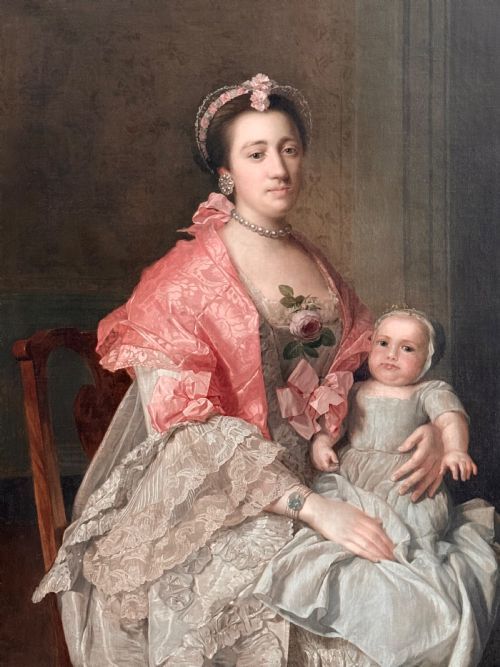
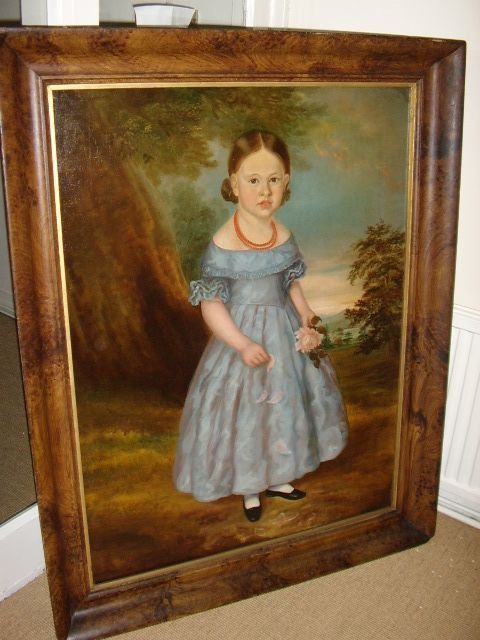
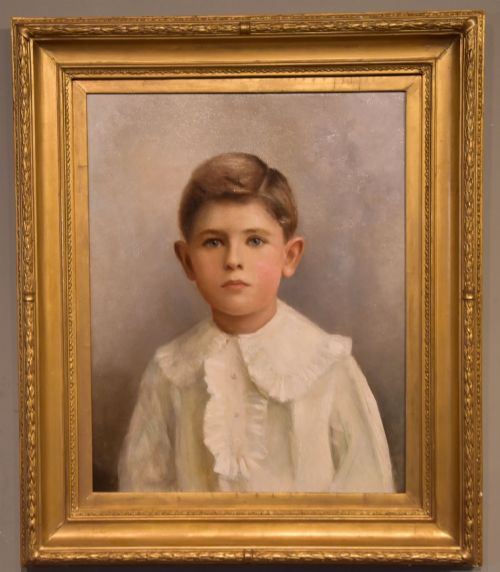
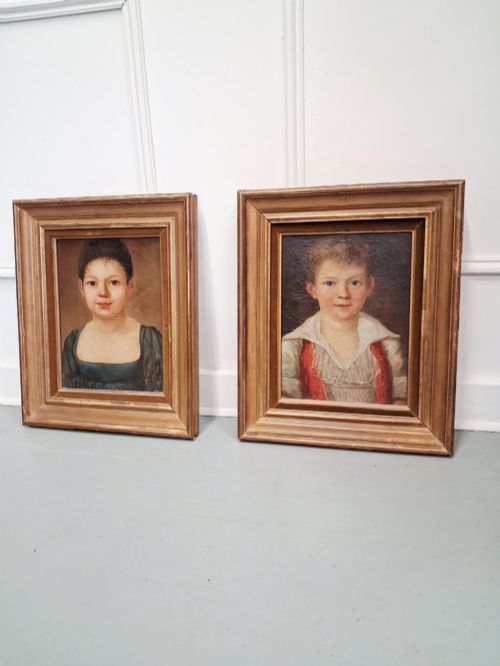
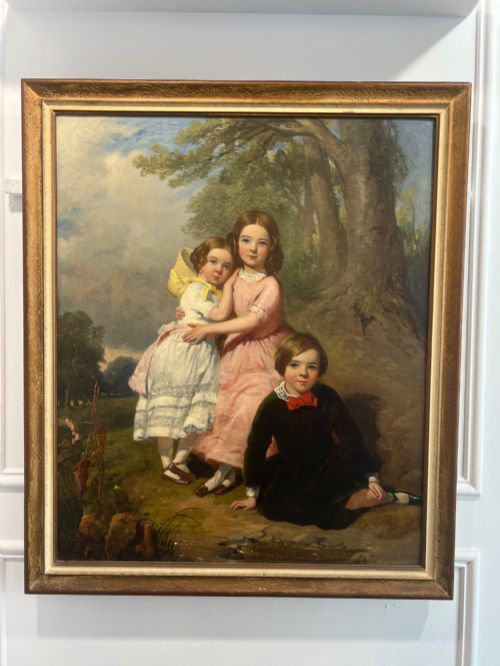
A traditional child portrait represents young subjects ranging from infants to older boys and girls, captured in domestic settings or formal poses. When searching for a traditional child portrait, buyers encounter works executed in oil on canvas, oil on board, watercolours and antique prints.
The selections span multiple eras, stretching from sixteenth-century devotional panels to nineteenth-century realist canvases and twentieth-century depictions. Many pieces feature named subjects with pets, toys or family members, offering a glimpse into historical childhood.
Domestic scenes dominate the offerings, from solitary sitters with rabbits and kittens to multi-figure family groups in period costume. These works vary greatly in scale, from intimate watercolours to large oil paintings framed in gilt wood and gesso.
Materials and Construction
Painters relied principally on oil paint applied to stretched canvas or wooden panels, building up layers of pigment to achieve depth in skin tones and garments. Watercolours on paper appear alongside these oils, offering a lighter medium for domestic likenesses.
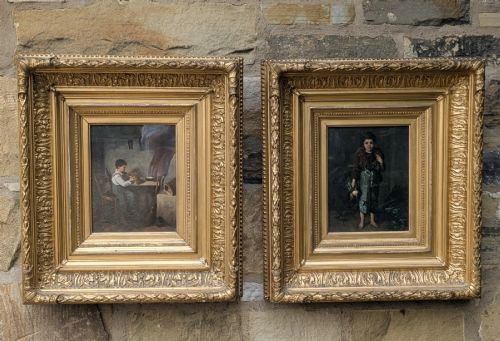
Frames play a crucial role in the presentation of these artworks, frequently constructed from wood and finished with intricate gesso and gold leaf. These giltwood surrounds often date from the same period as the canvas, showing traditional joinery and ornamentation.
Frames span multiple styles from the Georgian and Victorian eras, utilising carved wood, gesso, and gold leaf.
Assessing Quality and Execution
The handling of surrounding details, such as fabrics, pets and domestic objects, distinguishes accomplished hands from provincial practitioners. Furthermore, the original integration of period gilt frames adds considerable weight to the piece's overall integrity.
Henry Windsor Fry·Arthur Percy Dixon·John Henry Dell·Franz Xaver Winterhalter·Henry Weigall·Richard Buckner·Ralph Hedley·Henry Scott·John Russell
The Traditional Child Portrait Glossary
- Oil on Canvas
- Pigment mixed with drying oil applied to a woven fabric support. This medium allowed artists to achieve rich colour saturation and subtle tonal gradations.
- Giltwood
- Wood carved and coated with gold leaf or gold paint. This finish provided ornate decoration for nineteenth-century picture frames.
- Gesso
- A plaster mix applied to wooden frames as a smooth base for gilding. It enables intricate moulded relief details.
- Naive School
- Art produced by painters with little or no formal academic training. These works charm viewers through flat perspectives and unpretentious observation.
- Oleograph
- A mechanical colour print designed to imitate an oil painting. Manufacturers used lithographic stones to replicate the texture of canvas and brushwork.
Traditional Child Portrait: Frequently Asked Questions
How do I date a child portrait?
Dating relies heavily on the style of clothing, hair and surrounding furniture depicted in the composition. Framing materials and stretcher construction at the back of the canvas provide additional chronological clues.
Examining any signature, inscription or gallery label helps narrow down the decade. Comparing the sitter's attire to documented historical fashion trends remains the most reliable method.
Are these portraits always painted from life?
Many sitters posed in artist studios over several sessions, though commissioned works of young children sometimes utilised preparatory sketches. Portraitists frequently worked from life to capture skin tones and natural expressions accurately.
Posthumous commissions existed, relying on earlier photographs or verbal descriptions. However, the immediacy in most surviving canvases points to direct observation.
How should I hang an oil portrait?
Choose a wall away from direct sunlight and strong heat sources to protect both canvas and paint layers. Adequate picture wire and secure wall fixings are essential for heavier framed works.
Display the artwork at eye level to engage properly with the sitter's gaze. Allowing a little clearance from damp exterior walls ensures the canvas stays stable over time.
What subjects typically accompany children in these works?
Pets appear frequently, from prized dogs and rabbits to cats, reflecting the companionship animals offered young people. Toys such as dolls, hobby horses and playing cards also feature prominently to illustrate childhood pastimes.
Books, maps and flowers occasionally appear as symbolic elements representing education or growth. These contextual details help reveal the social background of the family.