



Traditional Chest on Stand
A traditional chest on stand combines upper drawer storage with elevated form, offering robust utility and distinct period character.
Traditional Chest on Stand
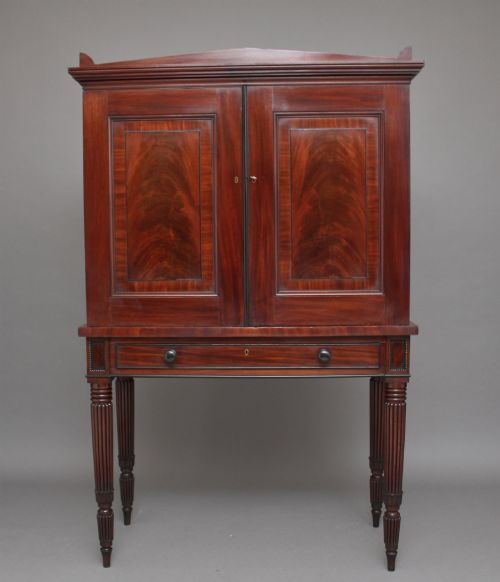
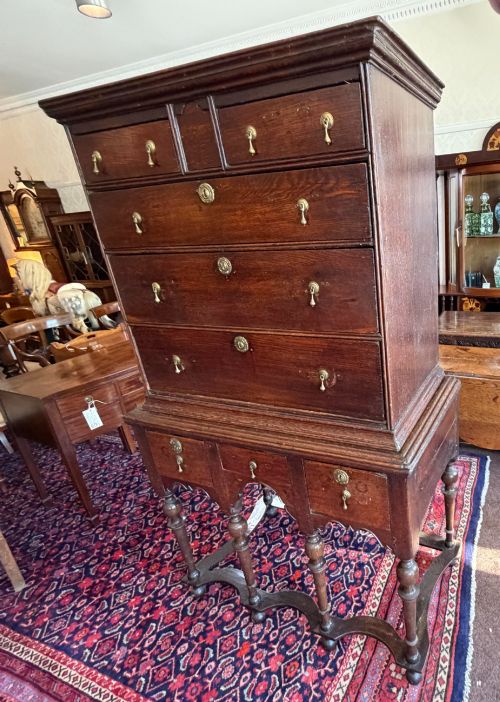
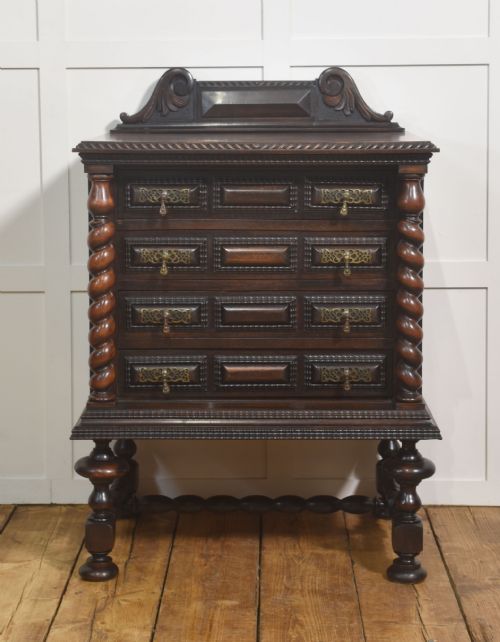
A traditional chest on stand comprises a storage section raised on a separate supportive base, appearing across the seventeenth, eighteenth, and nineteenth centuries. These pieces serve as functional storage units for clothing or papers while adding architectural height to a room.
The versions most commonly met on this page span Georgian, Victorian, and Edwardian periods, alongside revival styles. They utilise timbers such as oak, walnut, and mahogany, reflecting domestic needs from different eras.
Materials and Construction
Cabinet makers utilised solid hardwoods including oak, walnut, and mahogany, frequently applying burr walnut or flame mahogany veneers to primary surfaces. Brass handles and escutcheons provided functional hardware, while secondary timbers like pine appeared in concealed structural areas.
Joinery techniques involved precise drawer construction and frame-and-panel methods for stands, supporting the heavy upper section securely.
Traditional Chest on Stand Retail Price Guide 2026
Typical asking prices for traditional chest on stand among the pieces listed under this phrase on Sellingantiques today, from the lower quarter to the upper quarter. They describe what is for sale here now, not the wider market.
Listings feature oak, walnut, and mahogany timbers across periods spanning the seventeenth century to the Edwardian era.
Quality and Craftsmanship
Quality rests in the selection of timber veneers and the crispness of the joinery, distinguishing finely figured burr walnut or flame mahogany from plainer surfaces. The integration between the upper chest and its supporting stand reveals the maker's structural intent.
Proportion and the retention of original brass hardware elevate certain examples, separating standard utilitarian items from finer decorative cabinet work.
The Traditional Chest on Stand Glossary
- Chest on stand
- A storage chest elevated upon a distinct supporting frame or base. This form lifts the storage compartments off the floor.
- Oyster veneer
- Circular cross-sections cut from small branches, arranged in decorative patterns. This method appears on seventeenth-century furniture.
- Tallboy
- A tall chest of drawers standing upon another section or base. It maximises vertical storage space within a room.
- Coffer
- A box used for storage, often hinged at the top. When placed on a base, it forms a coffer on stand.
Traditional Chest on Stand: Frequently Asked Questions
What is a traditional chest on stand used for?
These pieces function primarily as storage furniture for household goods, clothing, or linens. The elevated design prevents dampness from reaching the contents while offering easy access.
Today, they serve equally well as statement furniture in living spaces, hallways, or bedrooms.
How do I date a traditional chest on stand?
Dating relies upon examining timber species, construction methods, and hardware styles. Seventeenth-century examples often feature oak or walnut with oyster veneers, while Georgian pieces favour mahogany or burr walnut.
Revival pieces from the Edwardian era or later imitate these earlier styles using mixed period characteristics.
Are these pieces made of solid wood?
Many examples utilise solid primary woods like oak or mahogany for structural elements and frames. Secondary timbers such as pine frequently appear inside drawers and back panels.
Finer decorative surfaces often employ veneers laid over a stable softwood or hardwood core.
How do I care for walnut and mahogany furniture?
Maintain stable humidity levels in the room to prevent timber movement or veneer lifting. Keep the wood away from direct heat sources and strong sunlight.
Apply traditional wax polish occasionally to nourish the surface and preserve the timber's natural lustre.