
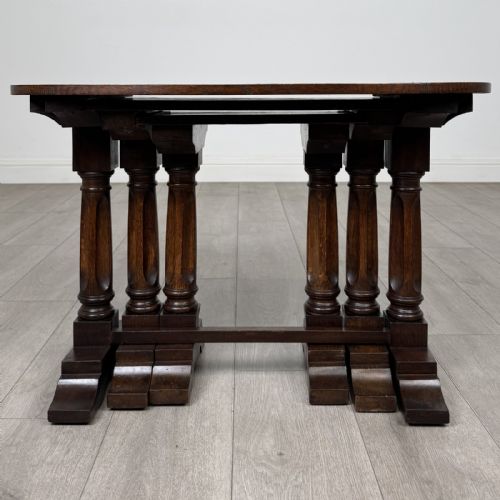
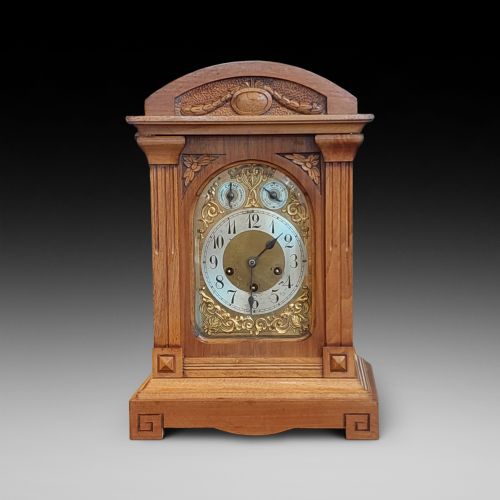
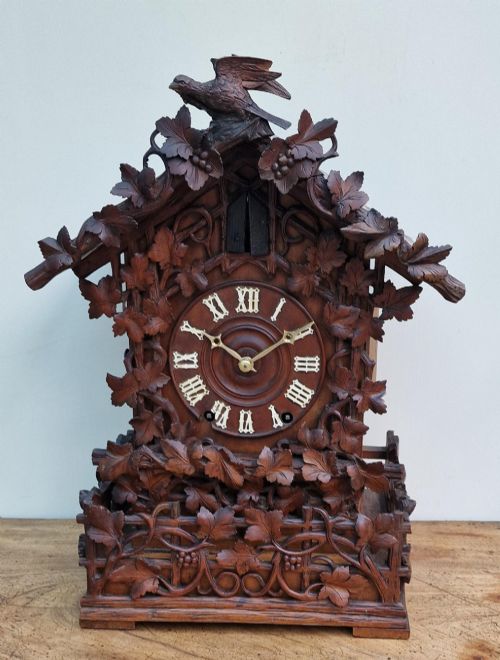
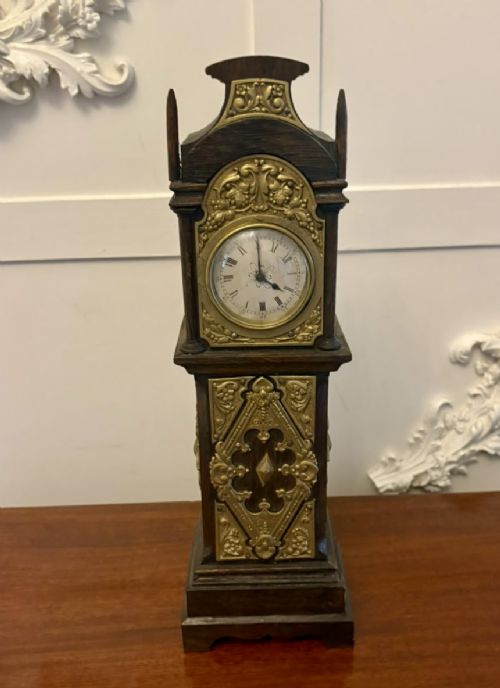
Traditional Carved Oak Table
A traditional carved oak table brings centuries of solid timber and rich grain into a room, offering practical use alongside enduring craft.
Traditional Carved Oak Table
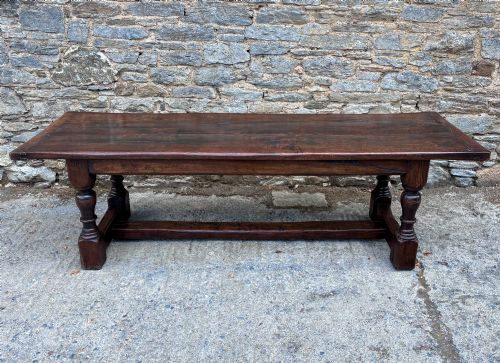
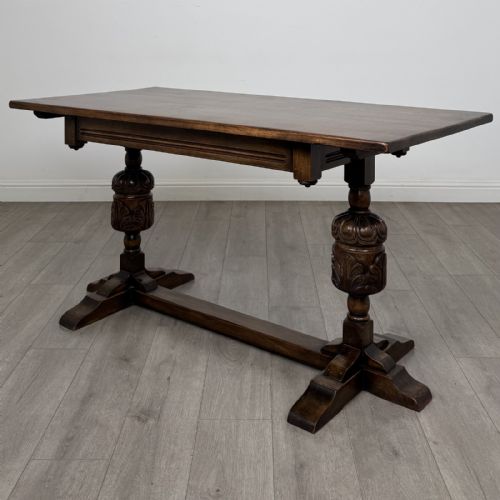
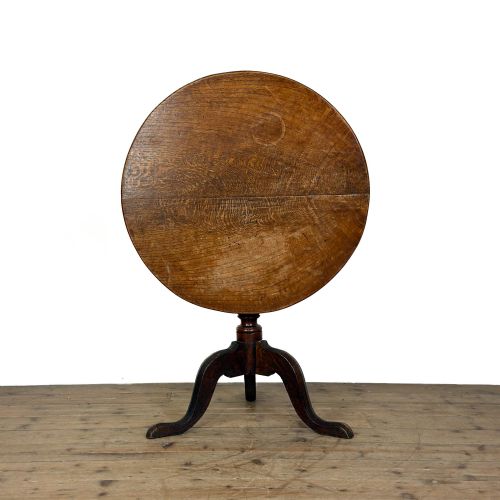
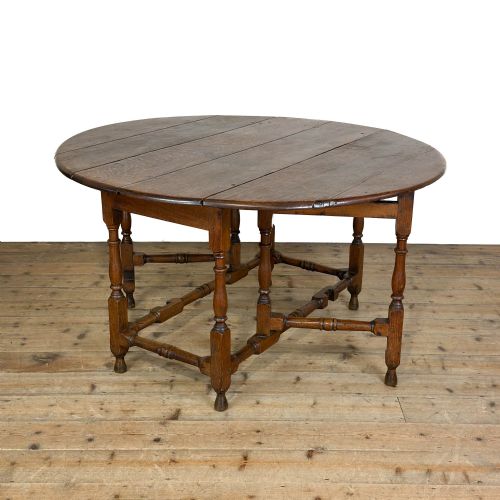
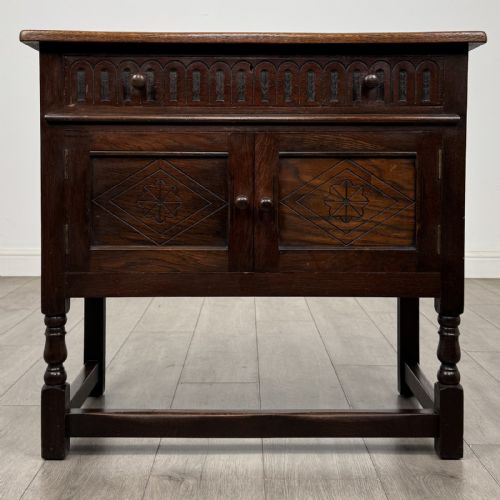
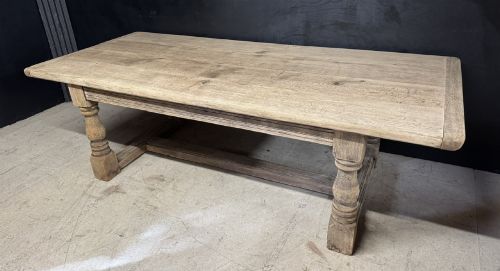
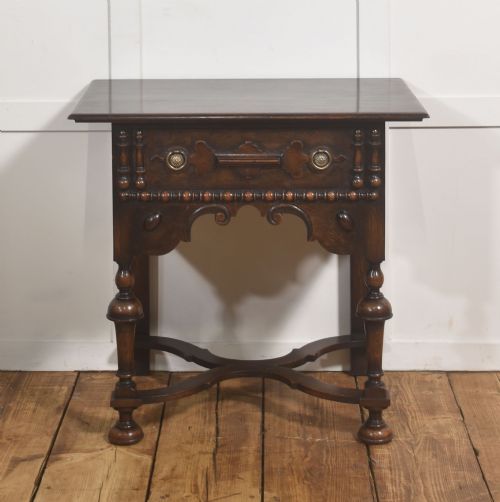
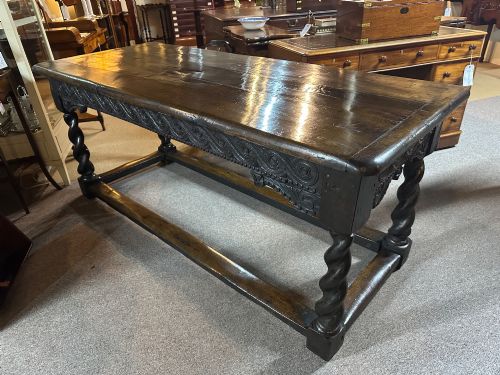
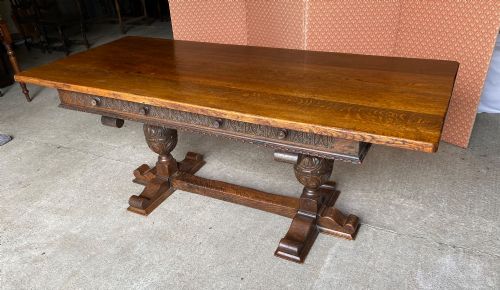
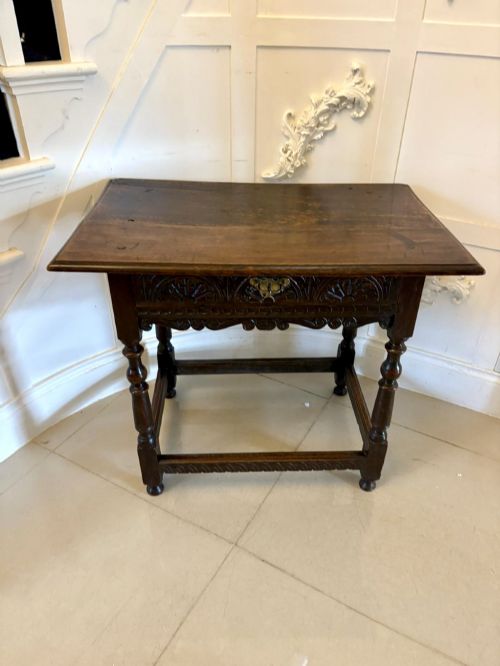
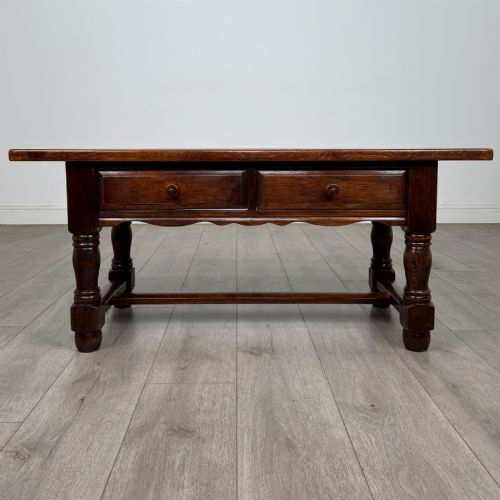
A traditional carved oak table covers a wide span of domestic furniture, most commonly appearing in refectory, draw-leaf, and gateleg forms alongside smaller side and coffee tables.
The pieces seen here range across the seventeenth, eighteenth, and nineteenth centuries into the Edwardian era, reflecting both genuine early construction and later revivals.
Buyers will encounter dining tables built for large gatherings as well as compact hall benches and desks, all sharing a foundation in solid oak.
Materials and construction
These items are constructed primarily from solid oak, sometimes combined with beech for turned supports or supplemented with brass and iron hardware.
Carpenters utilised traditional jointing methods to build robust frames, adding carved details such as linenfold panels and barley twist legs to surfaces.
Listings feature solid oak alongside supplementary materials such as brass, iron, beech, and glass across multiple centuries.
Evaluating craftsmanship
The standard of a traditional carved oak table rests on the depth and crispness of the timber carving and the stability of the structural joints.
Examples featuring single-plank tops or substantial refectory bases demonstrate superior timber selection compared to lighter, later revival pieces.
The Traditional Carved Oak Table Glossary
- Refectory table
- A long, narrow dining table traditionally used in monastic refectories and built with sturdy legs joined by low stretchers.
- Draw-leaf table
- An extendable table with sliding leaves stored beneath the main top that pull out to increase surface area.
- Gateleg table
- A drop-leaf table with hinged flaps supported by legs that swing out like a gate.
- Barley twist
- A decorative turning technique resembling a spiralling rope, frequently found on table legs and supports.
- Linenfold
- A style of carved wooden panelling that imitates folded fabric, typical of late medieval and revival furniture.
Traditional Carved Oak Table: Frequently Asked Questions
How do I clean a carved oak table?
Dust the surface regularly with a soft, dry cloth to prevent dirt from settling into the carved details. Avoid modern silicone sprays and instead apply a traditional beeswax periodically to nourish the timber.
Keep the wood away from direct heat sources and strong sunlight to prevent the solid oak from drying out and splitting over time.
Can I use an antique table every day?
These tables were built for daily domestic life, whether in a farmhouse kitchen or a formal dining room, and remain structurally robust.
Use coasters and placemats to protect the timber surface from moisture rings and heat marks during meals.
What is a draw-leaf mechanism?
A draw-leaf mechanism allows the ends of the table to extend outwards by pulling additional leaves from beneath the main top.
This design lets you adjust the table length easily for guests without needing to store separate loose boards.
How do I identify a revival piece?
Revival furniture often dates from the Edwardian period or the early twentieth century, mimicking earlier styles like Jacobean or Elizabethan.
Look at the underside and interior fixings, as machine-cut components and modern screws typically indicate a later interpretation rather than an original early piece.